English
Gaeilge
With over 1,000 medical device recalls globally, can robots catch the mistakes humans miss?
With over 3,600 device vigilance reports in Ireland and more than 1,000 global medical-device recalls in 2024 alone, PhD researcher Dipshikha Das is teaching robots to support human inspectors in this demanding work.
In today’s medical manufacturing lines, tiny defects can have critical consequences, but inspection often depends on human eyes and repetitive manual handling.
The Sedgwick State of the Nation (2025) report logged 1,059 medical-device recall events worldwide: the highest in four years. Device failure was the leading cause.
In the EU and UK, recall activity hit one of its highest annual totals in more than a decade.
PhD researcher, Dipshikha Das, is tackling this challenge head-on:
My research addresses the challenge of manual material inspection in manufacturing industries… I’m working towards reducing the burden of repetitive tasks performed by people and integrating robots to aid and learn from them.
The Health Products Regulatory Authority (HPRA) in Ireland processed 3,672 medical-device vigilance reports in 2024 alone. Its most recent Field Safety Notices in September 2025 covers a wide range of medical devices. The list included pacemakers, cardiac pumps, dialysis systems, CT scanners, robotic surgery platforms, and respiratory devices.
Without careful monitoring and inspection, medical device failures can result in severe harm or death, making them more critical than routine product recalls.
Dipshikha’s solution is simple. Using vision-based Learning from Observation (LfO), robots watch human inspectors perform a task to see how they move the object, where they look at it, and what views matter. They are then taught to reproduce it repeatedly without fatigue or error.
“Just as you would teach a colleague to perform an inspection task, you teach the robot,” she explains. “The robot helps you perform the repetitive task precisely, accurately, and without getting tired.”
Dipshikha’s system uses methods of multi-view scene understanding, visual perception and information from images and videos. Her work is enabling she is enabling robots to understand spatial relationships, object positions, and multiple viewpoints.
Early experiments with a UR5e robot and a wrist-mounted camera show it can align its perspective to match a demonstration.
We want robots to learn like humans by watching, understanding, and doing.
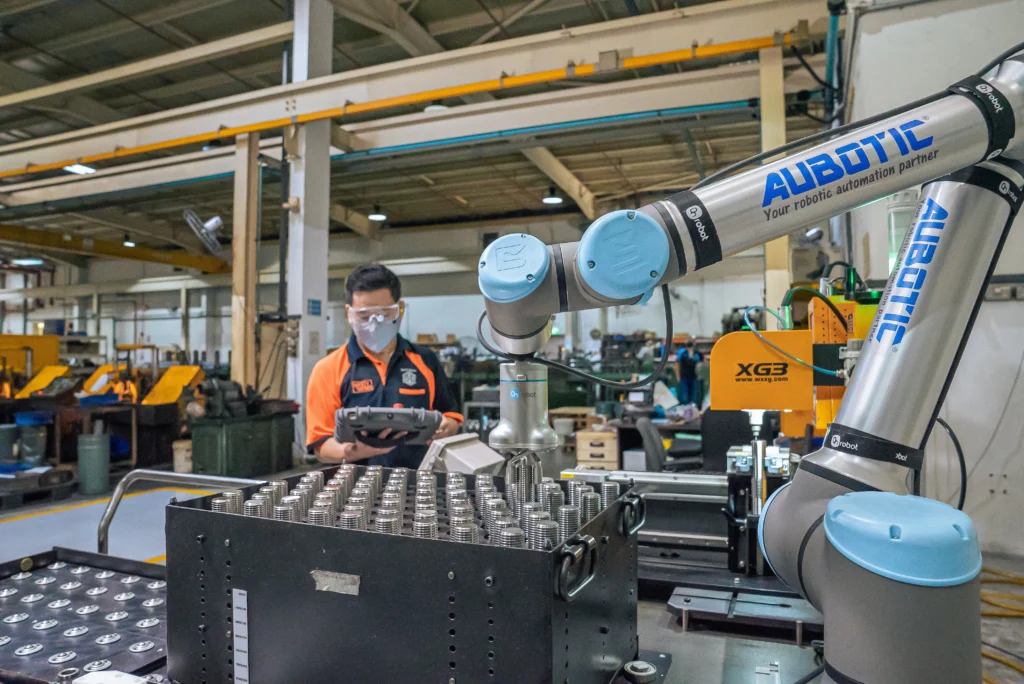
Her long-term roadmap embraces foundation models and human-in-the-loop learning, building toward robotic systems that don’t just mimic actions but understand the reasoning behind them.
In an industry where minor mistakes can trigger recalls, regulatory action, or safety incidents, her work is more than efficiency. She is highlighting a future where robots act as reliable partners to support skilled inspectors and make the work more sustainable.
Listen to why Dipshikha says teaching a robot is like teaching a coworker – only the robot never gets tired:
About Dipshikha Das
Dipshikha Das is a PhD researcher at ATU’s Galway Campus, funded by RISE@ATU, developing robots that learn complex inspection and material-handling tasks by observing humans. Recognized among ‘50 Women in Robotics You Need to Know About 2023’, she also achieved 1st place with team Atlabotics at the Robothon Grand Challenge 2025 in Munich for designing a robot that could complete a series of complex tasks.
RISE@ATU is co-funded by the Government of Ireland and the European Union through the ERDF Northern & Western Regional Programme 2021-2027.

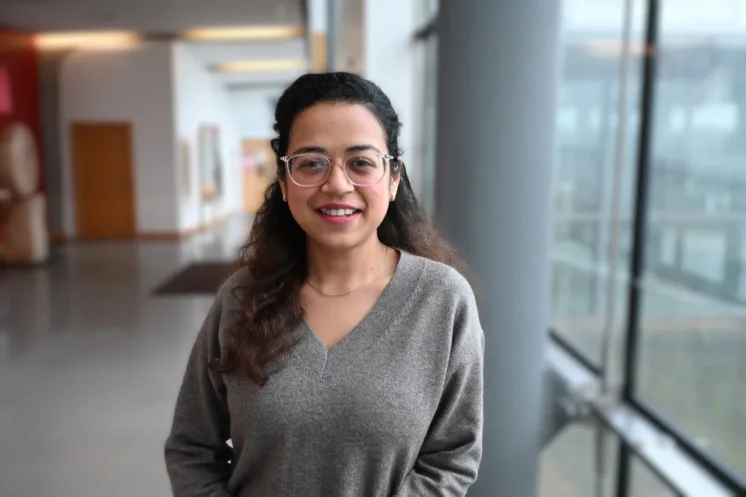
Photo Caption: PhD researcher Dipshikha Das is undertaking work that could prevent critical errors in manufacturing lines for medical industries.
For media enquiries, contact:
Jorden McMenamin
Communications Officer
Tel: 074 918 6127
E: jorden.mcmenamin@atu.ie