English
Gaeilge
How Killybegs is turning the blue economy green
By Karl Bonner
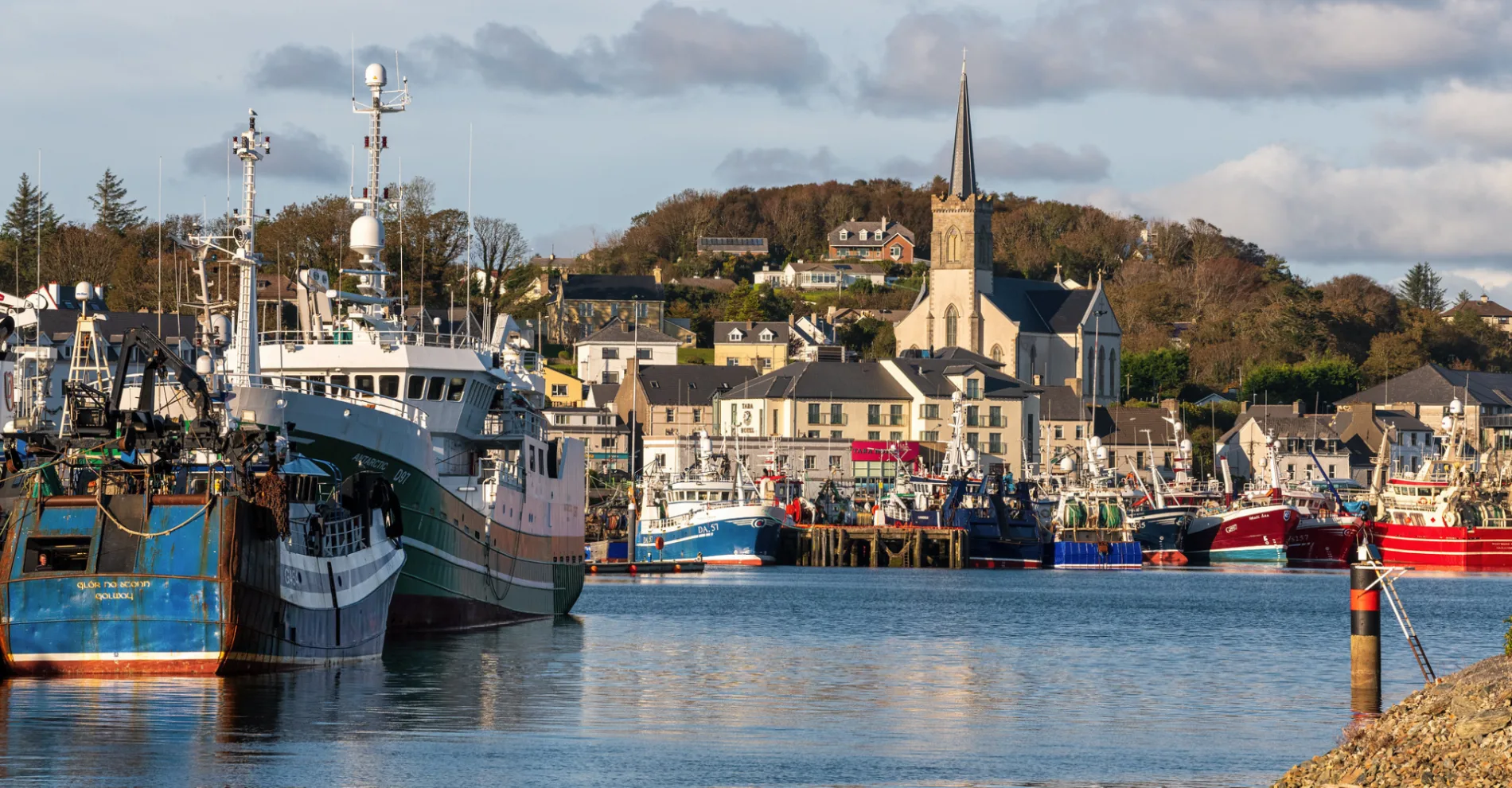
As the maritime sector faces growing pressure to reduce emissions and operate more sustainably, Killybegs is emerging as a centre for developing and testing marine innovation. Through the ATU Killybegs Marine Cluster, researchers, industry partners and public sector organisations are working together to develop practical solutions that support decarbonisation while creating new opportunities for growth across the blue economy.
The ATU Killybegs Marine Cluster is currently involved in collaboration with the Irish Maritime Development Office (IMDO), in the EU funded Smart Clusters for Maritime Decarbonisation (SMART DEC) project. The overall ambition of SMARTDEC is to support the maritime sector’s transition towards decarbonisation and carbon neutrality through collaboration, innovation and the adoption of cleaner technologies. The Killybegs Marine Cluster secured funding for two key projects.
Hydrotreated Vegetable Oil (HVO)
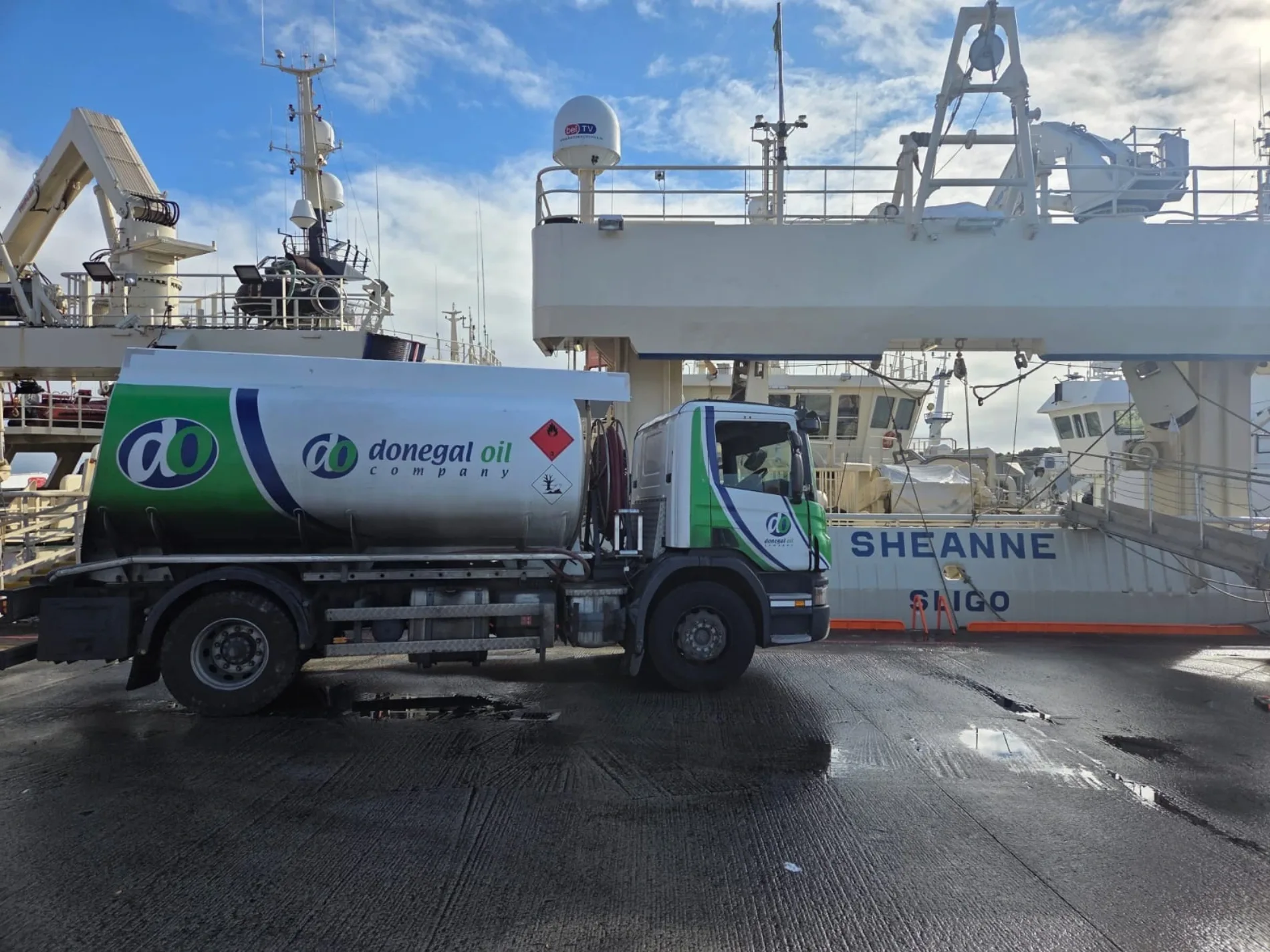
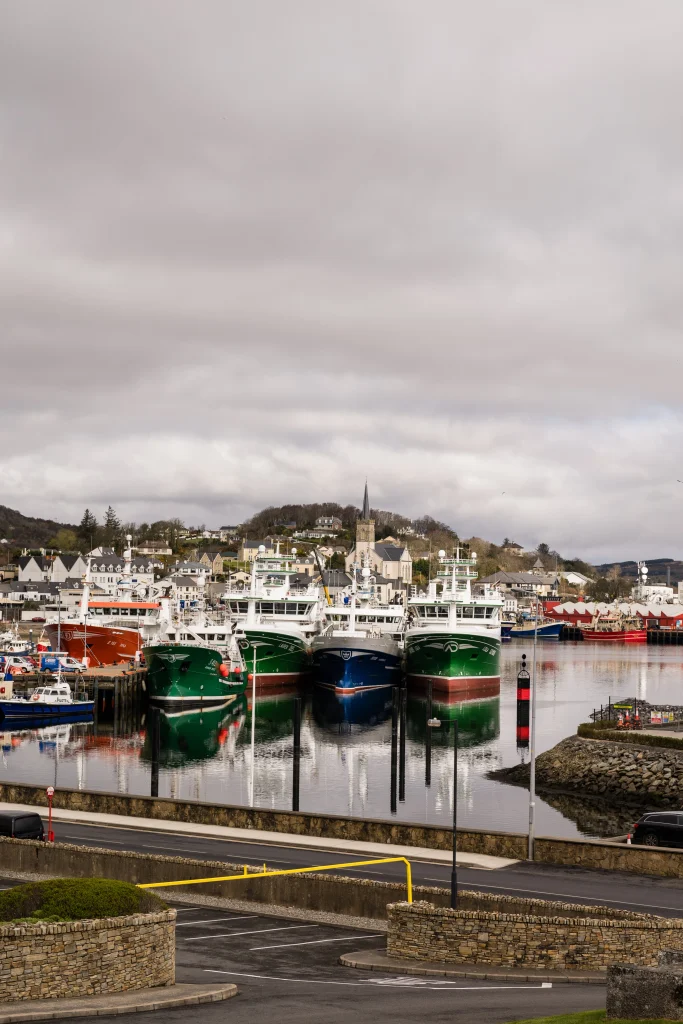
The first involves the trial of Hydrotreated Vegetable Oil (HVO) onboard a pelagic fishing vessel in Killybegs. The trial is testing whether HVO fuel can be used instead of regular fossil fuel to power a ship’s auxiliary generator while the ship is quayside.
While berthed in port, the vessel normally uses marine gas oil to power onboard systems and equipment. The aim is to see if using HVO can reduce emissions and the vessel’s carbon footprint.
Some modifications are required before the technology can be trialled on the main engines, so for in this phase the focus is on the generators and auxiliary load. The next iteration of the project will look at progressing the technology further and potentially integrating it with the vessel’s main propulsion engines.
The trial, currently taking place onboard the Marine Fishing Vessel (MFV) Sheanne, brings together a range of stakeholders from across the Killybegs marine ecosystem. These include BIM, the Killybegs Fishermen’s Organisation (KFO), Sheanne MFV owners, the Department of Agriculture, Food and the Marine (DAFM), Caterpillar through their agent Finnings, and Donegal Oil’s Killybegs Hub, which is supplying the certified HVO.
ATU Killybegs Marine Cluster manager Karl Bonner says:
This is very much an industry led demonstration project, coordinated through the ATU Killybegs Marine Cluster, and provides a practical example of innovation and decarbonisation within Ireland’s pelagic fishing fleet. We expect measurable outputs from the trial, which will be published, and we also intend to support the project with an academic research paper.
Killybegs Sustainability Charter
The second part of the SMARTDEC project involves developing a Killybegs Sustainability Charter with our sustainability partner GreenFeet. The Charter will capture and measure the sustainability activities taking place across the wider Killybegs blue economy ecosystem and establish individual targets and ambitions for participating stakeholders.
This includes initiatives such as DAFM’s investment in LED lighting and port electrification infrastructure, private sector investment in solar PV, reductions in grid electricity demand, water efficiency programmes and other decarbonisation measures.
“Taken together, the two workstreams provide a good example of what we are trying to achieve through the Killybegs Marine Cluster, bringing industry, academia and public sector stakeholders together to turn sustainability ambitions into practical, measurable projects,” shares Karl Bonner.
Importantly, the Charter provides a framework for measuring and recording these activities across Scope 1, Scope 2 and, where appropriate, Scope 3 emissions.
Scope 1 emissions come directly from a company’s operations, Scope 2 emissions are linked to the energy it purchases, and Scope 3 emissions arise from activities across its wider supply chain and business network.
Beyond decarbonisation
While SMARTDEC focuses on decarbonisation, it also highlights broader opportunities emerging within Killybegs’ blue economy ecosystem. Many of these opportunities are linked to sustainability, helping the marine sector reduce waste, improve resource efficiency and create new sources of economic value.
In Killybegs, opportunities are emerging across sectors including marine food production (Protein), renewable energy (Energy), ocean data and maritime security (Data and Security).
In Protein, significant opportunities are emerging to create greater value from marine resources. Atlantic Dawn Group, a member of the Cluster, is developing an application for a biorefinery focused on higher value products, including specialised proteins and peptides (small protein fragments).
Instead of only producing standard seafood products, Atlantic Dawn Group want to extract and produce specialised proteins and peptides that can be used in areas such as food ingredients, health supplements, sports nutrition, pharmaceuticals, or animal feed. These products are typically worth more than raw fish or conventionally processed seafood.
In Energy, Killybegs is positioning its existing marine engineering, port and industrial capabilities to participate in the evolving offshore and renewable energy supply chain and maritime skills.
A further opportunity lies in Data and Security, reflecting Killybegs’ strategic position on the western edge of Europe and the increasing importance of the Atlantic Ocean in areas such as subsea infrastructure, ocean data, monitoring and maritime security.
Connecting these opportunities is ATU. The university is working to establish an Ocean Innovation Centre (OIC) on its Killybegs Campus that will bring together marine research, innovation, industry and maritime skills development.
The centre will complement ATU’s world class Marine and Freshwater Research Centre (MFRC) based in ATU Galway and will build on the Northern and Western region’s key strengths: a coastal community on the Atlantic edge of Europe, with an established marine industry, a working port, an active fishing and seafood sector and a technological university capable of connecting industry challenges with research and innovation.
The projects underway through SMARTDEC demonstrate how collaboration between industry, researchers and public sector partners can translate sustainability ambitions into practical action. From alternative fuels and emissions monitoring to marine biotechnology and renewable energy opportunities, ATU is showing how innovation can support both environmental sustainability and economic resilience.
Through initiatives such as the ATU Killybegs Marine Cluster, the proposed Ocean Innovation Centre, and the existing successful MFRC, ATU is helping to position the region as a leading hub for marine research, innovation and industry engagement. As Killybegs builds on its strengths in fishing, marine enterprise and research, it is demonstrating how coastal communities can lead the transition to a greener blue economy.
Find out more about the ATU Killybegs Marine Cluster: kmc.blue/