Courses
ATU nutrition expert guides participants in RTÉ’s Slán go Feoil meat-free challenge
Nóra Ní Fhlannagáin, Lecturer in Public Health Nutrition at Atlantic Technological University (ATU), features as one of the expert voices in Slán go Feoil, a new four-part Irish-language series on RTÉ 1, following seven committed meat-eaters as they attempt to give up meat for one month. The programme explores diet and nutrition, Ireland’s cultural relationship with meat, and the environmental impact of food choices.
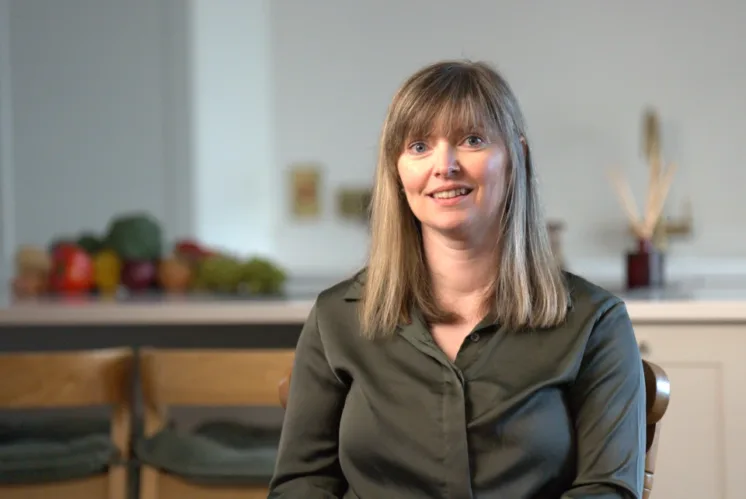
Ní Fhlannagáin, a regular contributor to Raidío na Gaeltachta’s Iris Aniar programme on nutrition, serves as a nutrition expert, guiding participants through the health and performance implications of adopting a meat-free diet. Her role, she explains, was driven by a desire to ensure the conversation remained balanced.
“I wanted to ensure that there was balance, highlighting both the benefits and the challenges nutritionally and practically of adopting a vegetarian diet in Ireland,” she says.
According to Ní Fhlannagáin, one of the most striking insights from the programme is just how embedded meat is in Irish food culture.
“Any change from the ‘normal’ is challenging. In Ireland, where eating meat is ingrained in our environment and culture, it can be hard to make that change,” she explains. “If I lived in Berlin, where every second restaurant is vegan, it wouldn’t be as challenging. In Ireland, it takes more effort to learn new recipes, try new foods, and plan.”
The participants’ experiences reflected this. While she describes the challenge as “tough but rewarding,” she was surprised by baseline health findings.
“I was surprised by how many participants had high cholesterol at their baseline blood tests considering they were a young-to-middle-aged group who were pretty into growing their own food and eating well,” she says. “It serves as a reminder that we should all be keeping an eye on our bloods annually, and that nutrition and exercise are so important for heart health, especially as cardiovascular disease is one of the leading causes of death in Ireland.”
A memorable moment in the series sees Ní Fhlannagáin say she would choose a banana over both sausages and “fake sausages.” Her reasoning highlights a broader message about food quality.
“Processed meats, including sausage meat, are classed as Class 1 carcinogens by the World Health Organisation because there’s good evidence they increase the risk of colon cancer,” she explains. “Rather than replacing meat with foods modified to taste like meat, I’d rather enjoy the naturally delicious taste profile of vegetarian foods.”
She adds that trying to replicate meat flavours can often lead to disappointment, whereas embracing vegetables, beans and herbs can broaden enjoyment and appreciation of food.
Ní Fhlannagáin believes the value of Slán go Feoil extends beyond the one-month experiment.
“Challenging yourself like this can be really eye-opening,” she says. “While becoming vegetarian for a month might not change your eating patterns for life, it’s likely to challenge people to think about their food more broadly – from a taste, nutrition, ethical, environmental and social perspective, which I think will stick with you for life.”
She is also keen to challenge the perception that meat is inherently unhealthy.
“There’s a myth that all meat is unhealthy, but it’s actually a nutrient powerhouse,” she says. “But unfortunately, it’s also very damaging to the environment. Like many things in life, there’s good and bad to it.”
Her view is that moderation offers the most realistic path forward.
Conscious meat consumption-minimising our intake and thinking about farming methods, is probably the most achievable balance for Irish people. There’s a lot to be said for the way your granny would have eaten meat: locally sourced, in moderation, minimally processed, and almost zero waste.
Through her contributions, Slán go Feoil moves beyond a simple yes-or-no debate on meat consumption, instead encouraging viewers to reflect on sustainability, health and tradition together.
As the series continues, her expert voice ensures the discussion remains grounded in evidence and in the realities of how Ireland eats today.
Watch the series on RTÉ Player: https://www.rte.ie/player/series/sl%C3%A1n-go-feoil/10016240-00-0000?epguid=IP10016601-01-0001
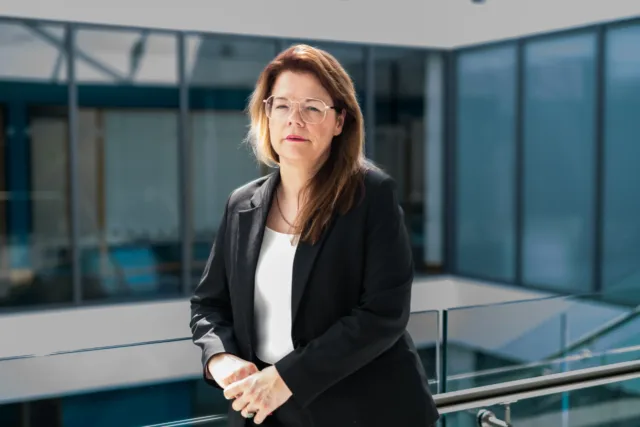
Photo caption: Nóra Ní Fhlannagáin, Lecturer in Public Health Nutrition at Atlantic Technological University (ATU).
For media enquiries, contact:
Ivana Hanjs
Communications Officer
Tel: 089 963 9559
E: ivana.hanjs@atu.ie