
Courses
“Storm Bram caught us at sea — a stark reminder of the forces shaping my research”
PhD researcher Charles Lucas Makio studies how storms, bottom contact fishing, and invasive species are disturbing Ireland’s seabed.
Forests, wetlands and renewable energy projects often lead discussions about climate action.
Yet beneath Ireland’s waters lies another powerful climate ally: marine sediments capable of storing carbon for decades, centuries and sometimes even longer.
For PhD researcher Charles Lucas Makio, understanding how these hidden carbon stores respond to disturbances is the focus of his work at Atlantic Technological University.
“How are frequent disturbances on the seabed compromising the ocean’s natural ability to sequester carbon?”, he asks.
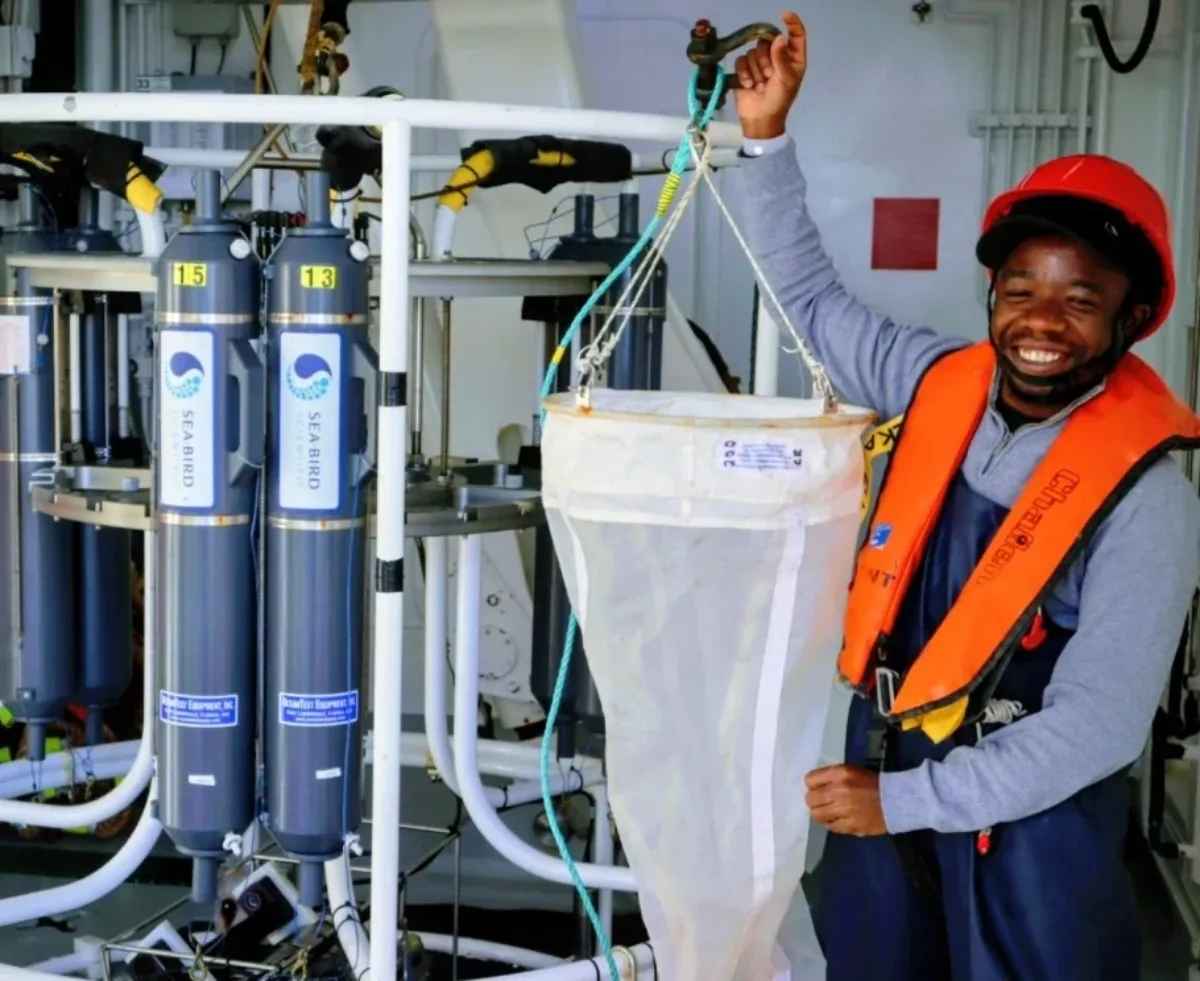
The question has taken him from mudflats to research voyages along Ireland’s Atlantic coastline, investigating how carbon becomes locked away in seabed sediments — and what happens when those sediments are disturbed.
“We often talk about forests as carbon sinks,” Charles explains, “but some of the most important reservoirs for climate regulation are right beneath our waves in the form of marine sediments.”
These sediments, found from Donegal Bay to the Celtic Sea, can lock away carbon for long periods if left undisturbed.
But the seabed is rarely left untouched. Storms, dredging and bottom-contact fishing all have the potential to disrupt sediments and release carbon back into the marine environment.
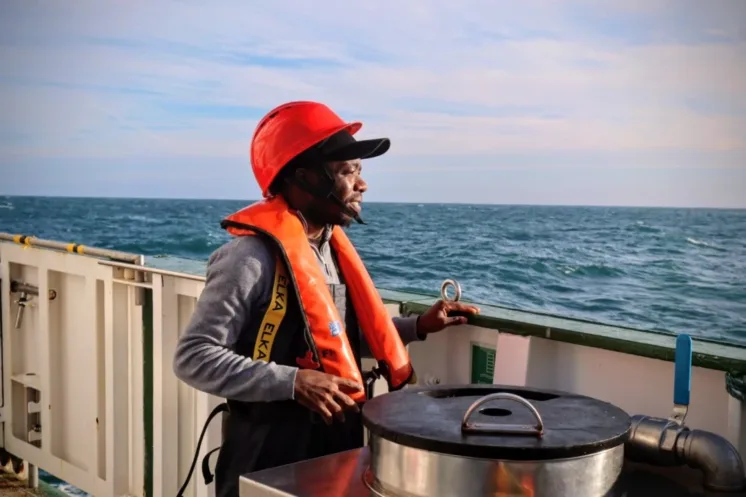
The reality of that challenge became clear during fieldwork aboard the research vessel RV Tom Crean.
In December 2025, Charles and his colleagues found themselves caught in Storm Bram while working off the Irish coast.
Storm Bram caught us at sea, forcing us to take shelter in the safety of Cork Harbour,” he recalls. “The experience was a stark reminder of the extreme weather component of my research.”
At its peak, the storm generated winds approaching 120 kilometres per hour.
Charles’ preliminary findings suggest these disturbances may be more significant than many people realise:
Analysing 78 named Atlantic storms between 2015 and 2024, he found that extreme events such as Storm Ophelia generated wind gusts of up to 191 km/h — powerful enough to disturb the upper layers of seabed sediment in waters up to 100 metres deep.
“Such high-energy events can resuspend settled sediments in shallow coastal waters and potentially remobilise carbon that has been sequestered for decades”.
The same process can occur through human activity.
Bottom trawling, one of the most widespread fishing methods used across the North Atlantic, involves heavy fishing gear being dragged across the seabed. While effective for catching fish, repeated disturbance can alter habitats and stir up buried sediments.
Previous research has shown that some parts of the Irish continental shelf experience bottom trawling more than 10 times each year, repeatedly disturbing the same seabed habitats.
“When a massive storm hits, or a heavy trawl net drags across the seabed, it doesn’t just move sand,” Charles explains. “It also resuspends decades or even centuries of buried carbon.”
Once exposed to oxygen-rich water, that stored carbon can be broken down and eventually returned to the atmosphere as carbon dioxide.
Understanding the potential resilience of these carbon stores has become an increasingly important question for marine scientists and policymakers alike.
But not all of Charles’ research focuses on storms and fisheries.
Along Ireland’s coastline, another unexpected challenge is emerging.
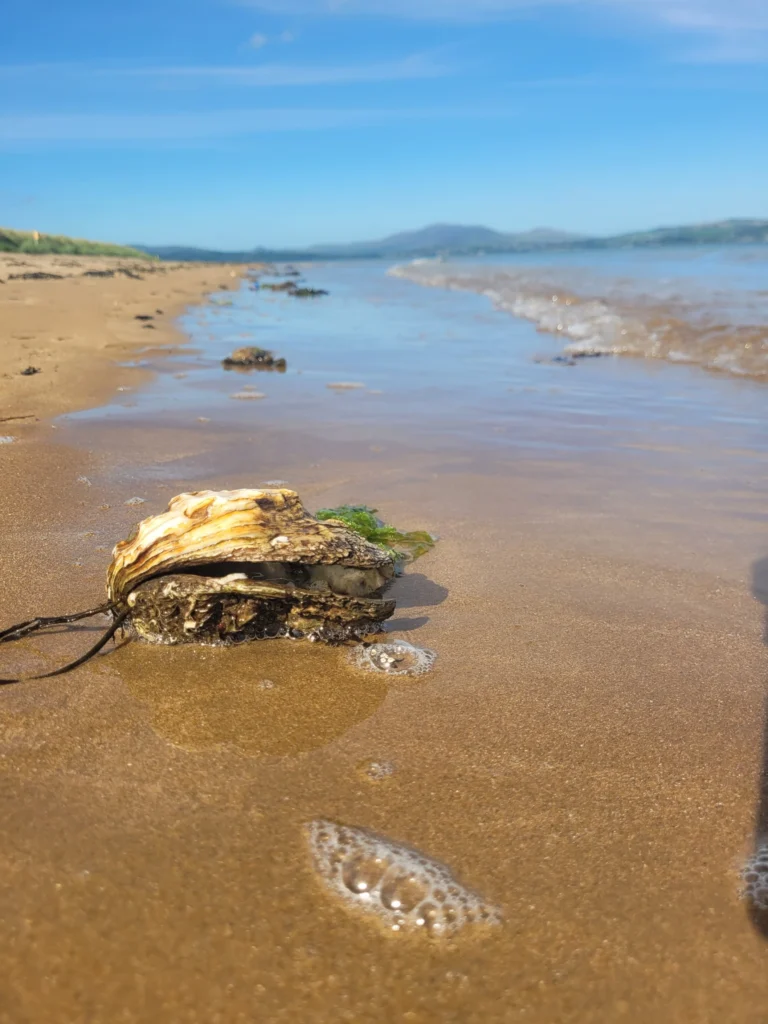
In Donegal, his work has taken him into intertidal zones, such as Lough Swilly, Mulroy Bay and Sheephaven Bay, to look at the invasive Pacific oyster (Magallana gigas).
“It’s a fascinating dilemma,” Charles says of the species.
On the one hand, Pacific oysters can outcompete native species and alter local ecosystems. But they may also play a role in helping carbon become buried within sediments:
“The physical removal of these invasive oyster reef mats would likely cause substantial disturbance to sedimentary carbon; however, as efficient filter feeders, they may also contribute to sequester carbon”, explains Charles.
Understanding these interactions is becoming increasingly important for coastal management.
“What drives me beyond the lab is the potential for this work to step off the page of a thesis and into the hands of people making real-world decisions”, he adds.
Yet much of this system remains under-recognised.
For Charles, the challenge is visibility — making something hidden part of the climate conversation:
“Currently, our seabed sediments are the ‘invisible’ giants of climate reporting—overshadowed by more visible issues like terrestrial forestry or immediate fishing pressures”
As Ireland develops climate and marine policy, protecting these systems may prove essential to how oceans respond to a changing climate.
This research is funded under RISE@ATU with supervision by Dr Christopher McEleney, Dr Denis McCrudden, Dr Roisin Nash and Dr Shane O’Reilly. RISE@ATU is co-funded by the Government of Ireland and the European Union through the ERDF Northern and Western Regional Programme 2021-27.
About Charles Lucas Makio
For Charles Lucas Makio, some of the most important climate systems are the ones we rarely see. A PhD researcher at Atlantic Technological University, he studies the carbon buried within Ireland’s coastal seabeds and what happens when storms, fishing activity and other disturbances disrupt these underwater stores. His research spans Ireland’s western coastline, from Donegal Bay to the Celtic Sea, combining fieldwork aboard research vessels with laboratory analysis to uncover the hidden role sediments play in climate regulation and marine ecosystem health.
For media enquiries, contact:
Jorden McMenamin
Communications Officer
Tel: 074 918 6127
E: jorden.mcmenamin@atu.ie