
English
Gaeilge
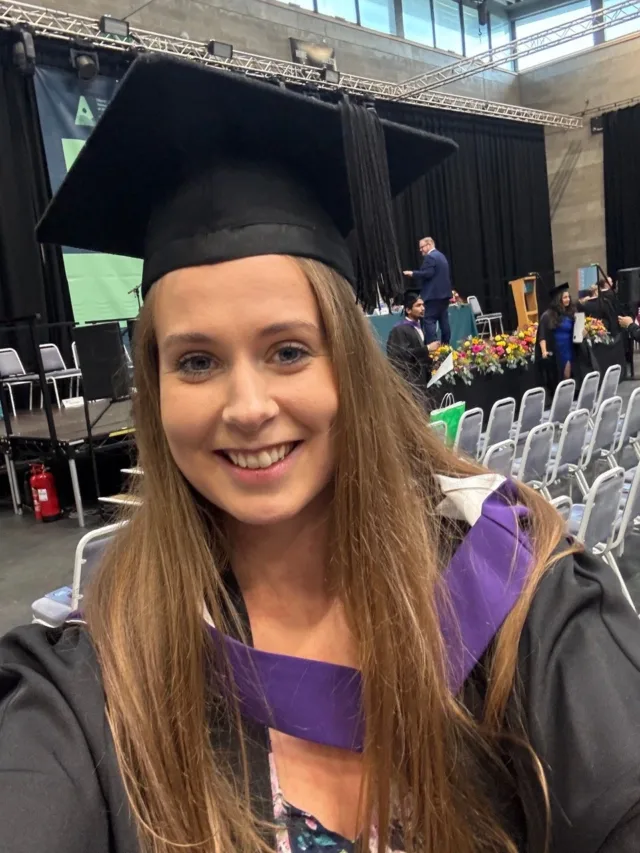
Can you tell us your name, job title, and the course you studied at ATU?
My name is Guðný Ósk Sigurðardóttir. My current job title is a Quality & Regulatory Specialist and I completed my studies in Masters of Science in Quality.
Can you share your career path to date?
I worked as waitress when I was studying my BSc in Biology. After I completed my BSc in 2015 I kept waitressing for a few more years, then I worked in Technical Support for a phone company for one year. It wasn’t until 2019 I entered the Biopharma Industry as a Microbiology Scientist, that is where I found my field. I worked as a Microbiologist Scientist for three years, then I moved over to become a Sterility Assurance Specialist, later promoted to Team Leader. Today I work as a Quality & Regulatory Specialist within a Medical Device company in Iceland and I’ve been there for the past 2 years.
What does your current role involve?
My role involves supporting key quality and regulatory activities and ensuring compliance within our quality management systems.
What motivated you to start studying?
Well, I always planned to complete a Master’s degree after my BSc. However, after I finished the BSc, I was just done with school and I needed a break, so I decided to take a year off. That year ended up turning into several years working instead. When my boyfriend decided to do his BSc at ATU Sligo, I started looking at their Master’s programs. That is when I came across the Master’s in Quality for Manufacturing and Engineering. It really aligned with what I was already doing in my career, so it felt like the right time to go back and complete my Master’s degree.
Why did you choose this course at ATU?
To be honest, I feel like the Master’s program chose me. I have a BSc in Biology, but I hadn’t pursued a Master’s because I didn’t want to commit to just any degree—I wanted something practical that would genuinely add value to my career. I’ve been working in the pharmaceutical and medical device industries for several years now and am currently in a Quality role. So, when I came across a Master’s in Quality, I knew straight away that was the Master I had been waiting for.
How did you find the process of studying in a flexible manner? What elements did you find helpful? Were there elements you found challenging?
Studying in a flexible manner was great overall, it allowed me to complete my Masters degree fully online from my home in Iceland, but it definitely came with its challenges. One of the most helpful aspects was that the lectures were always recorded. This meant that if I missed a class, or when it came to exam season, I could go back and rewatch the recordings to revise or clarify concepts.
The biggest challenge for me was maintaining momentum and staying disciplined with my study routine. To manage this, I made it a habit to attend the live lectures whenever possible and ask questions when I didn’t fully understand the concept. I found that when I didn’t show up, it was very easy to fall behind – especially since the weeks seemed to go by so quickly!
How did you balance work and study?
That was definitely a challenge, especially at the beginning, as I was working full-time, while also teaching at a fitness studio in the evenings. Over time, I made some adjustments, including stepping back from teaching when school became particularly busy. There were also times when I needed extra time to complete assignments, and my workplace was very understanding and allowed me to take time off when needed.
Both employers were incredibly supportive, and they both always emphasized that school came first. I felt very lucky to be working for two companies that were so flexible and accommodating, especially during busy periods like assignment deadlines and exam season.
In terms of your employer, were they supportive of your decision to study? Were there elements of the course that were particularly relevant to your current employer?
They were incredibly supportive and understanding throughout the whole process. They invested in my education and they gave me time off during exam periods, as well as whenever I needed extra time to finish an assignment. When I graduated and received the Academic Excellence Award, they even helped make it possible for me to attend my graduation in Ireland. Everyone was genuinely proud of me completing my degree and celebrated the achievement with me, which made the experience even more meaningful.
What advice would you have for anyone considering studying a flexible learning programme?
It can feel tough at times, but before you know it, you will have already completed the first year. I would definitely recommend you attend the live classes whenever you can and ask questions if you don’t understand something. Chances are, another student has the same question but it just too nervous to ask. The weeks go by very quickly, and if you don’t remain disciplined it can be very easy to fall behind.
In what way has studying with ATU benefitted your career?
The program deepened my understanding of how quality systems operate, how different elements connect, and how future trends are shaping the field. This broader perspective has helped me approach my work more strategically and from multiple viewpoints. My degree contributed to my career progression and it provided me a formal recognition within my organisation.
Did this course provide any unexpected benefits to your career?
The course broadened my understanding of multiple functions within my organization, sparking curiosity and a more strategic mindset. This growth was recognised by my manager and led to the opportunity to lead a strategic project for 2026.
Did you find that the elements you were studying had practical relevance in your day-to-day role?
Yes, absolutely. Before completing my Master’s in Quality, I often worked with individual quality activities in isolation. The program helped me see the full picture of how quality systems, processes, and regulatory requirements connect. I now have a clearer “overall picture” and my day-to-day quality tasks are the puzzle pieces that fit into it. While experience will continue to add new pieces over time, the Masters’ provided the core framework and key pieces needed to understand how everything fits together.