English
Gaeilge
New study explores attitudes that may shape infant-feeding support
ATU research highlights the importance of evidence-based and individualised conversations with parents

Infant feeding is a deeply personal decision, but the information and support parents receive from healthcare professionals can play an important role in their experience.
A new study led by Atlantic Technological University (ATU) researcher Ali Usama has examined a less visible part of those interactions: whether the attitudes healthcare professionals consciously express about infant feeding reflect the automatic associations they may also hold. His co-authors were Dr James Connolly of Ulster University, Dr Ian Stewart of the University of Galway and Dr Sarah Brennan, a Donegal GP and breastfeeding medicine doctor.
The exploratory study of 66 healthcare professionals in Ireland and the UK found that participants generally favoured breastfeeding in both their consciously reported and automatic attitudes. However, there was no statistically significant relationship between the two measures.
This suggests that asking people what they believe may provide only part of the picture.
For example, a healthcare professional may sincerely believe that every parent should receive balanced and individualised support. At the same time, they may automatically associate breastfeeding or bottle-feeding more strongly with particular positive or negative ideas, without being consciously aware of it.
The researchers emphasise that an automatic association does not mean someone is deliberately prejudiced, nor does it mean the association affects the advice or care they provide.
Ali, who is a lead researcher on the study, said:
Infant feeding is a highly personal decision, but healthcare professionals can play an important role in the information and support parents receive. Ireland and the UK have historically had low breastfeeding rates despite strong evidence about the health benefits of breastfeeding. This led us to examine a less visible part of the picture- not only what healthcare professionals consciously say they believe, but also the automatic associations they may hold.
Implicit attitudes are automatic associations or preferences that can operate without a person deliberately thinking about them. Explicit attitudes are the views people consciously recognise and can report when asked.
To examine both, the researchers used two different tests.
They developed the Infant Feeding Implicit Association Test, or IFIAT, to measure automatic associations with breastfeeding and bottle-feeding. The test assessed how quickly participants paired images of each feeding method with positive or negative words.
The researchers also used the established Iowa Infant Feeding Attitude Scale, or IIFAS. This questionnaire asked participants to indicate how strongly they agreed or disagreed with a series of statements about infant feeding, providing a measure of their consciously reported attitudes.
The average IFIAT score indicated an automatic tendency favouring breastfeeding over bottle-feeding. Results from the questionnaire also showed that participants’ consciously reported attitudes were generally supportive of breastfeeding.
However, there was no statistically significant relationship between the results of the two tests.
“One of the most important findings is not simply that a particular preference exists, but that what people consciously report may not fully capture their automatic associations,” the PhD researcher said.
“A healthcare professional can consciously endorse evidence-based breastfeeding recommendations while their automatic associations do not necessarily follow the same pattern or strength.
“This suggests that the two tests may be measuring different aspects of attitudes. Relying solely on questionnaires asking people what they believe may therefore provide only part of the picture.”
The study focused on measuring attitudes rather than observing clinical consultations, recommendations or outcomes for parents and babies. It cannot establish that an automatic association causes a healthcare professional to communicate or advise parents in a particular way.
Ali added:
“Identifying an implicit association does not mean that someone is deliberately prejudiced, and it does not necessarily predict how they will behave. A preference towards breastfeeding should not automatically be interpreted as a problem. Breastfeeding recommendations are supported by substantial scientific and public-health evidence.”
He added that the issue becomes more nuanced if any preference towards breastfeeding or formula feeding interferes with listening to a parent’s circumstances, values, medical situation, and feeding goals.
“Good care should combine evidence-based information with individualised and respectful support.”

This story is based on ATU Policy Brief No. 28 How Healthcare Professionals’ Unconscious Bias Can Influence Infant Feeding Support, drawing on peer-reviewed research by Ali Usama.
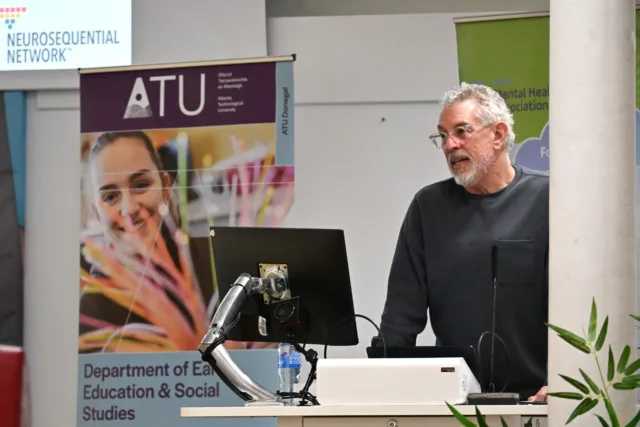
Photo caption: Atlantic Technological University (ATU), Donegal Letterkenny Campus.
For media enquiries, contact:
Ivana Hanjs
Communications Officer
Tel: 089 963 9559
E: ivana.hanjs@atu.ie
RISE@ATU is co-funded by the Government of Ireland and the European Union through the ERDF Northern & Western Regional Programme 2021-2027.