English
Gaeilge
This International Men’s Day, a BowelScreen story shows why screening matters even when you feel well
This International Men’s Day, we’re encouraging ATU staff and students to take up cancer screening when they’re eligible.
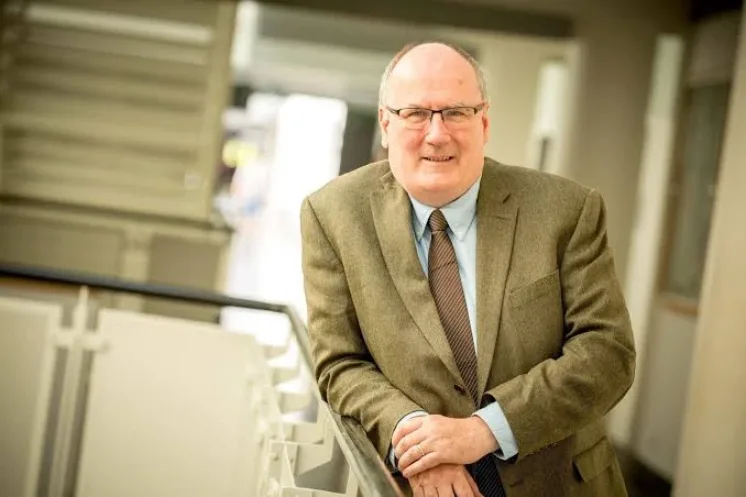
When a BowelScreen kit arrived in the post, Dr Michael Barrett felt healthy and active. He had no symptoms and no reason to suspect he had bowel cancer. He took the test and sent it back. The result led to a colonoscopy that found the cancer.
He shares his story.
Could you tell us a little about yourself and your time at ATU?
I spent many rewarding years at the Sligo campus and was Head of Faculty of Business and Social Sciences until my recent retirement. Much of my work involved supporting academic staff, creating more opportunities for students and bringing colleagues across the region together as we became Atlantic Technological University. Retirement has changed the pace of my days, but I still feel very much part of the ATU community.
How did you find out you had bowel cancer?
It started with an envelope through my letterbox. It was a home test kit from BowelScreen. I took the test, posted it back and found out it had picked up traces of blood I couldn’t see. That led to a colonoscopy, which found the tumour.
I was diagnosed in Spring 2026. It came as a complete shock. I felt well, I was active and I hadn’t noticed anything unusual. Things moved quickly after that. I had surgery at University Hospital Galway to remove the tumour, followed by six months of chemotherapy at Sligo University Hospital. I finished treatment in late October.
I could easily have left that envelope in a drawer because I felt fine. I’m very glad I didn’t. I believe that test saved my life.
What was it like to tell people about your diagnosis?
I was used to organising my own time, and suddenly my days were shaped by appointments and decisions about treatment. I had already retired, which made the practical side of planning treatment easier.
My family, friends and close colleagues were a fantastic source of support, I was met with kindness. It made a difference knowing I didn’t have to go through it on my own.
What surprised you about treatment?
I expected chemotherapy to make me feel sick. With the medication my team gave me to manage side effects, I went through 12 cycles without nausea. That was my experience, and it can be different for everyone. The fatigue built up over time, and I had tingling and numbness in my hands and feet. I had to learn to pace myself and adjust what I could do from one day to the next.
What helped you most during treatment and recovery?
I’m grateful to the surgical team in Galway and to the oncology doctors, specialist nurses and day ward staff in Sligo. They were kind and compassionate, and it meant a great deal to have my chemotherapy close to home. My family were there for me through every appointment and cycle.
Keeping a routine helped too. I tried to sleep well, stay active when I felt up to it and rest when I needed to. Recovery doesn’t happen overnight. I’ve learned to be patient with myself and notice the small signs of progress.
Why did you want to share your story for International Men’s Day?
I’m much more comfortable talking about health now. Bowel health can feel awkward to bring up, but I know how easy it is to put something off when you feel fine or would rather not think about it. If telling my story prompts even one person to open their screening letter or speak to their GP about something that’s been bothering them, it’s worth sharing.
What would you say to a colleague or student who’s hesitant about getting checked?
If you’ve noticed a change that’s worrying you, make an appointment with your GP. It’s understandable to feel embarrassed, but these are conversations healthcare professionals have every day.
And if a screening invitation comes through your door, take it up. I felt fine when mine arrived. That’s exactly why it would have been so easy to put it aside.
Screening resources: what to do
HSE BowelScreen offers free bowel screening to people aged 57 to 71 who have no symptoms of bowel cancer. If you notice a change that concerns you, contact your GP. Don’t wait for a screening invitation or your next test, even if your last screening result was normal.
Students, if you have concerns, symptoms, or questions about cancer, I strongly recommend you contact the Student Health Unit and arrange an appointment with a member of the medical team as soon as possible for assessment and advice.
Staff are encouraged to consult with their GP.
Additional resources:
HSE Cancer Information: Sign and Symptions
- Irish Cancer Society: Cancer Information
- Marie Keating Foundation: Information Hub
- Prostate Cancer Ireland: Services
- Men’s Health Forum in Ireland: www.mhfi.org
- HSE Podcast “Why Bowel Screening Matters”
- HSE Screening programme.
This story is part of ATU’s International Men’s Day initiative, a collaboration between Healthy Campus, Student Health services, Student Support Services, Equality, Diversity and Inclusion (EDI), Communications and Marketing.