
Courses
“Every timber building is effectively locking carbon away for decades”
As buildings are often seen as sources of emissions, Dr Conan O’Ceallaigh explores whether mass timber could become part of the climate solution.
This article is based on the ATU Research Commentary Series, a compilation of peer-reviewed research by ATU researchers.
Concrete and steel built the modern world. But they also helped build its carbon problem.
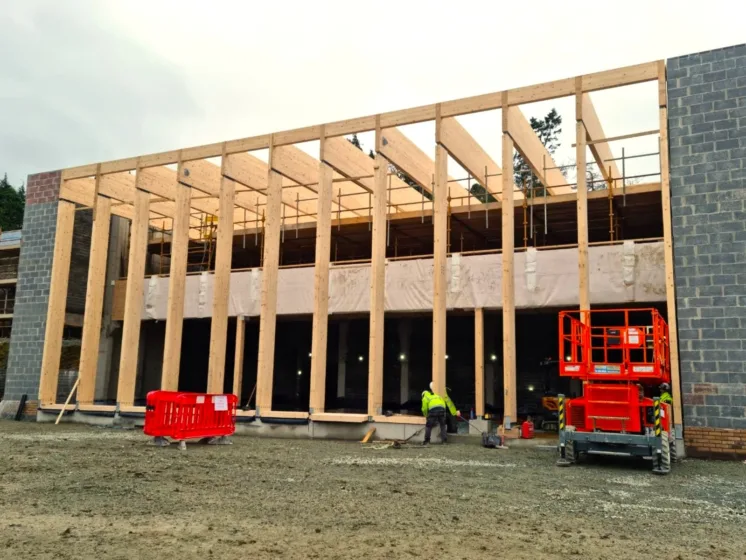
For Dr Conan O’Ceallaigh, Principal Investigator and Chartered Engineer at ATU, mass timber buildings and infrastructure could help reduce emissions and store carbon within the structures themselves.
Every timber building is effectively locking carbon away for decades. It’s not a one-off extraction, but part of a cycle that depends on forests being continually renewed.
Dr Conan O’Ceallaigh

Across the EU, buildings account for around 40% of energy consumption and 36% of energy-related greenhouse gas emissions (GHG).
In Ireland, the built environment produces approximately 37% of national emissions, comprising 23% from building operations and 14% from embodied carbon emissions.
This highlights the scale of the challenge facing the sector as the country works toward halving GHG emissions by 2030 and reaching net-zero by 2050.
We often talk about energy or transport when we think about climate change. But the materials we build with are just as important.”
Unlike traditional materials, mass timber is an engineered wood product that stores the carbon absorbed by trees during their growth.
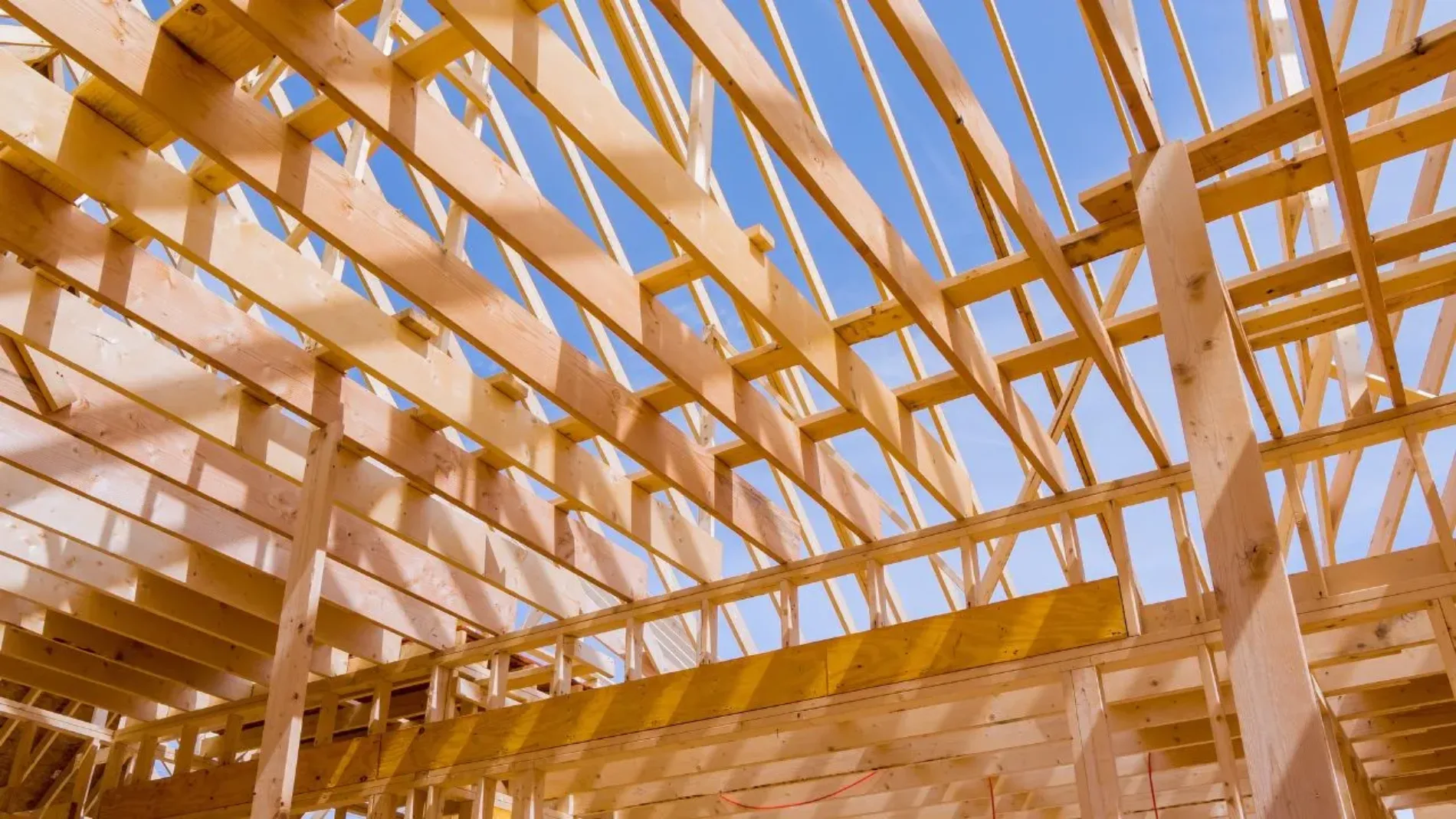
His current focus is the study, “A review of best international life cycle assessment (LCA) practices in wood construction: Challenges for Ireland”, published in Cleaner Environmental Systems. This research was carried out in collaboration with the University of Galway, alongside SAOLWood project coordinator, Dr Patrick McGetrick, and lead author, PhD researcher Song Ge.
Dr Patrick McGetrick commented that collaborations of this kind are essential for advancing timber research in Ireland, particularly in the West:
By bringing together academic expertise, industry insight, and international best practice, we can accelerate the adoption of timber and wood construction solutions that are both environmentally robust and locally relevant”.
Building on Dr O’Ceallaigh’s previous findings, this research explores how mass timber can reduce emissions across a building’s entire life cycle while delivering the strength and performance required for modern construction.
It means the design stage is where some of the biggest climate decisions are actually made.
Dr Conan O’Ceallaigh
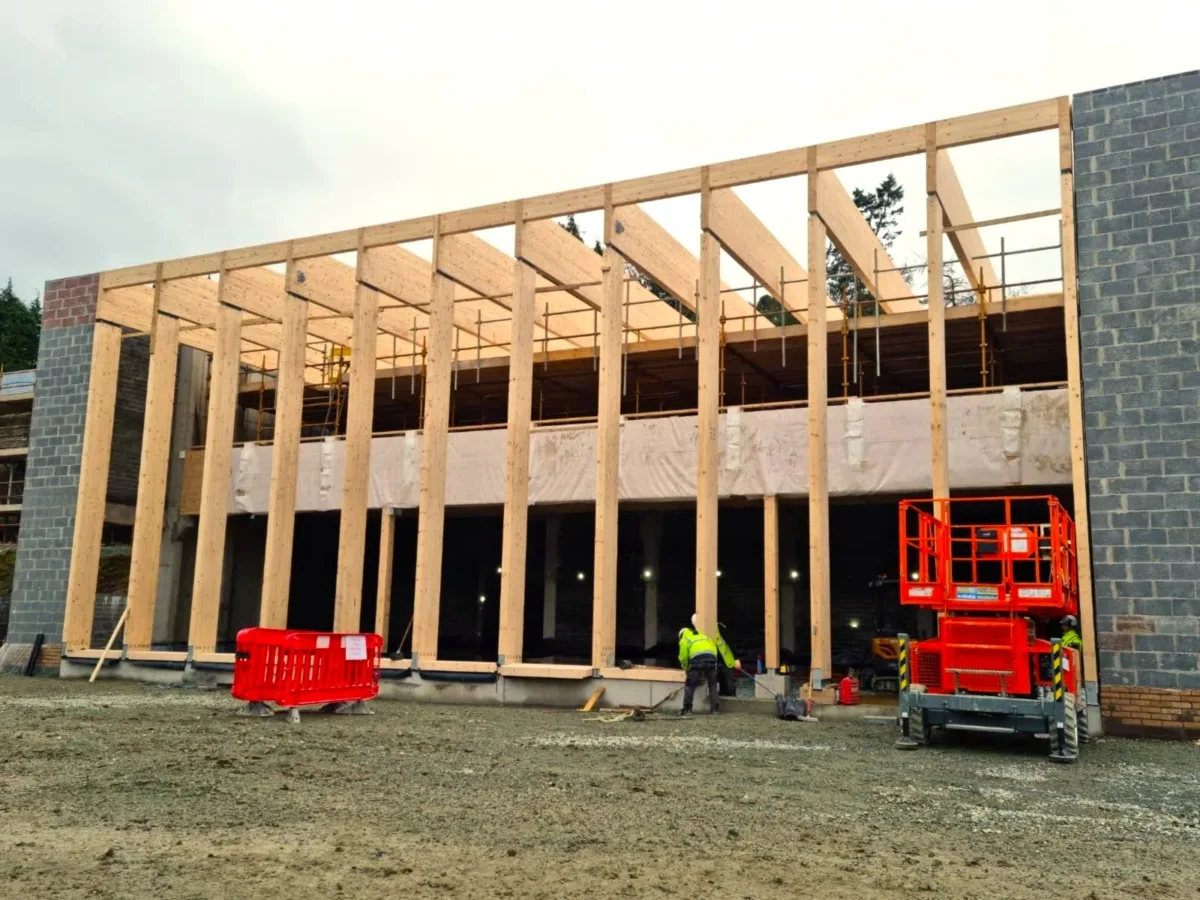
Across these studies, a consistent picture emerges that timber is not only structurally viable but increasingly competitive as a low-carbon construction material when assessed across its full life cycle.
This work reflects a shift toward embodied carbon (EC), the emissions associated with the materials and processes used before a building is even occupied.
A key aim of this research is to provide the evidence base needed for engineers, developers, and policymakers to make informed decisions.
This isn’t about replacing every material. It’s about giving the industry confidence to adopt lower-carbon options where they make sense.”
The potential benefits extend beyond carbon reduction, including faster construction times, reduced waste, improved safety on site, and stronger links between forestry, manufacturing, and regional economies.
Looking ahead, future work will explore long-term performance monitoring of timber buildings, modular construction systems, and design approaches that allow buildings to be adapted, reused, or disassembled over time. There is also increasing interest in how mass timber could support public infrastructure such as schools, transport facilities, and community buildings.

This article is based on ATU Research Commentary Series Issue 5, Building the Future in Wood: Harnessing Mass Timber to Store Carbon and Deliver Net-Zero Infrastructure, drawing on peer-reviewed research by Dr Conan O’Ceallaigh.
This research is in collaboration with ATU’s TRIBE Lab (Transformative Research & Innovation in the Built Environment), which focuses on applied research and sustainable construction systems. It also sits within ATU’s newly established School of the Built Environment, centred on the sustainable future of construction and infrastructure.
For media enquiries, contact:
Jorden McMenamin
Communications Officer
Tel: 074 918 6127
E: jorden.mcmenamin@atu.ie
The SAOLWood Project is funded by the Department of Agriculture, Food and the Marine’s Competitive Research Funding Programmes. Project Ref: 2021R543.
The ATU Research Commentary Series is funded by RISE@ATU. RISE@ATU is co-funded by the Government of Ireland and the European Union through the ERDF Northern & Western Regional Programme 2021-2027.

Featured Image: Dr Conan O’Ceallaigh, Principal Investigator and Chartered Engineer at Atlantic Technological University.