

Courses
Researchers develop battery-free smart sensor for structural health monitoring
ATU researchers develop flexible self-powered sensing technology for structural monitoring, smart infrastructure and Internet of Things applications.
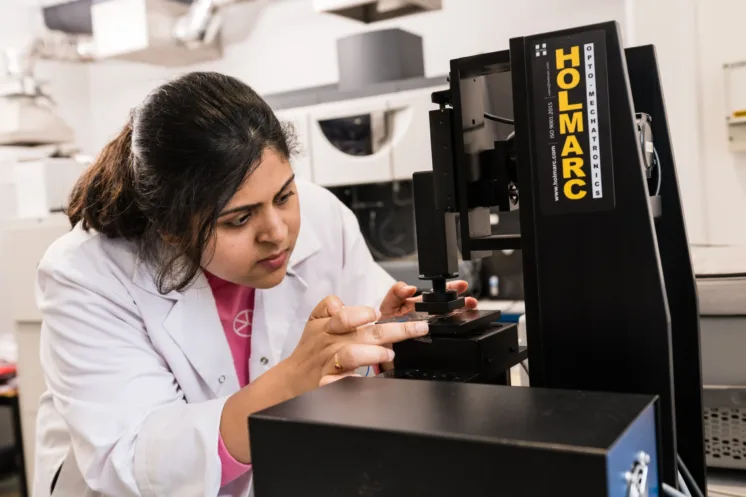
Scientists have developed a battery-free smart sensor that generates its own electricity from movement, offering a potential solution to one of the biggest challenges facing connected devices: how to keep billions of sensors powered without constant battery replacement.
As sensors become increasingly common in healthcare, manufacturing, transport and smart buildings, keeping them powered remains a major challenge. Batteries must be replaced or recharged, increasing maintenance costs and limiting long-term monitoring, particularly in remote or inaccessible locations.
Researchers at Atlantic Technological University (ATU) have created a flexible self-powered sensor that converts everyday mechanical vibrations into electricity while simultaneously monitoring those vibrations in real time.
The technology could support the next generation of wearable healthcare devices, structural health monitoring and Internet of Things (IoT) applications without the need for external power supplies.
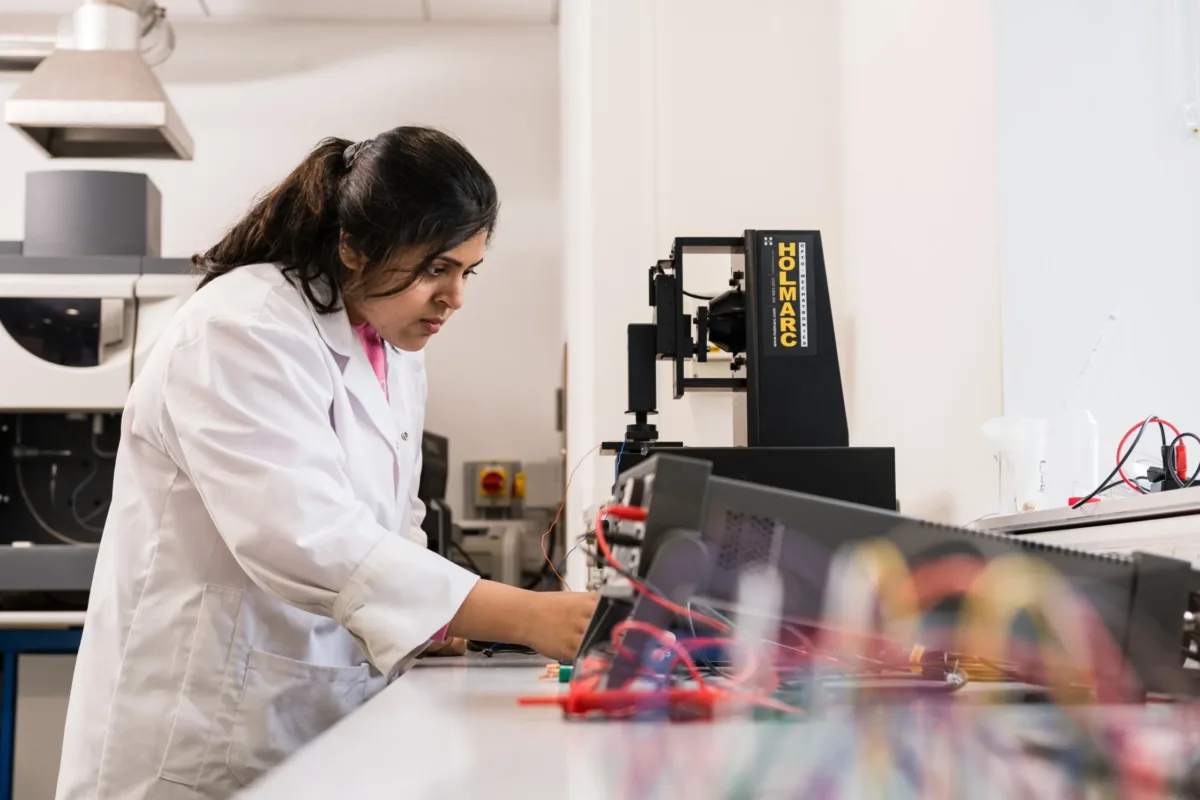
The research was led by PhD researcher Anagha Ramesh M from ATU’s Nanotechnology and Bioengineering Research Group and funded by RISE@ATU. Her work was recently published in the Journal of Power Sources and carried out in collaboration with ATU’s Wireless Sensor Applied Research (WiSAR) Centre.
As more devices become connected, we also need to think about how they are powered…This could make a real difference in healthcare, infrastructure and many other areas.
PhD researcher, Anagha Ramesh M.
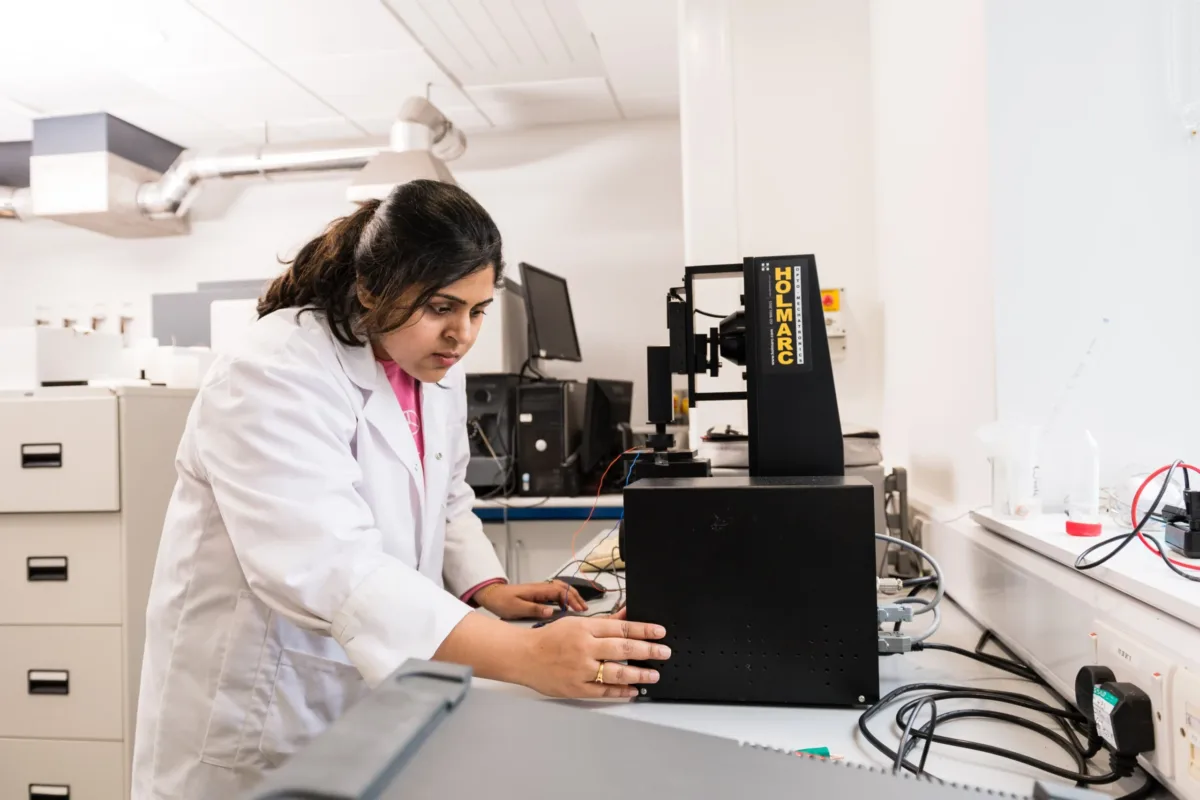
Anagha believes the technology has the potential to make connected devices more practical by reducing the need for regular maintenance:
If sensors can generate their own energy from everyday movement, they can operate for much longer with less maintenance.
Every time we walk, close a door or operate machinery, small amounts of mechanical energy are produced. Normally, that energy is lost. Anagha’s research explored how some of it could instead be captured and used to power a sensor.
“Our goal was to develop a material that not only converts ambient mechanical stimuli into electrical energy but also responds sensitively to subtle mechanical vibrations. That means the sensor can power itself instead of relying on a battery”, she added.
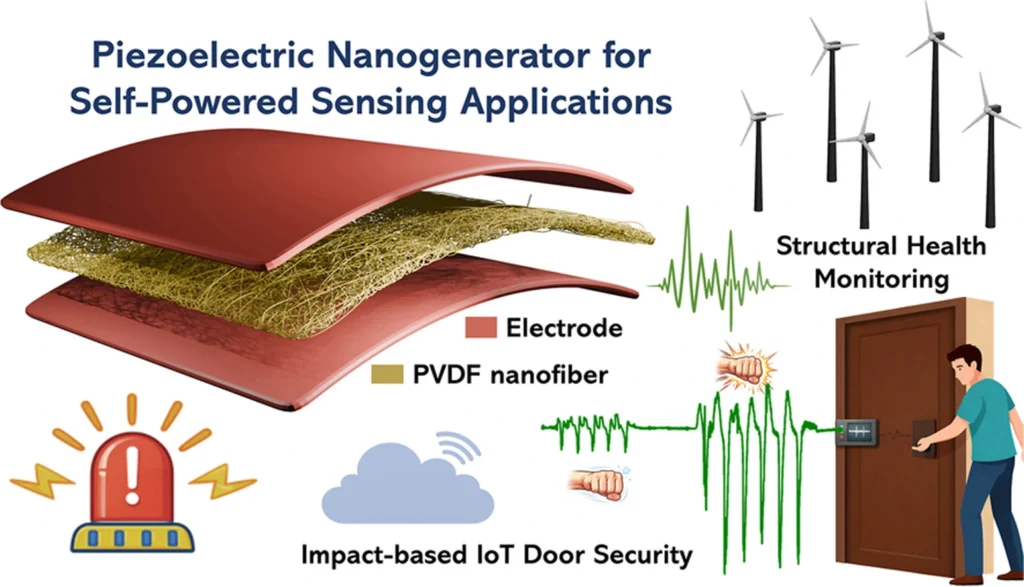
At the centre of the technology is a flexible piezoelectric nanogenerator (PENG). Piezoelectric materials generate electricity when they are bent, pressed or vibrated.
The device combines bismuth oxychloride (BiOCl) nanosheets with a flexible polyvinylidene fluoride (PVDF) polymer.
Together, these materials enhance the sensor’s ability to convert mechanical energy into electrical signals, enabling it to harvest energy and continuously monitor vibrations without an external power source.
Anagha said one of the biggest challenges was developing a material that could both harvest energy and remain sensitive enough to detect even small vibrations.
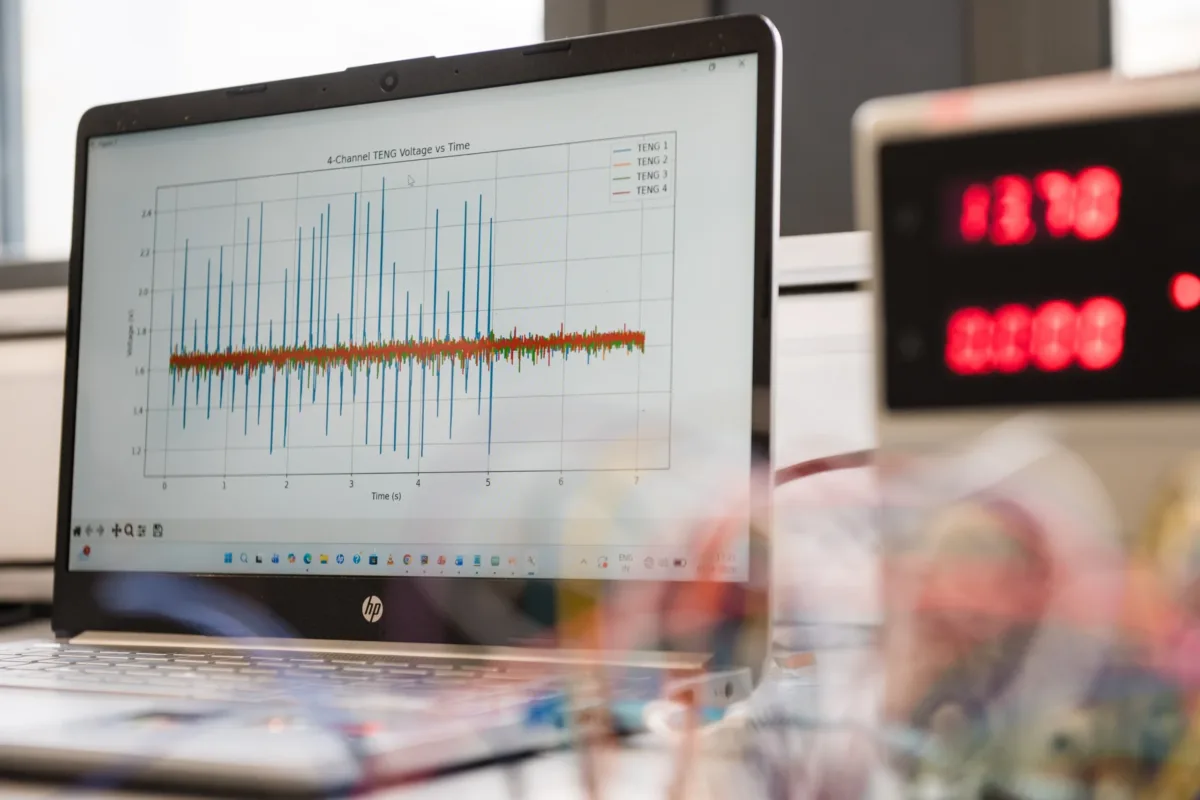
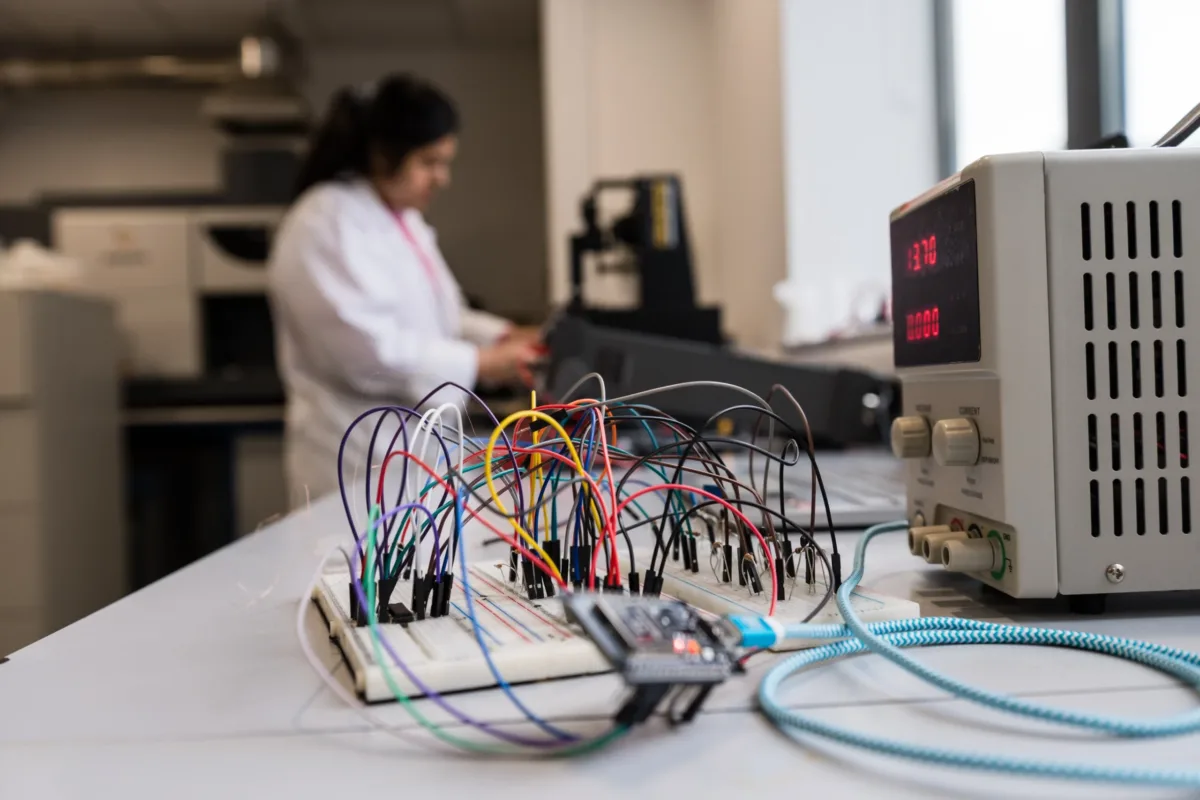
To demonstrate the technology, the researchers integrated the sensor into a wireless smart security system. Mounted on a door, it detected mechanical impacts and wirelessly transmitted vibration data without requiring a battery.
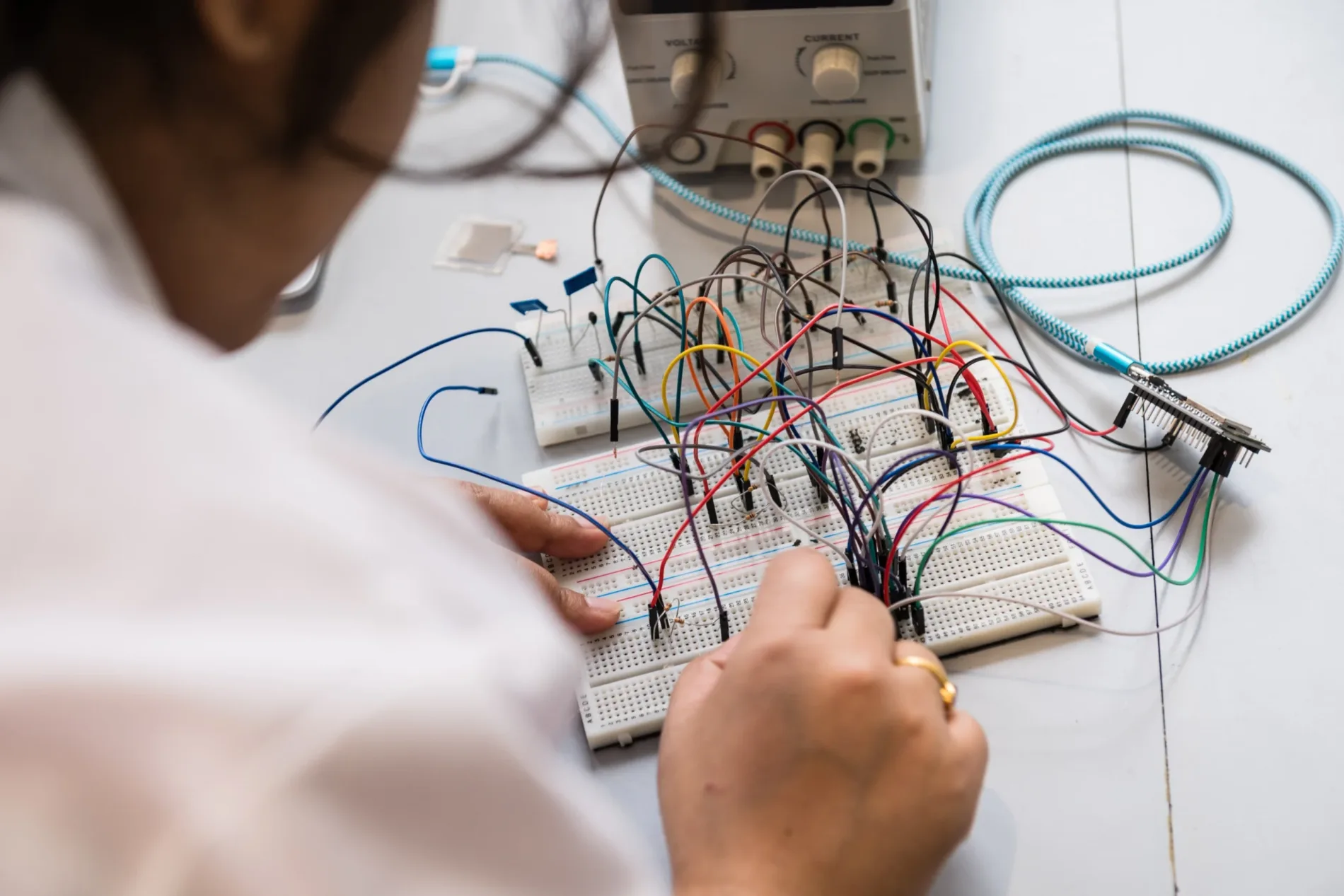

Prof Suresh C. Pillai, Principal Investigator of the project and Director of the Nanotechnology and Bioengineering Research Group at ATU, said:
“Our self-powered vibration sensor demonstrates how advanced composite materials can simultaneously harvest energy and provide highly sensitive monitoring, opening exciting opportunities across healthcare, biomedical, and industrial automation. This technology moves us closer to truly autonomous intelligent systems that are both sustainable and maintenance-free.”
The future of connected devices depends on sensors that can operate independently for years without battery replacement.
Prof Suresh C. Pillai, Principal Investigator of the project

The team believes the technology could support the next generation of structural health monitoring, predictive maintenance, wearable healthcare technologies and intelligent IoT systems.
Dr Karla Muñoz Esquivel, Lecturer in Computing at ATU and Principal Investigator at the Wireless Sensor Applied Research (WiSAR) Lab, said:
“Wearable technology is shaped by advancements in materials, our work is a leap forward towards energy-efficient wearables and high-conformity contact, which will offer new levels of functionality, integration and user comfort.
Future applications include monitoring heart rate, breathing, movement and rehabilitation, as well as fall detection, smart prosthetics, sports performance monitoring and wearable medical devices. Beyond healthcare, the technology could also help monitor machinery, buildings and other critical infrastructure, reducing maintenance requirements while improving long-term reliability.
The collaboration reinforces our commitment to develop innovative solutions that address global challenges across healthcare, sustainability, and digital transformation.
Dr Brendan Jennings, Chief Officer of Research, Innovation and Engagement

The research was supervised by Prof Suresh C. Pillai and Dr Karla Muñoz Esquivel, with experimental support from PhD researcher Irthasa Aazem.

For media enquiries, contact:
Jorden McMenamin
Communications Officer
Tel: 074 918 6127
E: jorden.mcmenamin@atu.ie
Featured Image: Anagha Ramesh M., PhD researcher at Atlantic Technological University. Photo by Conor Doherty.
The project was funded by RISE@ATU. RISE@ATU is co-funded by the Government of Ireland and the European Union through the ERDF Northern & Western Regional Programme 2021-2027. Additional funding was provided by Research Ireland under the EPSRC Research Ireland Joint Funding of Research programme and the Connacht Ulster Alliance (CUA) bursary in Sligo.