

Courses
Civil Engineering (Apprenticeship) (2-year add-on)
Bachelor of Engineering (Honours)
Course Details
| Course Code | SG_CCIVI_K08 |
|---|---|
| Level | 8 |
| Duration | 2 years |
| Credits | 120 |
| Method of Delivery | Blended |
| Campus Locations | Sligo |
| Mode of Delivery | Part Time |
| Work placement | Yes |
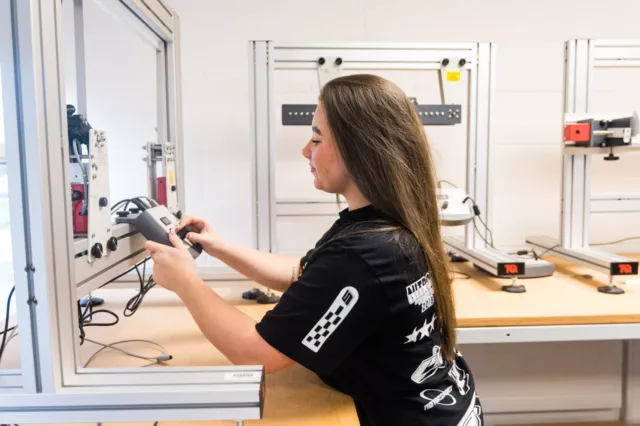
Course Overview
The Level 8 BEng (Honours) in Civil Engineering by Apprenticeship (Add-on) is designed for individuals currently employed in the civil engineering sector who hold a Level 7 Ordinary Bachelor of Engineering in Civil Engineering.
This innovative apprenticeship programme supports apprentices to develop into professionally competent civil engineers through a structured work-based learning (WBL) pathway that integrates academic study with supervised workplace experience.
Why Choose This Programme?
Progress from a Level 7 to a Level 8 Honours degree while remaining in employment
Combine theory and practice through an apprenticeship model
Develop skills aligned with industry and professional practice
Learn within a strong peer community of civil engineering apprentices
What You Will Study
The programme provides broad and in-depth coverage of the core civil engineering disciplines, including:
Structural & Geotechnical Engineering
Hydraulics & Environmental Engineering
Highway and Transportation Engineering
A True Apprenticeship Model
Learning is delivered through a blended apprenticeship approach, integrating:
On-the-job learning in the workplace
Off-the-job academic study
Assessments based on both academic achievement and workplace competence
Apprentices earn credits through a combination of academic and work-based assessments, ensuring learning is directly aligned with professional civil engineering practice.
Course Details
Year 1
| Semester | Module Details | Credits | Mandatory / Elective |
|---|---|---|---|
| Year |
Bridging Mathematics (A)This intensive week-long module equips learners with essential mathematical tools, progressing from single-variable algebra and calculus to multivariable and vector calculus concepts relevant to the field. Learners will refresh algebraic techniques, differentiation, integration, and optimisation, then apply these skills to multivariable functions, partial derivatives and vector calculus, including 3D geometry and analysis of vector fields. Emphasis is placed on solving practical civil engineering problems, such as structural analysis, fluid mechanics, and site modelling, preparing students for advanced engineering coursework and professional applications. Learning Outcomes 1. Apply algebraic techniques, including the remainder theorem, factor theorem, and partial fraction decomposition, to simplify and manipulate functions used in civil engineering calculations. |
05 | Mandatory |
| Year |
Work Based Learning 3H(A)The work-based learning (WBL) module is an integral component of the Civil Engineering Apprenticeship Programmes. The module is designed to provide apprentices with the opportunity to demonstrate their ability to transfer and apply classroom learning to the workplace. The integration of the academic theories with the professional work setting enables the apprentice to gain a wider breadth of application for the academic theories and positions covered in the classroom setting. Individual experiences in the workplace environment will vary from apprentice to apprentice. The workplace learning element of the programme is designed in a flexible manner to ensure that each apprentice is given the opportunity to apply the knowledge, skills and competencies gained in the academic modules into a real-life workplace context. Learning Outcomes 1. Analyse real world civil engineering projects by integrating taught theoretical principles, organisational practices and industry standards to clearly define engineering, operational or commercial problems. 5. Analyse and interpret qualitative and quantitative data, including engineering calculations, cost information, measurements, schedules or performance metrics to support evidence based conclusions. |
15 | Mandatory |
| 1 |
Structural Analysis 301H(A)This module builds on concepts covered in the Structural Mechanics 201H and Structural Mechanics 202H modules. The behaviour of sections when stressed above the elastic limit is explored. Methods to analyse statically determinate structures (including multiple component beams, pin-connected planar structures, cables and arches) to determine reactions, shear force, bending moments and slopes/deflections are detailed. Techniques to analyse statically indeterminate structures are introduced. Learning Outcomes 1. Analyse sections undergoing inelastic deformations |
05 | Mandatory |
| 1 |
Structural Design 301H(A)This module introduces Eurocode-based structural design for steel structures in buildings. It covers fundamental concepts of actions, limit states, and load combinations, alongside the design of key steel members and simple frames, with consideration of sustainability and durability. Learning Outcomes 1. Recognise the fundamental principles of Eurocode-based structural design, including limit states, actions, and load combinations. |
05 | Mandatory |
| 1 |
StatisticsThis module introduces fundamental concepts of probability, statistics, and numerical methods relevant to civil engineering. Learners develop skills in combinatorial probability, probability distributions, and descriptive statistics, and progress to inferential techniques including confidence intervals and hypothesis testing. The module also covers simple regression analysis for data interpretation and prediction. Emphasis is placed on practical applications, analytical reasoning, and the interpretation of statistical results in engineering contexts. Learning Outcomes 1. Apply elementary combinatorial methods to solve probability problems |
05 | Mandatory |
| 1 |
Environmental Engineering 301H(A)Students learn to integrate sustainable energy and environmental practices into civil engineering projects. They will design renewable energy systems and evaluate the technical, environmental and financial implications of different technologies. The module covers noise and air pollution, including modelling, monitoring and mitigation that aligns with standards and community expectations. Students will also develop waste management strategies based on circular economy principles and justify their choices within regulatory and practical limits. Learning Outcomes 1. Design renewable energy systems for integration into civil engineering projects using modelling software and site-specific data |
05 | Mandatory |
| 2 |
Geotechnical Engineering 302H(A)Geotechnical Engineering 302H(A) is a follow-on module to Geotechnical Engineering 202H(A). This module examines more advanced topics in soil mechanics, including: the strength and consolidation characteristics of soil and site investigation practices. Formal lectures are supplemented by laboratory classes where the learner undertakes practicals to examine the strength and consolidation properties of soil. Learning Outcomes 1. Analyse the strength characteristics of saturated soil. |
05 | Mandatory |
| 2 |
Structural Design 302H(A)This module introduces Eurocode-based design of reinforced concrete structures in buildings. It covers durability, limit states, and sustainability principles, alongside the design of slabs, beams, columns, walls, foundations, and simple frames, supported by detailed calculations and drawings. Learning Outcomes 1. Explain the fundamental principles of Eurocode-based reinforced concrete design, including durability, limit states, and load combinations. |
05 | Mandatory |
| 2 |
Road and Transport Engineering 302H(A)This module introduces learners to the principles and practice of road and transportation engineering. It focuses on geometric design, traffic flow and control, sustainable transport planning, and the application of relevant Irish and European standards. Learners develop the ability to analyse and design functional, efficient, and safe road networks that integrate the needs of all users. The module also introduces key digital tools and software used in transportation analysis and planning. Learning Outcomes 1. Describe and explain the functional components of road and transport networks and their role in sustainable mobility systems. |
05 | Mandatory |
| 2 |
Hydraulics 302H(A)This module develops advanced understanding of fluid flow theory and its application to civil engineering systems. It covers boundary layer behaviour, surface roughness effects, and analysis of complex pipe networks and distribution systems. Learners evaluate steady and unsteady open channel flows and develop skills in interpreting laboratory and field hydraulic data. Building on this foundation, learners design and justify integrated hydraulic infrastructure systems—such as water supply, drainage, foul sewers, and SuDS—incorporating regulatory requirements, sustainability, and resilience principles. Learning Outcomes 1. Analyse the theoretical foundations of fluid flow, including boundary layer behaviour and surface roughness effects, and their application to complex pipe systems and distribution networks. |
05 | Mandatory |
Year 2
| Semester | Module Details | Credits | Mandatory / Elective |
|---|---|---|---|
| Year |
Research Methods (A)The Research Methods module is designed to provide the appropriate research skills, knowledge and practical guidance necessary to complete a Learning Outcomes 1. Demonstrate an understanding of the critical role and value of research within the civil engineering industry and formulate clear, focused research questions on a relevant topic of interest. |
05 | Mandatory |
| Year |
Work Based Learning 4(A)This module consists of two main components: the Capstone Project and the Overall Performance Evaluation. The Capstone Project requires students to implement their research proposal by conducting independent, supervised research and producing an applied research report that addresses a real civil engineering problem or contributes to the discipline's knowledge base. Projects will be based on a civil engineering topic and may be connected to the learner's workplace but do not have to be. The Overall Performance Evaluation comprises two elements: a Mentor's Report and a Self-Appraisal. The Mentor's Report, completed by the workplace mentor, evaluates the student's progress against defined criteria and includes written feedback. The Self-Appraisal promotes self-regulated, lifelong learning and professional development by encouraging students to actively reflect on and engage with their own learning process. Learning Outcomes 1. Develop and refine a focused civil engineering research question grounded in relevant theory, industry challenges, or workplace practice. |
15 | Mandatory |
| 1 |
Structural Analysis 401H(A)This module further develops the material covered in Structural Analysis 301H(A) to include the analysis of structural systems based on the flexibility and stiffness methods. The plastic analysis of beams and frames is considered. An introduction to structural dynamics is also provided. Learning Outcomes 1. Formulate and apply flexibility methods for the analysis of statically indeterminate structural systems |
05 | Mandatory |
| 1 |
Structural Design 401H(A)This module extends reinforced concrete design from Structural Design 302(H)A to include combined pad foundations and retaining walls and introduces Eurocode-based timber design. Learners will explore durability, sustainability, and the design of timber elements and connections, supported by detailed calculations and drawings. Learning Outcomes 1. Explain the fundamental principles of Eurocode-based timber design, including durability, limit states, and load combinations. |
05 | Mandatory |
| 1 |
Numerical Modelling 401H(A)Numerical Modelling 401H(A) provides an introduction to numerical modelling in the areas of Geotechnical, Structural, Environmental, Traffic and Hydraulic Engineering. The learner is introduced to a variety of modelling techniques with real-world applications. The learner will undertake projects modelling Geotechnical, Structural, Environmental, Traffic and Hydraulic Engineering problems. Learning Outcomes 1. Conduct least squares optimisation to data modelling. |
05 | Mandatory |
| 1 |
Road and Transport Engineering 401H(A)This module integrates two complementary strands of road and transport engineering. The first develops a comprehensive understanding of pavement design, materials, and maintenance, with an emphasis on sustainability, innovation, and life-cycle thinking. Learners study the behaviour of flexible and rigid pavements, design methods in accordance with Transport Infrastructure Ireland (TII) standards, and modern approaches such as the use of Reclaimed Asphalt Pavement (RAP) and Warm Mix Asphalt (WMA). The second strand is a Transport Studies Laboratory, where learners work in teams to conduct real-world traffic and transport investigations. Building on skills acquired in Road & Transportation Engineering 302H(A), learners plan and perform a selection of five field/ desktop studies from traffic-flow measurements to user-behaviour surveys – analysing and presenting their findings in a technical report. Learning Outcomes 1. Distinguish between pavement types, structures, and materials, explaining their functional behaviour under different loading and environmental conditions. |
05 | Mandatory |
| 2 |
Structural Design 402H(A)This module builds on the learning from Structural Design 301(H)A, 302(H)A and 401(H)A modules, and focuses on more advanced topics in building design, including sustainability assessment, formulation of design concepts and scheme development, structural stability and robustness, and approaches to the structural renovation of existing buildings. The module requires the learner to identify and formulate design concepts and evaluate traditional and sustainable construction options for the refurbishment of existing buildings and/or the design of new buildings. Learning Outcomes 1. Critically appraise sustainability principles and their integration into concept and scheme design for building structures. |
05 | Mandatory |
| 2 |
Geotechnical Engineering 402H(A)Geotechnical Engineering 402H(A) builds on the learner's understanding of soil mechanics gained in Geotechnical Engineering 202H(A) and Geotechnical Engineering 302H(A). Geotechnical Engineering 402H(A) is a design-oriented module, where the learners prepare the design of shallow and deep foundations, gravity, embedded retaining walls and piles and earthworks. A key element of this module is the preparation of design reports for foundations, walls, piles and earthworks to relevant national and European standards. Learning Outcomes 1. Determine the forces, moments and pressure distributions on gravity and cantilever retaining structures. |
05 | Mandatory |
| 2 |
Sustainable Engineering 402H(A)This module explores how civil engineering decisions shape environmental, social and economic outcomes. Students learn to apply tools and frameworks such as Life Cycle Assessment to quantify impacts across project life cycles, and examine how legislation, policy and climate targets influence practice. The module aims to develop the ability to design resource and energy management strategies at different scales, and to recommend balanced solutions that consider technical, managerial and ethical factors while supporting sustainable development. Learning Outcomes 1. Critically evaluate the environmental, social and economic impacts of civil engineering projects using appropriate tools and frameworks. |
05 | Mandatory |
| 2 |
Hydraulics 402H(A)This module covers key applied hydrology and coastal engineering concepts essential for civil engineering practice. It focusses on quantitative analysis of the hydrologic cycle and advanced methods such as frequency analysis and hydrologic modelling for design and risk assessment. In addition, students will learn to analyse catchment water balance, design and manage reservoirs, interpret hydrologic data, and address climate related hydrologic challenges. Learning Outcomes 1. Analyze the hydrologic cycle by quantifying precipitation, infiltration, evapotranspiration, and runoff using hydrological methods and models for engineering design and water resources management. |
05 | Mandatory |
Recommended Study Hours per week
5/6 hours per module, per week
Examination and Assessment
This programme is assessed via a mix of continuous assessment, a final exam and Work Based Learning Projects.
On-Campus Attendance Requirement
Each year begins with a residential week, which sets the academic focus for the year, Supports the work-based learning (WBL) element of the programme and builds a strong community of learning among apprentices.
Blended Learning Structure:
• Weekly online lectures
• Monthly on-campus laboratory sessions
• Mid-semester residential periods focused on group work, collaboration and peer learning
This flexible delivery model allows apprentices to balance work, study and professional development effectively.
Blended Learning Structure:
• Weekly online lectures
• Monthly on-campus laboratory sessions
• Mid-semester residential periods focused on group work, collaboration and peer learning
This flexible delivery model allows apprentices to balance work, study and professional development effectively.
Progression
Atlantic Technological University is currently developing a Level 9 Master’s in Civil Engineering by way of apprenticeship. This will complete a suite of civil engineering programmes by way of apprenticeship providing progression pathways from Level 6 to Level 9.
You may also use the qualification to progress within the sector and/or to higher education programmes.
For further information and to register your interest, please email civilapprenticeships@atu.ie
Download a prospectus
Entry Requirements
Minimum Entry Requirements
Applicants must have:
A Level 7 Ordinary Bachelor of Engineering in Civil Engineering with an overall average of 55% in the final stage
A minimum 55% in Mathematics module(s) in the award stage (qualifier exam also available in August)
Applicants must also:
Complete a Bridging Mathematics module during the first residential week
Achieve at least 40% (32/80) in the associated tests to progress on the programme
Careers
You may choose to work as a civil engineer in the following sub-sectors of the construction industry:
Government Agencies & Local Authorities – the clients responsible for commissioning projects and managing assets
Consulting – supporting clients to design and manage construction projects
Contractors – constructing the assets e.g. buildings, bridges, reservoirs etc.
Suppliers – providing specialist materials and products to contractors.
Projects include the design and construction of civilian infrastructure from buildings such as hospitals and schools to transportation and utilities networks.
Further Information
Start Date
September 2026
Who Should Apply?
This programme is ideal for:
Civil engineering technicians/technologists and graduates already working in the industry.
Employers seeking to upskill and develop future professional engineers
Learners who value practical, work-integrated education
Contact Information
Further information for both prospective apprentices and employers can be obtained by contacting civilapprenticeships@atu.ie