
English
Gaeilge
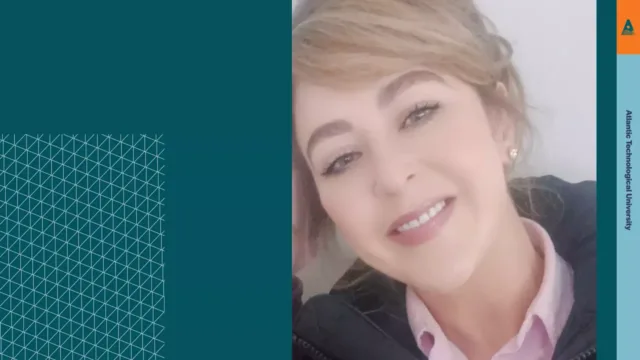
Breege Mulrooney
Master of Science in Applied Health and Wellness Coaching
St Angelas
Can you tell us your name, job title, and the course you are studying at ATU?
Breege Mulrooney, Staff Nurse, HDip + Master’s in Applied Health and Wellness Coaching.
Can you share your career path to date?
Qualified Nurse since 2009
- Emergency Nursing
- High Dependency
- Medical and Surgical Nursing
- Nursing Quality Care Metrics and audits
- Diabetic Retinal Screening Service
What does your current role involve?
Managing the Diabetic Retinal Screening service for the northwest region (Sligo and Letterkenny University Hospitals) and working in the diabetes centre one day a week.
What motivated you to start studying?
I chose to pursue the MSc in Health and Wellness Coaching because I wanted to develop a structured, evidence‑based skillset that complements my clinical expertise and strengthens my ability to support sustainable behaviour change in people living with chronic conditions. In practice, I repeatedly saw that information alone does not translate into improved self‑management, particularly in diabetes care. What patients needed was a person‑centred, motivational approach that helps them clarify goals, build confidence, and take ownership of their health. Health coaching provides that framework.
This programme allows me to integrate advanced coaching competencies with my nursing background, enabling me to work more effectively with individuals who struggle with lifestyle change, ambivalence, or low self‑efficacy. It also aligns with national priorities for chronic disease management, where behaviour‑change support is increasingly recognised as essential to improving outcomes. By completing this MSc, I am equipping myself with the professional, credentialed coaching skills required to deliver high‑quality, patient‑centred interventions and to contribute to service development within a future CNS Diabetes role or an advanced role in Nurse-led coaching.
Why did you choose this course at ATU?
I chose this course at ATU because it was the only programme that genuinely aligned with me personally and professionally. As I explored the curriculum and read the real‑world stories of how health coaching had transformed people’s lives, I felt genuinely empowered. The emphasis on person‑centred behaviour change, motivational approaches, and sustainable lifestyle support resonated strongly with my own values and with the gaps I see every day in clinical practice. ATU’s MSc offered a credible, evidence‑based pathway that matched exactly what I wanted to develop: the skills to help people move from knowing what to do to actually being able to do it. That alignment made the decision feel natural.
How do you find the process of studying in a flexible manner? What elements did you find helpful? Were there elements you found challenging?
Studying in a flexible manner has been essential for balancing postgraduate work with a demanding clinical role. The structure of the programme made this manageable: ATU provides the full two‑year schedule in advance, with teaching consistently delivered on Wednesdays from 3–5pm and a small number of longer days clearly outlined from the start. Knowing this allowed me to plan ahead, book annual leave when necessary, and avoid last‑minute pressure.
The flexibility of online delivery, recorded lectures, and clear assessment timelines were particularly helpful. Even during busy clinical periods, I could engage with the material at times that suited my shift pattern. While the work–life balance can be challenging—especially when assignments are due—the lecturers provide ample notice and guidance, which reduces stress and supports steady progress.
Despite the demands, the process has been highly rewarding. Seeing what I can achieve within a structured, flexible model has reinforced that postgraduate study is entirely possible alongside full‑time practice.
How do you balance work and study?
I balance work and study by using ATU’s fixed two‑year schedule to plan ahead, book key days off early, and stay consistent even during busy clinical periods.
What advice would you have for anyone considering studying a flexible learning programme?
My advice is to plan ahead, use the fixed schedule to your advantage, and trust that flexible learning is completely achievable once you stay organised and consistent.
In what way has studying with ATU benefitted your career to date?
Studying with ATU has strengthened my confidence, broadened my skillset, and given me a clear professional direction. The programme has also enhanced my academic skills, improved my ability to appraise evidence, and positioned me strongly for future progression into a CNS Diabetes role or an advanced nurse-led coaching role within the HSE. Overall, it has expanded both my capability and my career opportunities.
Has this course provided any unexpected benefits to your career?
Not yet, but I am hopeful. While I haven’t experienced major unexpected career benefits so far, I can already see the potential. Health coaching is not fully embedded within the HSE at present, but the skills I’m developing position me to contribute to that shift. My aim is to help introduce and integrate coaching‑based approaches into chronic disease services, and I expect the impact of this qualification to grow as the value of health coaching becomes more widely recognised.
Do you find that the elements you are studying have practical relevance in your day-to-day role?
Yes – the elements I am studying have clear practical relevance to my day‑to‑day role. I will be working in the Diabetic Hub one day a week, which creates a direct opportunity to integrate health coaching into routine patient care. The behaviour‑change frameworks, motivational communication skills, and structured goal‑setting techniques from the programme align perfectly with the needs of people living with diabetes. These competencies will allow me to support patients more effectively, particularly those struggling with self‑management or lifestyle change. Even though health coaching is not yet fully embedded within the HSE, the skills translate seamlessly into clinical practice and will enhance the quality of care I can provide within the Hub.