English
Gaeilge
Can you tell us your name, job title and the course you studied at ATU?
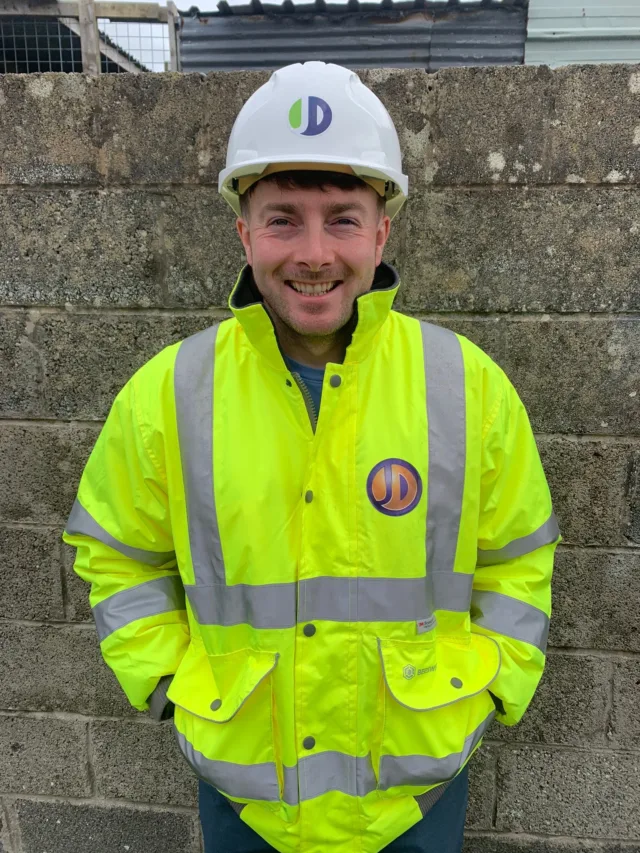
My name is Shane McLaughlin and I am an HSEQ Advisor
As a HSEQ Advisor, I perform the role of Project Supervisor Design Process (PSDP) across a range of renewable energy projects throughout Ireland including Wind Farms, solar energy developments, Battery Energy Storage Systems (BESS), anaerobic digestors, as well as retrofitting initiatives for housing, hotels, and other infrastructure.
I initially completed a BSc (Hons) in Environmental Science (Level 8) at what was then I.T. Sligo. I then returned to specialise in the Health and Safety field by completing a MSc in Environmental Health & Safety Management, also through ATU Sligo.
Can you share your career path to date?
I completed my BSc (Hons) in Environmental Science in 2020, just as the COVID-19 pandemic began. With lockdowns in place, it was difficult to find work, so I decided to return to education and specialise in Environmental Health & Safety (EHS) Management. After two years of study, I submitted my dissertation in May 2023 and started my professional career the following Monday working since as an HSEQ Advisor.
What does your current role involve?
As an HSEQ Advisor/ PSDP, I travel to project sites across Ireland and work closely with contractors throughout all phases of a project. My main focus is ensuring health and safety is built into every stage, from initial design through to completion. I support a wide range of projects including wind farms, solar energy, battery storage systems, and retrofitting works – each bringing unique challenges, and opportunities to learn.
Back at the office, I manage our sustainability performance by tracking energy use, waste, water, travel, and heating. I ensure all PPE and training records are kept up to date and oversee general office safety and maintenance. I also hold additional responsibilities as a qualified First Aid Responder, Fire Warden, and the designated Health & Safety Officer.
What motivated you to start studying?
I returned to study the MSc in Environmental Health & Safety Management because I wanted to build on my environmental knowledge and had a real interest in health and safety. Combining both fields seemed like a smart move since it opens up lots of opportunities, especially in the renewable energy sector.
During my bachelor’s degree, I took a health and safety module that really clicked with me, it felt natural and interesting. Plus, with my mother working in healthcare and my father working in construction, I was inspired to pursue something that helps protect people.
I’ve always wanted a career that’s fun, diverse, and never the same. Working on different projects keeps me engaged and constantly learning, which is exactly what I was hoping for.
Why did you choose this course from ATU?
I chose the MSc in Environmental Health & Safety Management because it was the perfect fit for my goal of moving into a health and safety role within the renewable energy sector. I reviewed the modules before applying and was really impressed with the balance between environmental topics and health & safety especially given the growing potential for wind and solar energy in Ireland.
The course built well on my background in Environmental Science, while giving me a solid foundation in health and safety, which was new to me. The group project work was a real highlight – it allowed us to learn from each other and develop as a team, which reflects how things work in the real world. The lecturers were excellent, always approachable and willing to help, which made a big difference throughout the course.
I also chose ATU because I had studied here before and felt comfortable on campus. Having friends around and being familiar with the environment made the two years more enjoyable and easier to settle into.
How did you find the process of studying online? What elements did you find helpful? Were there elements you found challenging?
Overall, my online learning experience was really positive. It took a bit of time to adjust at first, especially after being out of full-time study for a while, but once I got into a routine, I found the flexibility really helpful. I was able to work part-time while completing my Master’s, which wouldn’t have been possible with a traditional, full-time setup.
What I found most helpful were the recorded lectures, which meant you could catch up at a time that suited you, especially if you were working during the day. The evening classes were also a big plus; they gave me time to decompress after work and focus properly. The course structure was clear and the lecturers were very responsive and supportive throughout.
There were some challenges too, especially with group work. At times, there were language barriers and uneven workloads, which could affect the group’s overall progress. But despite that, the group work helped build teamwork skills and gave us a chance to learn from each other.
Looking back, I’m really glad I chose this course. It gave me the foundation I needed and directly led to the role I’m in today which was exactly the goal from the start.
How did you balance work and study?
It definitely took a bit of time to adjust to the new routine, but once I settled in, I didn’t find balancing work and study too difficult. As deadlines or exams approached, I’d reduce my working hours to make sure I could focus fully on assignments or revision.
I usually set aside 1-2 hours each evening for lectures, reviewing notes, or working on assignments. What helped most was keeping a good balance; I stayed socially active, kept in touch with friends, and played college sports, which really helped clear my head and manage stress.
Overall, it was very manageable. With a bit of structure and knowing when to switch off, I was able to stay on top of both work and study without feeling overwhelmed.
In terms of your employer, were they supportive of your decision to study? Were there elements of the course that were particularly relevant to your current employer?
At the time, I was working part-time back home in Donegal. While the job itself wasn’t directly related to the course, I did start to notice health and safety aspects in the workplace that I wouldn’t have picked up on before starting the MSc; things like potential hazards, signage, and general store safety.
My employer was supportive and encouraging about my studies, even though the shift-based nature of the work meant my hours couldn’t be adjusted. That said, I had no issues managing both work and the Master’s over the two years. It actually helped me start thinking with a health and safety mindset early on, which has carried through into my current role.
What advice would you have for anyone considering studying online?
My advice would be to stay organised and get into a routine early on. Online learning gives you a lot of flexibility, but that also means it’s up to you to manage your time. Set aside regular hours each week for lectures, reviewing notes, and working on assignments, even just an hour or two a night makes a big difference.
Also, don’t be afraid to reach out to lecturers or classmates. Even though you’re not in a physical classroom, there’s still plenty of support available.
Finally, make sure to take breaks and look after yourself. Keeping a balance with exercise, social time, or hobbies will help you stay focused and avoid burnout. It’s manageable once you find your rhythm.
In what way has studying online with ATU benefitted your career?
Before starting the course, I was working in a local grocery store in Donegal for two years after college, so my IT skills were a bit rusty. The online format of the MSc really helped me improve those skills, especially because a lot of the learning was independent and required me to use various online platforms regularly.
This experience has carried over directly into my current role as a HSEQ Advisor. Although I spend time on site visits, much of my work involves internal communication and data recording using online tools. My IT skills, particularly with programs like Excel, have improved a lot. Now I confidently manage large files and use Excel to generate monthly targets and project fees.
Overall, studying online helped me develop essential technical skills and independence, which have been crucial in managing the digital side of my role and communicating with contractors across various projects.
Did this course provide any unexpected benefits to your career?
As part of the HSEQ Department in my workplace, each advisor brings expertise in different areas. Given my background and strengths in Environmental matters on top of Health and Safety, my experience is utilized when relevant, while other team members contribute their knowledge and expertise in areas where they are stronger. This collaborative approach ensures we leverage the strengths of the entire team effectively.
Did you find that the elements you were studying had practical relevance In your day-to-day role?
Yes, definitely. One key area that stands out is the focus on Integrated Management Systems (IMS), which was covered in detail during the course. In my current role, I’m heavily involved in maintaining and improving our IMS to ensure we’re always audit-ready and in line with our JSO certifications.
What I learned in the Master’s directly applies to the systems and standards we use every day. The course gave me a strong foundation in understanding how these systems work and how to implement them effectively in a real business environment.
Overall, the course really prepared me for what came next and helped me transition smoothly into my current role. The theory matched the practical realities I now deal with daily.
What were the key skills you took away from your time studying at ATU?
Studying at ATU helped me build a wide range of valuable skills that I now use every day in my role. Some of the key ones include a solid understanding of health and safety and environmental legislation, how to work within an Integrated Management System (IMS), risk assessment, data handling, resource management, and perhaps most importantly; strong communication and people skills.
For example, in my current role, I write Preliminary Health and Safety Plans (PHSPs) for projects from start to finish and present monthly progress updates, so having a strong foundation in legislation is essential. I need to confidently reference relevant laws and standards when assessing health and safety risks on site, which the Master’s prepared me well for.
Another major skill is communicating effectively with different types of people whether it’s contractors, clients, or colleagues. It’s important to avoid confrontation but still stay confident in your decisions to ensure work is carried out safely and correctly.
All the skills I developed from handling large project safety files to applying risk assessments and managing environmental performance in the office directly relate to my current role. I try to apply everything I learned during the Master’s in my professional life every day, and it’s made me much more confident and competent in what I do.