
Courses
Only 5% of participants in sports concussion studies are women. Can AI help close the gap?
PhD researcher Luke Canavan Dignam investigates whether AI can detect possible head injuries equally in men’s and women’s football.

Concussion in sport is a major concern, but many of the tools currently used to detect or assess it have serious limitations.
PhD researcher Luke Canavan Dignam is investigating whether artificial intelligence systems used to detect head impacts in football work equally for male and female athletes.
His review of 21 research studies identified a gap: female athletes have largely been overlooked.
Only 5% of participants were women, and none of the studies examined whether the tools worked differently for male and female athletes.
PhD researcher, Luke Canavan Dignam

For Luke, this research matters because concussion risk may not be the same for every player:
“If female athletes are underrepresented in research, then the tools and guidelines used to protect them may not be accurate enough”.
Prior studies also suggest female athletes may experience concussion differently, and possibly at lower impact thresholds, due to factors such as neck strength, head movement, and body mechanics.
If this research can show meaningful differences in the forces involved in heading between men and women, it could help lay the groundwork for sex-specific heading guidelines in football.

From RTÉ Radio 1’s archives, Dr Lisa Ryan, Head of Department of Sport Exercise and Nutrition, investigates why Female GAA players are not receiving adequate concussion treatment

One of the most novel parts of the project is its focus on fairness in AI.
As men’s sport has historically dominated sports footage and datasets , there is a real risk that “one-size-fits-all” AI systems may perform better on male players than female players.
To address this, Luke’s research is developing a female-specific dataset and AI model to test whether separate or more balanced systems are needed to ensure women’s football is analysed accurately.
So far, no previous computer vision study in this area has properly tested whether AI models work equally well on female athletes.
His focus is not just about building a model in isolation.
The long-term vision is a tool that can watch a match and flag moments where a player’s head may have been exposed to impact, without needing wearable technology or specialist operators.
The goal is to create a faster, more objective way to track head impact exposure in players, in both the men’s and women’s games.
To address this, Luke is using computer vision, a type of artificial intelligence that can ‘watch’ video and recognise patterns.
“A major advantage of this approach is that it works with normal broadcast footage, so there is no need for players to wear sensors or special equipment”, he adds.
This process requires collecting and carefully labelling thousands of clips from football matches, showing moments such as headers, aerial challenges, and collisions.
The growing video library includes footage from both men’s and women’s matches to make sure the system works fairly across both groups.
The same approach could eventually be used in other sports where head impacts are a concern, such as rugby or GAA. It also contributes to a wider conversation about making AI more inclusive.
This is not just a sports issue, but a broader challenge across many areas where AI is increasingly being used.
PhD researcher, Luke Canavan Dignam
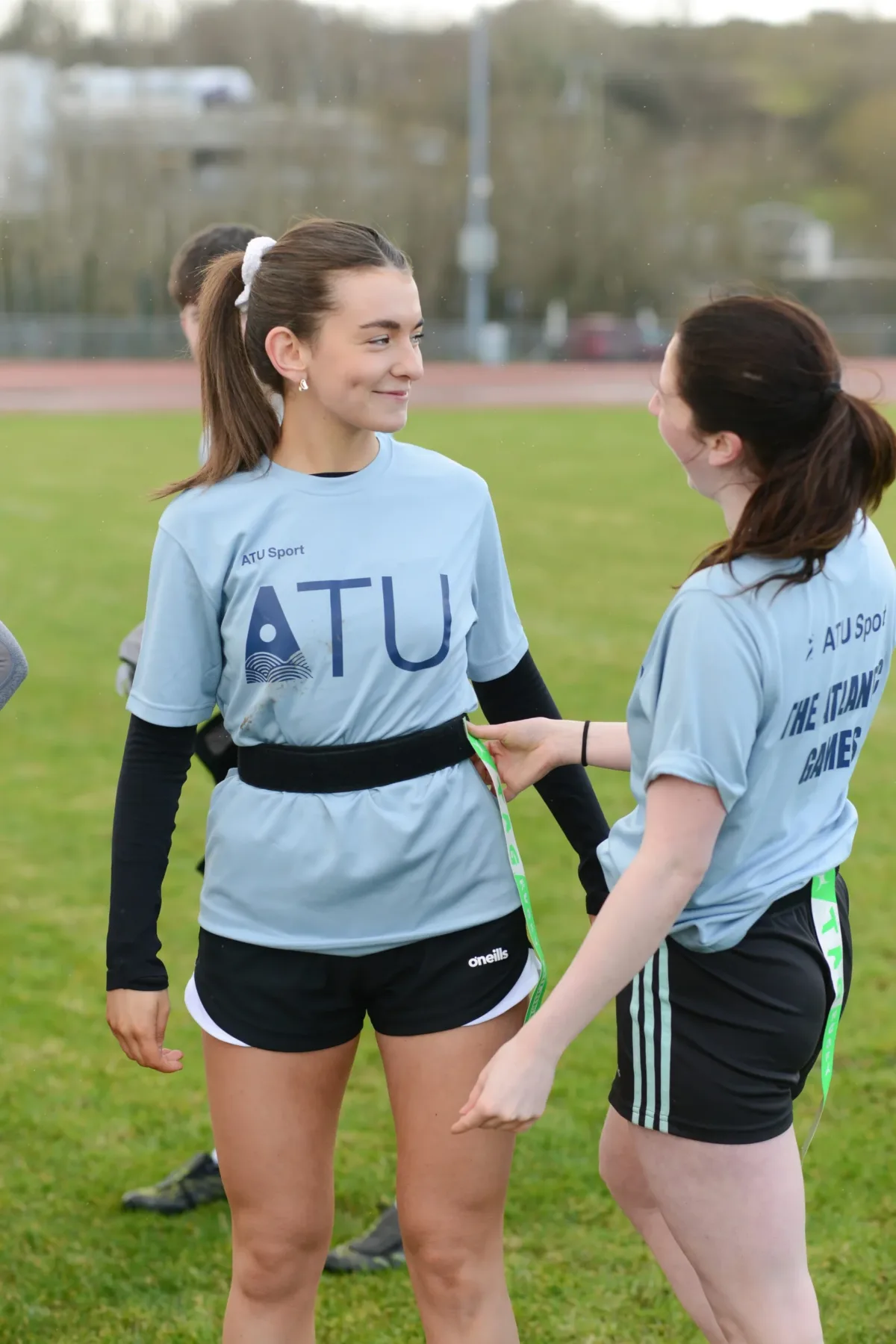
One of the biggest questions that sport still cannot answer clearly: when does a routine header become harmful?
In this research, AI is being trained to detect events such as:
- Heading the ball.
- Head-to-head collisions.
- Elbow-to-head contact.
- Aerial duels where players compete for the ball in the air.
But Luke shares that there is currently no clear threshold for how much impact is too much:
A ball striking a player’s head does not always cause injury, but over time those smaller impacts may still matter.
To explore this, Luke and his team will work with smart football technology that can measure things like ball speed, spin, and contact force at the moment of impact.
Protecting player welfare begins with having accurate evidence. Luke’s research is tackling an issue that has received surprisingly little attention by testing whether the tools used to monitor head impacts perform equally well across men’s and women’s games.
Lecturer and lead supervisor, Dr Ed Daly
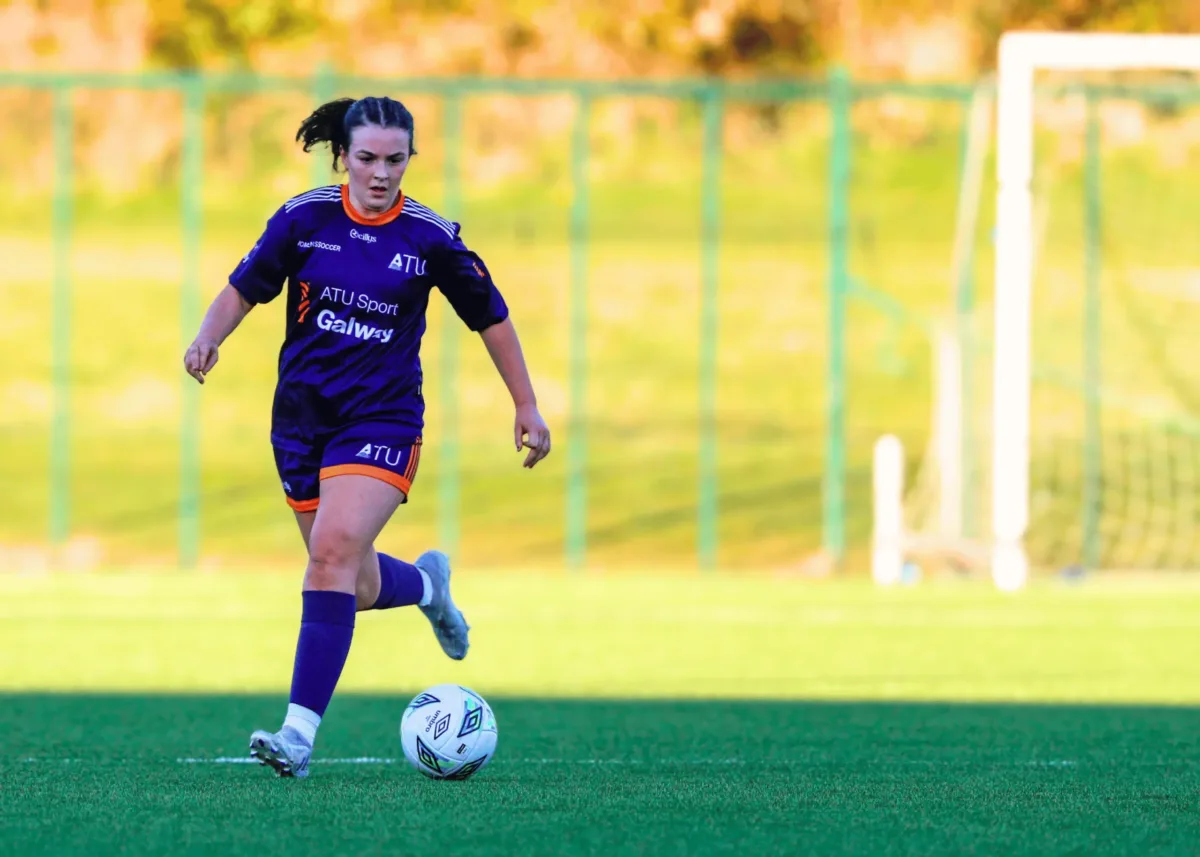
His research will also move from simply detecting headers to trying to measure them. This includes how much force is involved when the ball hits the head, how that force may differ depending on the speed of the ball, the angle of contact, and the way the player’s head moves during impact.
It could improve how head impacts are tracked in elite sport, help inform better protection for amateur and youth players, and ensure that future safety guidelines are based on evidence that reflects both male and female athletes.
This research is funded under RISE@ATU with supervision by Dr Lisa Ryan, Dr Micheal McCann, and Dr Ed Daly. RISE@ATU is co-funded by the Government of Ireland and the European Union through the ERDF Northern and Western Regional Programme 2021-27.
About Luke Canavan Dignam
Luke Canavan Dignam is a second-year PhD researcher concentrating his research using Artificial Intelligence, specifically computer vision to identify, detect, and quantify sport-related concussion and sub-concussive impacts. His research intends to provide benchmark thresholds of force relationships and sub-concussive impacts with gender stratification using AI trained on broadcast footage from contact sport games.
For media enquiries, contact:
Jorden McMenamin
Communications Officer
Tel: 074 918 6127
E: jorden.mcmenamin@atu.ie
Featured Image: PhD researcher Luke Canavan Dignam at Atlantic Technological University. Photo by Conor Doherty.