English
Gaeilge
€2.5 million investment to transform the future of lung cancer treatment
Atlantic Technological University (ATU) has been awarded €2.5 million under the Government’s Disruptive Technologies Innovation Fund (DTIF) to advance SensABLATE- a breakthrough technology that could transform the future of lung cancer treatment.

The funding forms part of a wider €8.46 million investment announced by the Minister for Enterprise, Trade and Employment, Peter Burke, and the Minister for Further and Higher Education, Research, Innovation and Science, James Lawless.
SensABLATE, is led by Endowave (Galway) in partnership with ATU, Tyndall National Institute, and Quadrant Scientific.
Lung cancer is one of the most challenging cancers to treat. During microwave ablation, a minimally invasive technique used to destroy tumour tissue, clinicians currently have no reliable way to confirm in real time whether all cancerous tissue has been removed. This uncertainty can lead to incomplete treatment, repeated procedures, and poorer patient outcomes.
SensABLATE aims to change this over the next three years by developing a next-generation system that provides instant, intraoperative confirmation during lung cancer ablation procedures, combining advanced clinical photonics, deep-tissue visualisation, and AI-driven analysis to deliver a level of precision not currently available.
ATU will lead the development of an AI-augmented two-photon fluorescence microscopy combined with a hyperspectral imaging system to deliver real-time tissue viability mapping, enabling precision lung cancer therapy. This work will generate high-quality datasets to train the SensABLATE algorithm and provide real-time confirmation that clinicians urgently need.
The ATU team is led by Dr Karina Litvinova, Principal Investigator and Lecturer in Biomedical Engineering in ATU’s Department of Life Sciences.

Welcoming the announcement and ATU’s involvement, Dr Brendan Jennings, Chief Officer Research, Innovation and Engagement, said:
This award is a testament to our commitment to research that makes a real difference in peoples’ lives. SensABLATE brings together cutting-edge photonics and AI to tackle one of the most pressing challenges in cancer care. By working with our partners, we aim to deliver technology that measurably improves patient outcomes.
Dr Karina Litvinova, who established ATU’s Clinical Photonics Research Group, is building on more than two decades of experience in biophotonics and medical imaging.
She said:
We are incredibly proud to contribute to this transformative project. SensABLATE addresses one of the biggest challenges in lung cancer treatment – the lack of real-time confirmation during ablation. By combining advanced photonics and AI, we aim to give clinicians the confidence that a tumour has been fully treated on the first attempt. This funding enables us to push the boundaries of imaging, improve patient outcomes, and ultimately support the development of a new, minimally invasive therapy.
As part of the project, ATU will recruit three postdoctoral researchers, one clinical project manager, and one PhD student, with recruitment beginning early next year.
The complete system will undergo evaluation in a 40-patient clinical study at a leading US hospital, generating evidence to support FDA submission and pave the way for commercialisation in the United States.
This story is part of Bright Minds, Big Impact, a series highlighting ATU’s research excellence and the people driving meaningful change.
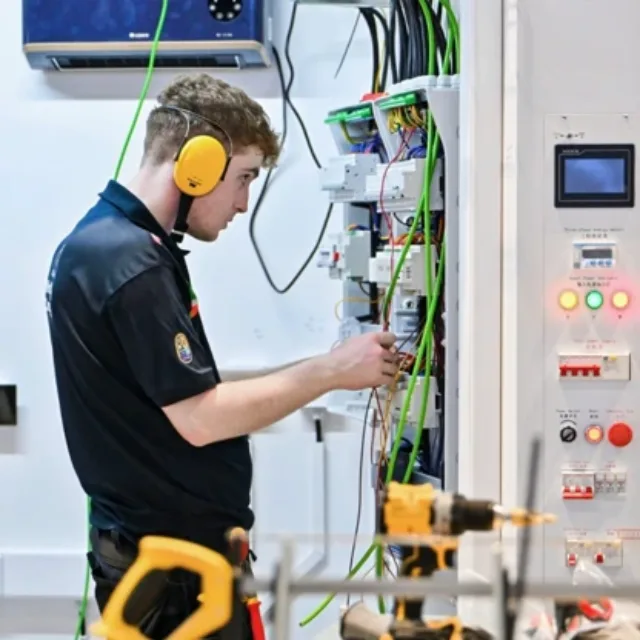
Photo captions: 1- Generic image of ATU research students. 2- Dr Karina Litvinova, Principal Investigator and Lecturer in Biomedical Engineering in ATU’s Department of Life Sciences
Ivana Hanjs
Communications Officer
Tel: +353 89 963 9559
E: ivana.hanjs@atu.ie