English
Gaeilge
ATU lecturer shares his cancer journey for International Men’s Day
This International Men’s Day, we’re encouraging ATU staff and students to take up cancer screening when they’re eligible and to speak to their GP about any changes that concern them.
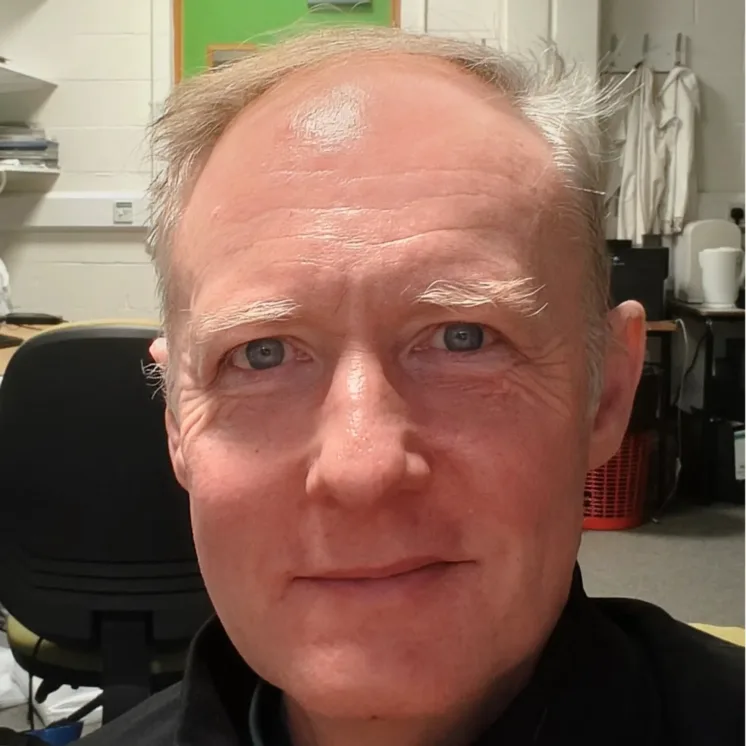
When Dr Oliver Joyce, a lecturer at Atlantic Technological University (ATU), noticed blood in his urine in 2022, he got it checked. The initial investigations didn’t find cancer, but his father’s history of prostate cancer was one reason his doctors kept monitoring him. In May 2025, aged 49, Oliver was diagnosed with prostate cancer.
He shares his story.
Could you tell us a little about yourself and your role at ATU?
I’m originally from Mayo and have lived in Sligo since 2004. I’m married to Lorna and we have four children. I play tennis, enjoy cooking and eating, and I love drinking tea!
I joined IT Sligo, as it was then, in September 2005. I mainly teach biology and biochemistry, from first year through to fourth year. I enjoy the variety of lectures and practicals, and one of the best parts of the job is seeing how much students develop during their time with us and beyond.
What first prompted you to seek medical advice?
One Friday in June 2022, I felt uncomfortable and unwell and noticed blood in my urine. I went to Caredoc and was advised to see my GP the following week. My GP knew about my dad’s prostate cancer diagnosis and referred me to a specialist.
The initial investigations didn’t find cancer. Given my family history and some swelling of the prostate, the team decided to check my PSA level every three months. PSA stands for prostate-specific antigen, which is measured with a blood test. A PSA count of 6.4 in December 2024 prompted an MRI scan that showed a tumour 5mm in diameter which led to a biopsy the following May confirming that I had prostate cancer.
How did you react to the diagnosis?
I was 49. Dad had been diagnosed about 20 years earlier, so I knew it was a possibility. But I’d always thought that if it happened to me, I’d be 60 or older. Hearing it at 49 was a shock. If your father has had prostate cancer, you are two to three times more likely to develop the disease compared with a man with no family history.
I was offered two options: brachytherapy, a form of radiotherapy, or surgery to remove the prostate. I chose surgery and had a prostatectomy in late August 2025.
Did your dad’s experience make it easier to talk about what was happening?
Yes. Dad never shied away from getting symptoms checked or talking about them. I still remember exactly where I was when he rang to tell me his biopsy had come back positive.
His attitude shaped mine. I know not everyone has had that example, and telling people you’re ill can be hard. But when you feel able to talk about it, it can make it easier for others to ask questions or share something they’ve been worried about.
What helped you most during recovery?
Rest, and lots of it. I slept an awful lot in the early days after surgery. Sometimes I felt guilty about how little I was doing, but I needed that time to recover.
Family and friends were fantastic. People I didn’t expect to hear from got in touch and offered to help. It lifted my spirits. My physiotherapist was brilliant too. She gave me exercises and practical advice that helped me recover.
What was it like returning to work?
HR were very supportive. The message was simply: ‘Get well.’ That meant I could focus on recovering without worrying about work.
When I came back, I hadn’t realised how tiring ordinary parts of the day would be. Projecting my voice in lectures, writing on the board and walking around campus all took more out of me than I expected.
What would you say to a colleague or student who feels hesitant about getting something checked?
Even if you feel a little embarrassed, go ahead and make the appointment. The people who deal with these things are kind and considerate. They’ve heard it all before.
If prostate cancer runs in your family, tell your GP and ask whether PSA testing is right for you. And if you’re worried or want to know more, the Irish Cancer Society is a good place to start. I’m also happy to have a chat with anyone at ATU who’d find it helpful.
Is there anything else you’d like to share?
I was disappointed to learn I couldn’t give blood after my diagnosis, so I’ve taken to encouraging other people to do it! If you’re eligible and have been thinking about donating, I’d encourage you to give it a go. It can make a real difference to someone who’s ill.
Prostate health: where to start
If you notice blood in your urine or another change that concerns you, contact your GP. If you have a family history of prostate cancer, tell your GP and ask when to start discussing prostate checks. They can explain the benefits and limitations of PSA testing and help you decide whether it’s right for you. Find out more from the Irish Cancer Society.
Students, if you have concerns, symptoms, or questions about cancer, I strongly recommend you contact the Student Health Unit and arrange an appointment with a member of the medical team as soon as possible for assessment and advice.
Staff are encouraged to consult with their GP.
Additional resources:
- HSE Cancer Information: Sign and Symptions
- Irish Cancer Society: Cancer Information
- Marie Keating Foundation: Information Hub
- Prostate Cancer Ireland: Services
- Men’s Health Forum in Ireland: www.mhfi.org
- HSE Podcast “Why Bowel Screening Matters”
- HSE Screening programme
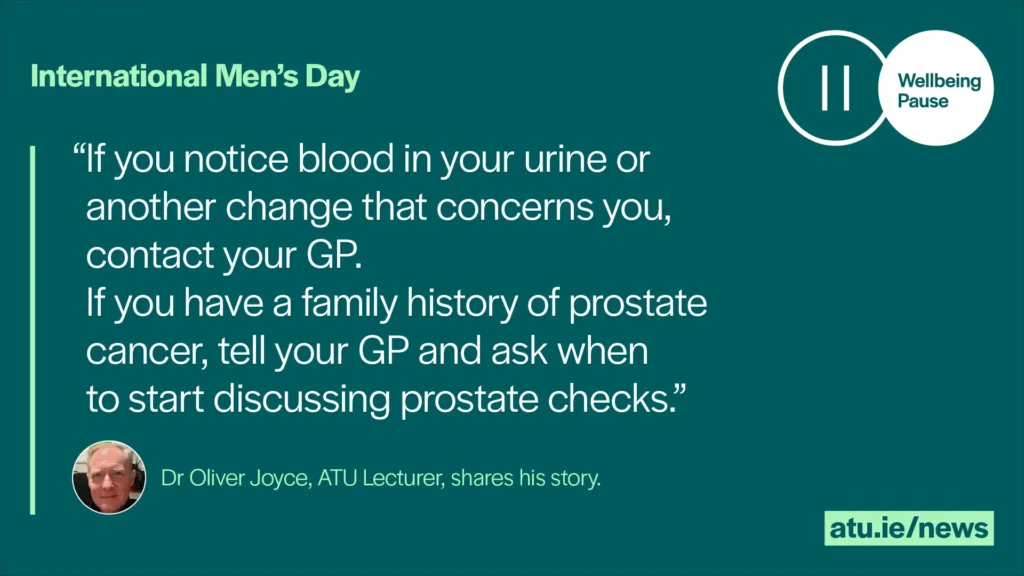
This story is part of ATU’s International Men’s Day initiative, a collaboration between Healthy Campus, Student Health services, Student Support Services, Equality, Diversity and Inclusion (EDI), Communications and Marketing.