

Courses
Prehistoric Archaeology of Ireland and Europe
Certificate
Course Details
| Course Code | SG_SPREH_S06 |
|---|---|
| Level | 6 |
| Duration | 1 year |
| Credits | 15 |
| Method of Delivery | Online |
| Campus Locations | Sligo |
| Mode of Delivery | Part Time |
Course Overview
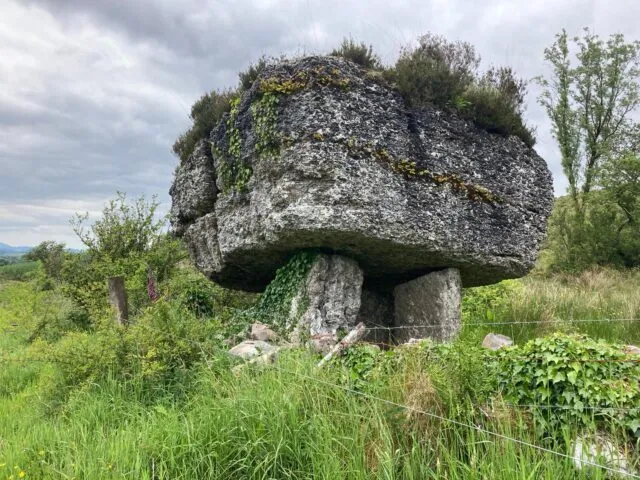
The aim of this certificate is to introduce the prehistoric archaeology of Ireland and Europe, spanning 40,000 years. The course will explore the major archaeological periods in European prehistory—Palaeolithic, Mesolithic, Neolithic, Bronze Age and Iron Age—in terms of settlement, economy, burial and ritual. Archaeological sites, monuments and artefacts will be examined together with the latest insights provided by scientific techniques, such as ancient DNA. Ranging from the Palaeolithic hunter-gatherers who ventured into deep caves to create spectacular paintings, to Neolithic farmers who constructed megalithic houses of the dead, through to the so-called Celtic elites of mainland Europe.
Programme Structure
This 15-credit will comprise three modules, each worth 5 credits, taught completely online over the course of one academic year (Sept-May). The modules include:
On the Move: Hunter-Gatherer Societies (Palaeolithic and Mesolithic) – Marion Dowd.
Megalithic Monuments of Ireland, Europe and Beyond (Neolithic and Early Bronze Age) – Sam Moore.
Hoards and Hillforts: Later Prehistoric Settlement and Society (Bronze Age and Iron Age) – Chris Read.
Other archaeology certificate courses you may be interested in: https://www.atu.ie/flexible-learning-courses-in-archaeology
This certificate course will be delivered by Dr Marion Dowd, Mr Sam Moore and Mr Chris Read.
Course Details
Year 1
| Semester | Module Details | Credits | Mandatory / Elective |
|---|---|---|---|
| 1 |
On the Move: Hunter-Gatherer SocietiesThis course provides an overview of the hunter-gatherer-fisher communities of Upper Palaeolithic and Mesolithic Ireland and Europe, spanning a period of approximately 25,000 years. The lifeways of these hunter-gatherer-fisher communities will be explored through themes including economy and diet; settlement and mobility; significance of natural places; lithics and lithic technology; microwear analysis; burial and funerary practise; ritual and votive deposition; and aDNA analyses. Learning Outcomes 1. Demonstrate knowledge of the environment, landscape and fauna of Upper Palaeolithic Ireland and Britain. 2. Describe the evidence for settlement, economy, material culture, ritual and funerary practices of Upper Palaeolithic Ireland and Europe. 3. Describe the evidence for settlement, economy, material culture, ritual and funerary practices of Mesolithic Europe. |
05 | Mandatory |
| 1 |
Megalithic Monuments of Ireland, Europe and beyondMegalithic monuments(from the Greek for 'Big Stones') are the most distinctive and visible evidence for the presence prehistoric peoples and their ritual and funerary activities in Ireland. This module examines the remains of the various types of megaliths found in Ireland with a focus on the Neolithic period (c.4000-2500 BCE). It also explores monuments from the early site of Gobekli Tepe in Turkey, to monuments in Northern Europe, Iberia, France and Britain, along with others in Asia and the Americas, in order to explore potential associated meanings, activities, beliefs and society related to the rationale behind their construction, and their use and re-use through time. Each monument is unique, but there are some typological, regional and chronological relations between a number of European megalithic constructions. The course also contextualises these monuments within the broader Irish Neolithic time period and into the Bronze Age, and looks at other evidence of monumentality, ritual and funerary activities. Learning Outcomes 1. Describe the various megalithic monuments of Ireland 2. Outline the various types of megaliths found across Europe 3. Be aware of the material culture associated with the megalithic tombs of Ireland 4. Contextualise Megalithic monuments within the broader knowledge of the Irish Neolithic |
05 | Mandatory |
| 2 |
Hoards and Hillforts: Later Prehistoric Settlement and SocietyIn this module, the student will travel through the Bronze and Iron Ages in Ireland and Europe (2400BC to AD400), from the development of metallurgy to the introduction of Christianity. Students will explore changes in burial/ritual practices, settlement and land use, in addition to technological developments. Learning Outcomes 1. Demonstrate awareness concerning arguments regarding the introduction of metallurgy in Ireland 2. Demonstrate detailed knowledge of Bronze and Iron Age settlement, material culture/technology, economy and ritual activities 3. Express archaeological data and ideas concerning the Bronze and Iron Ages through both written and oral formats |
05 | Mandatory |
Recommended Study Hours per week
Each of the three online modules will entail of 2 hours of online lectures per week. It is recommended that students should try to allow for 4-6 hours per week per 5 credit module to their studies.
Examination and Assessment
Each of the three modules will have two assessments, a combination of online class tests and essays. There will be no formal exams.
On-Campus Attendance Requirement
No on-campus attendance required.
Progression
Graduates may progress to another Level 6 or Level 7 SPA programme.
The following archaeology programmes are currently offered by ATU Sligo:
SG_SINTR_S06, SPA Introduction to Irish Archaeology, L6, ECTS 15
SG_SIRIS_S06, SPA Irish Medieval History and Archaeology, L6, ECTS 15
SG_SINTR_S07, SPA Introduction to Archaeological Interpretation, L7, ECTS 15
SG_SRITU_S07, SPA Ritual and Meaning in Archaeology, L7, ECTS 15
SG_SBUIN_S07, SPA Buildings Archaeology (Online), L7, ECTS 15
SG_SBUIM_S07, SPA Buildings Archaeology (Blended), L7, ECTS 15
For further information, please visit Archaeology at ATU.
Download a prospectus
Entry Requirements
This course will suit anyone with a desire to deepen their understanding of archaeology and explore how archaeologists actually reconstruct the past. Students will require an existing Level 5 qualification, or the equivalent in lived experience to secure entry.
Please contact the course coordinator, Dr Marion Dowd (marion.dowd@atu.ie ) if you have any questions.
Further Information
Application Closing Date
This course has now closed for applications for September 2026.
Start Date
September 2026
Contact Information
Dr. Marion Dowd