

Courses
Education (Art, Drama, Film and Theatre Studies)
Bachelor of Education (Honours)
Course Details
| CAO Code | AU688 |
|---|---|
| Level | 8 |
| Duration | 4 Years |
| CAO Points | NEW |
| Method of Delivery | On-campus |
| Campus Locations | Galway City – Wellpark Road |
| Mode of Delivery | Full Time |
| Work placement | Yes |
Course Overview
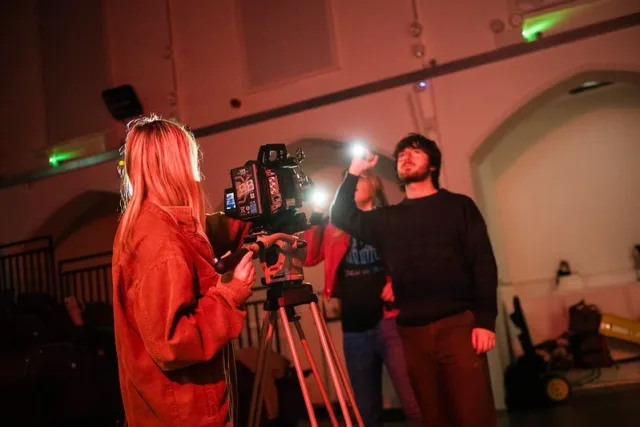
The Bachelor of Education (Honours) in Art, Drama, Film and Theatre Studies is an innovative teacher education degree for creative students who are passionate about visual arts, storytelling, performance and education. This unique programme combines professional teacher education with specialist subject expertise, preparing graduates to inspire the next generation through creativity, imagination and expression.
Students develop skills across a broad range of artistic and performance disciplines including drawing, painting, sculpture, visual culture, drama, theatre production, performance, filmmaking, digital media and creative design. Alongside subject knowledge, students learn how to plan, deliver and assess engaging learning experiences in diverse and inclusive post-primary classrooms.
The programme places a strong emphasis on creativity, collaboration and technology-enhanced learning. Through performances, productions, portfolios, exhibitions, film projects and creative practice, students gain valuable experience of both individual and ensemble work while developing confidence as educators and creative practitioners.
Core education and professional studies modules will support student teachers in developing their teaching philosophy and subject-specific pedagogical skills. School placement is a key feature of the degree, allowing students to complete approximately 30 weeks of progressively structured school placement to build their teaching skills in post-primary schools. Supported by experienced teachers and ATU staff, students gain practical classroom experience and apply educational theory in real-world settings.
Graduates will be qualified to teach Leaving Certificate Art and Drama, Film and Theatre Studies, as well as Junior Cycle Visual Art. As the only programme in Ireland to combine these disciplines within an Initial Teacher Education qualification, it offers a distinctive pathway for students seeking a career in creative education.
Course Details
Year 1
| Semester | Module Details | Credits | Mandatory / Elective |
|---|---|---|---|
| Year |
Creative Disciplines – Art and Design (1)This module allows learners to apply and develop the skills and processes introduced in Art Elements & Design Principles (Drawing – 2D & 3D) through an introduction to the creative disciplines. Emphasis is placed on the acquisition of practical skills, experimentation and making in visual art, craft and design. Students engage in the studio practices of painting, printmaking, ceramics, sculpture and textiles. Learners will experience all practice areas with a view to developing knowledge and skills which are applicable to the art classroom. Learning Outcomes 1. Demonstrate a basic knowledge of a range of skills, techniques and material(s) relevant to the creative disciplines of Painting, Printmaking, Ceramics, Sculpture and Textiles. 2. Collect and interpret appropriate research and apply this data for visual enquiry and studio experimentation. 3. Recognise the techniques and processesofeach creative discipline as they apply both to traditional and contemporary art and classroom practice. 4. Demonstrate a personal awareness of good workshop practice and Health and Safety requirements. 5. Record their engagement with each specific discipline in terms of process, materials and creative application in a Creative Workbook. 6. Consider the potential of each creative discipline with regards to their individual artistic development and teaching practice. 7. Present task work for assessment and analyse the method(s) employed in the realisation of the work. |
10 | Mandatory |
| Year |
Visual Culture and Critical Studies 1VCCS1 introduces key skills in visual and critical analysis as they are applied to a wide variety of cultural artifacts and visual media. Examples will be chosen that harmonise with the new Leaving Certificate Art curriculum within the three main content areas from Europe and the wider world; Ireland and its place in the wider world and Today's world. In VCCS1 historic examples of Irish culture from Pre-Christian to the Georgian era and European from the Romanesque, Gothic, Renaissance, Baroque up to the twentieth century will be explored, drawing upon contemporary case studies that bear relevance where appropriate. Participants will not only gain a familiarity with specialist terminology, concepts and ideas but will engage with aesthetic, social and cultural issues within an ethical framework rooted in questions of diversity and difference. The idea is that visual analysis is a form of critical and creative enquiry in tune with holistic philosophies of education. VCCS1 will prepare students to align with the focus of the Leaving Certificate curriculum that focuses on four sections: 'Artists: Theory and Thinking, Artists: Processes and Media, Art as Social Commentary or Commentator and Art and the Environment'. In Year 2 students will continue with VCCS2 with a focus on 20th century Modernism and Post-Modernism from Ireland, Europe and beyond. Learning Outcomes 1. Acquire critical skills in describing, interpreting, contextualising and evaluating cultural artefacts and visual media, using relevant terminology and specialist insight. 3. Present an analysis of selected cultural material through the seminar format and engage with confidence through peer/group discussion with competing arguments and perspectives. 4. Develop core skills in critical analysis through a range of research methods and an understanding of the demands of theacademic essay format. 5. Introduce skills in visual analysis to students undertaking the subject of junior cycle Visual Art in a stimulating and insightful manner. 6. Develop a critical awareness of their own creative role as teacher in the field of Art, Design and Graphics. |
10 | Mandatory |
| Year |
School Placement 1School Placement 1 gives students an introduction to foundational educational theory and its application in the classroom. Students participate in a series of peer teaching and/or microteaching exercises, with direction given on the development of lesson plans and teaching aids. Students also attend a primary or secondary school for one full week, as an observer and/or assistant teacher, and reflect on the experience in the context of practitioner/action research (AR). The module is delivered using a blended learning approach. As a requirement for commencing School Placement students complete TUSLA childcare e-Training, undergo Garda vetting and are required to comply with ATU 'fitness to practice' policy. Learning Outcomes 1. Apply a foundational knowledge of theories of learning and teaching to classroom management, lesson structure and effective lesson planning. 2. Prepare and deliver a section of a lesson in a peer and/or micro teaching environment. 3. Critically reflect on lessons observed and delivered in the context of practitioner research or Action Research (AR). 4. Demonstrate Numeracy, Literacy and Differentiation strategies in teaching and learning. 5. Demonstrate competency in the use of foundational ICT and education technology software. 6. Systematically observe key teaching strategies and interventions relating to Additional Education Needs. |
05 | Mandatory |
| Year |
Academic and Professional SkillsThe aim of this module is to develop academic and professional development skills for student success in higher education and beyond. This module combines online learning activities and small group workshops to focus on areas such as academic writing and integrity, creative thinking, problem-solving, time management, communications, group work, technology, innovation and presentation skills. Learning Outcomes 1. Apply appropriate tools and principles to optimise the learning experience. 2. Develop self-reflection practices for individual and group-work activities. 3. Develop academic writing skills, recognise different information sources and apply the principles of academic integrity. 4. Assess a variety of professional communication practices and digital tools and apply to problem-solving. 5. Consider how the chosen discipline has a responsibility to wider society. |
05 | Mandatory |
| Year |
Art Elements and Design Principles (Drawing – 2D & 3D)This module provides students with the opportunity to gain a deeper understand of drawing. A full spectrum of media and processes are explored through a variety of studio-based exercises and practices. This approach incorporates the principles of active learning through engagement, reflection, relevant coursework and self-directed experiences. Art elements and Design principles are referenced through drawing, colour, 2D and 3D exercises. The practical approach is structured around personal visual inquiry and the development of drawing practices that are transferable to teaching practice. In the module a variety of traditional and experimental methods and techniques are explored enabling learners to strengthen the technical and expressive content of their work. Learning outcomes for the module are supported through lecturers on historical and contemporary contexts. Group critiques and seminars introduce students to the work of a diverse range of artists from historic to contemporary. Throughout the module students are introduced to the strands of art, craft and design as they relate to the core element of drawing at junior cycle Visual Art and the three strands of study and learning outcomes relating to Senior cycle Art. Through this process they experience and acquire important critical and visual skills which assist in developing their personal teaching philosophy. Learning Outcomes 1. Identify and understand the value of drawing as an essential practical, conceptual and critical component of the creative process. 2. Recognise and apply the formal Art Elements & Design Principles through appropriate workbook and portfolio applications. 3. Comprehend and incorporate critical and visual language in Art and Design practices. 4. Recognise and utilise the Creative Workbook as an essential research tool and learning resource applicable to post primary art specifications. 5. Produce and present an Art Portfolio which reflects skills, know-how and autonomy in Art and Design practices and apply critical reflection to represent selected artworks in the learner’s Teaching and Learning Professional ePortfolio. 6. Develop and demonstrate a basic understanding and awareness of the work of historical and contemporary artists and designers. 7. Integrate critical thinking and 2D and 3D problem solving skills with an emphasis on visual enquiry. 8. Demonstrate visual research and reflective skills which communicates the analysis and contextualisation of artefacts. |
15 | Mandatory |
| Year |
Introduction to Film StudiesThis module provides an introduction to the historical development of world cinema in terms of technology, sound, form, economics, and audience. The module will take students from the first film productions of the late 19th century, through the Golden Age of Cinema , up to modern day productions. Using a range of film examples, students will review, analyse, discuss and critique film productions, considering genre, form, style and periods. Learning Outcomes 1. Identify the historical development of early cinema, distinguishing the early cinematic movements. |
05 | Mandatory |
| Year |
Introduction to Drama and Literature StudiesDrama combines the literary arts of storytelling and poetry with the world of live performance. This module introduces students to a variety of theatrical and literary forms in the context of culture, performance and representation. The module requires students to consider drama, literature, text, and performance from world contexts, raising their consciousness of ethical, historical, political and artistic questions and approaches to the world. They will also consider questions such as: What is meant by culture?; What is literature?; What is performance?; How do texts and performance signify meaning?; What is meant by representation? Cultural and historical contexts, performance spaces and production concerns, are typically examined in an effort to demonstrate the multiple ways in which a text or performance can create meaning. The module will also introduce an overview of the Leaving Certificate subject, Drama, Film and Theatre Studies. Learning Outcomes 1. Explain the relationship between form and content and the significance of textual and performance contexts. |
05 | Mandatory |
| Year |
Introduction to Set DesignThis module is designed as an introduction to the role of set design in the production of a play for theatre. Using practical workshops, learners explore texts to develop an awareness of what theatre and performance is. In a studio environment, the learner is guided through the process of designing a set for a theatrical production. Learners recognise how to analyse and interpret texts to identify themes, period, location, mood, and dramatic action from a design perspective that will reflect the emotional and imaginative world of the theatrical production. Prominence is given to nurturing personal response, and practical exercises are used to express visual language, generate curiosity and foster an imaginative approach to the work. Learning Outcomes 1. Describe the importance of theatre design as an integral part of the collaborative process. |
05 | Mandatory |
Year 2
| Semester | Module Details | Credits | Mandatory / Elective |
|---|---|---|---|
| Year |
Visual Culture and Critical Studies 2VCCS2 considers the main themes and issues characterising contemporary visual culture. It does so by giving due attention to the historical precedents underpinning the development of art, design, craft and new media. It also focuses upon the dynamics of visual culture as it grapples with a new age of digital media. Students completing this module should have confidence and flexibility in connecting these themes and issues to a variety of cultural artefacts pertinent to junior and senior cycle curricula. Examples will be chosen that are suited to the new Leaving Cert Art curriculum. In year 1, students will look at examples of Irish and European culture from the Romanesque and Gothic up to the twentieth century. In year 2 the focus will be on Modernism and Postmodernism in Europe and particularly Ireland. It will also include contextual content from the Pre-Christian period in Ireland to the present as appropriate. VCCS2 will continue the methodological approach to research appropriate to the level being assessed. Learning Outcomes 1. Develop further critical skills in describing, interpreting, contextualizing and evaluating cultural artefacts and visual media. |
10 | Mandatory |
| Year |
Creative Disciplines – Art and Design (2)This module will introduce learners to creative disciplines and pedagogical requirements, focusing on the Junior Cycle Visual Art programme. Learners obtain practical skills though making and experimenting in 2D media – emphasis is placed on drawing, painting, printmaking and photography. Learners also develop and hone pedagogical methods and relevant teaching strategies in relation to the Junior Cycle. They shape and construct learning resources/exemplars to be applied in the classroom. Throughout the module, the skills the learners acquire are mapped and integrated with the five core elements and learning specifications which relate to Visual Art at Junior Cycle. Learning Outcomes 1. Demonstrate a knowledge of materials, skills and techniques involved in two dimensional image making with respect to Drawing, Painting, Photography and Printmaking. 2. Display visual andpedagogical enquiry, studio and classroom experimentation and creativity by gathering and deliveringresponses to a range ofset briefs. 3. Articulate and synthesise ideas and critical concepts within peer critiques and through active learning. 4. Demonstrateteaching strategiesrelated tothe Junior Cycle Visual Art. 5. Understand and carry out good workshop practice with an awareness of health and safety issues pertaining to studio,workshop and classroom. |
10 | Mandatory |
| Year |
School Placement 2The School Placement 2 module prepares student teachers for their school placement in year 2. It is based upon the four pillars of lesson planning and preparation, classroom performance, including pedagogical competence, technical competence and reflective practice. As part of this school placement students are required to spend three weeks in a school. The module addresses such areas as professionalism, child care, lesson planning and preparation, the proper use of teacher resources and aids, and teaching and assessment skills and methods. It facilitates reflective practice and critical thinking. It promotes design-led, innovative and creative teaching, which is student-centred and employs active learning teaching and assessment strategies. It promotes advanced and skilful use of ICT and Educational Technology. These skills are developed through a combination of in-class training, online training, and school-based application, which work together to form a consistent approach. As such, students are required to participate in all elements and display competencies linking the theoretical knowledge and how to apply it to the practical classroom. A significant amount of independent, inquiry-based research, and practical lesson planning, takes place outside the module contact hours. Students produce a professional teaching e-portfolio detailing lesson plans and critical reflections. Learners will also develop a range of teaching aids and resources to showcase on their portfolio. They will provide evidence of critical reflection in relation to peer teaching and mainstream second-level education. Learning Outcomes 1. Ethically and professionally collate evidence of practice. 2. Engage in social constructivist, collaborative learning, and problem-based learning through: active learning activities, participation in online fora, and peer reviews and discussions. 3. Critically reflect on peer teaching and school-based performances by means of structured self/peer/tutor rubric feedback and an online forum. 4. Present a professional teaching e-Portfolio incorporating: high-quality lesson plans, teaching resources and critical reflections, to Junior Cycle level. 5. Demonstrate competence in the use of ICT and educational technology in teaching. 6. Apply and evaluate theories of teaching and learning to the context of collaborative, problem-based, design-led, innovative and creative lesson planning. 7. Describe and implement good practice in the field of classroom management, including child protection, rules and routines, positive discipline and motivation strategies. 8. Systematically observe, and reflect upon, key teaching strategies and interventions relating to Additional Education Needs. |
15 | Mandatory |
| Year |
Theory of Teaching and LearningThis module introduces initial teachers to theories of teaching and learning arising from the field of psychology, and sociology, that can be effectively applied in the classroom to enhance teaching and learning. Areas examined include the application of educational theory in the classroom, classroom and behavioural management, active teaching methodologies, technology and education, inclusive education, differentiated learning, child protection, and reflection. Active and problem-based learning strategies are used to engage and motivate learners and enable them to take ownership of learning. Both individual and group work is facilitated. Learning Outcomes 1. Demonstrate knowledge of foundational psychological theories relating tolearning, including debates from various psychological perspectives. 2. Explain the origin of sociology andprovide a foundationalaccount of the sociology of education. 3. Provide a comprehensive account of the theory of classroom management, including behavioural management,and the role of reflective practice in classroom management. 4. Show how to integrate differentiation and inclusion strategies into teaching and learning. 5. Identify key areas of Child Care legislation and practice relevant to post-primary schools |
05 | Mandatory |
| Year |
Cinematography and LightingA module introducing students to the essential aspects of camera and lighting operations necessary for the production of moving images for film and moving-image production. The main aim at this level of the course is to enable student teachers to appreciate both the technology and technical aspects of the role of the camera operator. They will learn to function in a range of circumstances to evidence an agnostic understanding of the process through a range of film and documentary circumstances. Learning Outcomes 1. Demonstrate a theoretical understanding of the physics of light (natural and artificial) necessary for the controlled recording of moving images with a broad range of cameras. 3. Test the set-up and operation of digital film cameras with respect to controlling the interdependent values necessary for correct exposure and recording of moving images, in terms of aperture, focus, shutter speed, white balance. 4. Organise and collaborate using the professional procedures and protocols required by industry in a collective crew-based setting, in order to produce practical outcomes in the form of individual digital cinematography projects for assessment. |
05 | Mandatory |
| Year |
Production Design for Film and TheatreAn Introduction to Production Design through a range of skills in design, research, critical thinking and presentation for film and theatre. The module introduces the role of the Production Designer relating to feature films, short films, TV, and theatrical performances. Learners explore the key skills, practices and thinking which describe contemporary film, television and theatre design practice. It explores key concepts that are required to add value and visual interest to a screen or stage story. Learners develop an appreciation of the Production Designer's role and responsibility, and their relationship with the Director and other members of the set/stage. The course encourages the learner to recognise the need for designers to use initiative and to be well-organised. Problem-solving and critical awareness are developed mainly through a project-based approach. Learners will gain an understanding of the importance of research and its role in dictating the visual language of Production Design. Learning Outcomes 1. Explain the role of the Production Designer and extended Art Department crew members. 4. Implement the principles of set design, taking into consideration aspects such as sets and props, lighting, music, sounds and costume. |
05 | Mandatory |
| Year |
Writing for Stage and ScreenThis module gives an overview of storytelling structure: including basic plot structure, writing exercises and an analysis of scripts for stage and screen . The modules enables learners to deftly translate scriptwriting skills into writing for the stage and screen. Learners have the opportunity to devote time to write, develop, and reflect upon their own creative practices, receiving ongoing feedback, both in a group setting, and one-on-one. Learning Outcomes 1. Relay characters grafted from personal experience rather than generic, formulaic representations. |
05 | Mandatory |
| Year |
Teaching for Drama and TheatreTeaching for Drama and Theatre aims to introduce key methodologies, pedagogies, practices and concepts to prepare student teachers of Drama, Film and Theatre Studies for the post-primary classroom. This immersive module will adopt a range of methodologies to engage learners in affective and aesthetic learning through dialogic meaning-making, developing specific pedagogical approaches that align with the teaching of Drama, Film and Theatre Studies. The module also introduces learners to the concept of Physical Theatre, the physical work of the actor and the world of professional, specialised actor training.These tools will help the teacher develop engaging learning environments that support critical and creative processes, adapting to a wide range of learning styles. The module will also introduce and examine a range of assessment strategies that assist the teacher in supporting and holistically assessing post-primary pupils' engagement in their learning and monitoring their progress in the subject. Learning Outcomes 1. Outline key classroom management techniques that help to support critical and creative processes in teaching Drama, Film and Theatre Studies. |
05 | Mandatory |
Year 3
| Semester | Module Details | Credits | Mandatory / Elective |
|---|---|---|---|
| 1 |
Creative Disciplines – Art and Design (3)In this module learners enhance their skills in 3D art practices through a range of making and thinking strategies relevant to the creative disciplines of ceramics and sculpture. Focus is placed on the skills, concepts and visual language required to produce appropriate 3D art, craft and design artefacts. Learners are trained in the application of these specialisms to the classroom in order to produce and describe creative and vibrant three-dimensional artworks. They investigate and develop fluency in 3D elements – form, proportion, balance, tension and structure by exploring objects within space and three-dimensional objects as promoted by artists and designers. Throughout the module students respond to both practical tasks and conceptual challenges by creating constructions, installations and artworks with a variety of materials – cardboard, clay, fabric, plaster, plastics, wire, wood, found objects etc. Projects may be individual or collaborative. Critical discussion and reflection are fundamental in integrating theory and practice. During the module learners engage in the wider debates around contemporary art practice as well as the pedagogical requirements, core elements, strands and specifications of both junior cycle Visual Art and Senior Cycle Art through critical reading, peer to peer discussion, critique and seminar. Learning Outcomes 1. Demonstrate and apply the formal art elements and design principles relevant to the 3D creative disciplines of ceramics and sculpture. 2. Integrate critical thinking and creative problem-solving skills whilst engaging with traditional and emerging media and processes relevant to teaching and learning in Senior Cycle Art programme. 3. Present artworks and artefacts in an appropriate manner which reflects skills and know-how in the 3D and Design processes in the Creative Workbook and Art Portfolio. 4. Demonstrate specialist skills in the areas of ceramics and sculpture and appreciate the health, safety and environmental considerations associated with the materials and processes. 5. Demonstrate an ability to respond to a set brief by engaging in workshop process, debate, seminar and tutorial activity by articulating ideas and design problems. |
10 | Mandatory |
| 1 |
Curriculum and AssessmentIn the Curriculum and Assessment module, students teachers clarify what is meant by the terms 'curriculum' and 'assessment'; they examine definitions and models, and their application in the classroom. Using Inquiry-based Learning (IBL) and Problem-based Learning (PBL) methodologies, students examine international trends in curriculum and assessment as well as contemporary issues in Irish curriculum policy and practice. A primary focus is to facilitate student teachers to gain an understanding of the nature and design of curricula and assessment in post-primary education in Ireland. The module affords them an opportunity to understand curriculum reform and critically evaluate curriculum choices offered at localised levels in post-primary schools. Students identify key stakeholders and appraise the role of key organisations contributing to curriculum and assessment at post-primary level. Students collaborate to develop cross-disciplinary curricular planning grids/schemes of work that incorporate creative approaches to assessment. Students also examine international trends. Learning Outcomes 1. Plan coherent, progressive and integrated teaching events and modules 2. Demonstrate an understanding of contemporary debates about curriculum developments and initiatives in second-level education |
05 | Mandatory |
| 1 |
Film Editing and Post-ProductionThis module introduces the history, aesthetics and practice of video and film editing and post-production processes. The module comprises both theory and practice, and is predominantly computer lab-based. Through lectures and critical analysis of fiction/non-fiction/animation excerpts, the students will be introduced to the terminology, basic techniques and aesthetics of editing and post-production techniques. Participants will also develop practical skills by working with industry-standard digital-editing software. By the end of this module, students will have acquired the essential knowledge, terminology, and skills needed to edit recorded projects relevant to the Leaving Certificate senior cycle subject, Drama, Film and Theatre Studies. Learning Outcomes 1. Describe the history and development of picture and sound editing. 4. Exercise appropriate judgement in the execution of aesthetic and narrative decision-making involved in the creative writing process. |
05 | Mandatory |
| 1 |
Performance Skills: Directing and ActingThis introductory module asks learners to consider some of the key roles in Drama, Film and Theatre: those of the actor and director. This module aims to broaden the student's understanding of the crafts of acting and directing, developing their confidence in these practices and introducing them to a wide range of directing and acting modes. In this module, students will enter the rehearsal room and practically explore acting and directing strategies, techniques and pedagogies. The module explores historic and contemporary acting and directing modes from a global context, enabling students to develop a tool-kit of practical acting and directing strategies and approaches that inform the work of the artist-practitioner. Students will engage with a diverse set of aesthetic forms of theatre and performance, exploring their associated directing and acting methodologies and critical ideas within them such as agency and expression. Learning Outcomes 1. Identify critical and aesthetic approaches to directing and showcase these strategies in practice. |
10 | Mandatory |
| 2 |
School Placement 3The School Placement 3 module prepares student teachers to plan and effectively deliver lessons in the technical subjects Technical Graphics and Materials Technology (Wood) or Art at Junior Certificate level. Student teachers are introduced to the various roles of the class teacher, reflective practice and practitioner or action-research in teaching and learning. Students integrate in the whole school environment while on placement in a host school. They develop a professional teaching e portfolio incorporating lesson schemes, plans, resources and reflective practices. They are required to demonstrate competence in a variety of active learning and assessment strategies. They are also trained to demonstrate technological competence through advanced use of ICT tools and educational technologies, in the context of flipped classroom teaching, blended learning and/or online learning, as required. TUSLA childcare e-Training, Garda vetting and Fitness to Practice, according to ATU policy, are requirements for commencing placement. Learning Outcomes 1. Prepare, deliver, manage and assess a series of design-led, innovative and creative lessons at Junior Certificate level. 5. Present a professional teaching e- portfolio incorporating lesson schemes, plans, resources and evidence of critical thinking and reflective practice. |
20 | Mandatory |
| 2 |
Education StudiesBuilding upon the prior Theory of Teaching and Learning module, the Education Studies module further explores educational theory in the context of initial teacher education and training. It examines philosophical, psychological and sociological perspectives on learning, and their application to the classroom. Students develop their own unique philosophy statement, of education. The module further examines the history of education in the Irish context, with particular emphasis on technical education. Current issues in Irish education are explored including curriculum reform, intercultural education, differentiation and special needs education, universal design for learning, empathy education, and educational technology, among others. Active teaching and learning methods, and strategies for reflective practice, are both examined and modelled in module delivery. Learning Outcomes 1. Apply key principles of educational theory, in the fields of philosophy, psychology and sociology, to the development of a personal philosophy of education 2. Demonstrate theoretical and practical understandings of Reflective Practice and Action Research in the field of teaching and learning. |
05 | Mandatory |
| 2 |
Education for Inclusivity and DiversityThis module aims to raise awareness of inclusion and diversity in education globally and nationally. By means of inquiry-based research, guest inputs, and observations (where feasible), participants' understanding of the role of global citizenship, partnership in the community, and non-mainstream educational provision will be enhanced. Learners will be introduced to the concepts of Civic Engagement and Service Learning. The theme of educational disadvantage will be examined. Participants will be provided with foundational tools of social analysis, with attention to socio-economic factors, gender, race and culture in the context of education. Learning Outcomes 1. Recognise the educational significance of multiple identities and develop skills for teaching inclusively in an increasingly diverse world. 2. Demonstrate professionalism and ethical integrity byco-creating a learningenvironment where each perspective is considered. 3. Reflect on global citizenship, from an education perspective, includinggood practices and ethical responsibilities in community education partnerships. 4. Identify key principles and good practices in civic engagement, service learning, adult education and community education. 5. Debate contemporary educational issues relating to diversity, gender, interculturalism, educational disadvantageand sustainability. |
05 | Mandatory |
Year 4
| Semester | Module Details | Credits | Mandatory / Elective |
|---|---|---|---|
| 1 |
School Placement 4This module facilitates students to successfully plan, teach, assess and evaluate a series of lessons at Junior and Leaving Certificate cycles. It enables student teachers to compile a fully comprehensive and professional teaching and learning e Portfolio, showcasing best sample outputs from SP1-4. The module promotes reflective practice, research, and professionalism in the practice of teaching. A large suite of professional teaching resources are developed with attention to differentiated learning and universal design for learning (UDL). Students become competent in the use of the language of reform and their subject/discipline literacy. On SP4 students engage weekly in ten hours of classroom teaching to senior level and 2 hours of school support work and/or practitioner research is also recommended. Practice-based research is supported by online supervision sessions and critical reflections. Digital literacy and practice is also enhanced. The module promotes the effective use of a variety of educational technologies, as well as blended/online pedagogical strategies and tools. The module also incorporates a ten-week peer mentoring and leadership training programme, called NEST ( Nurturing Excellence in Students Teachers ) where participants peer mentor year three students. Students are required to evidence fitness to practice, according to ATU policy, Garda vetting and e-TUSLA training prior to commencement of SP4. Learning Outcomes 1. Successfully plan, teach and evaluate a series of lessons at Junior and Leaving Certificate cycles and assist peer to do likewise. 2. Demonstrate competence in a broad range of generic teaching skills, particularly core skills (planning, implementation, evaluation and reflection), methodologies (design-led, problem-based, and co-operative learning) and mentoring skills (peer mentoring). 3. Undertake the various roles of the teacher and integrate successfully and professionally into the entire school community 5. Demonstrate high levels of skill in the advanced use of ICT tools and educational technologies 7. Apply numeracy, literacy, graphicacy and oracy strategies to classroom teaching. 9. Critically reflect on the implementation of research-based Additional Education Needs teaching strategies at Junior Cycle and Senior Cycle levels, applying selected models of reflection, and multimedia approaches. |
20 | Mandatory |
| 2 |
Creative Disciplines – Art and Design (4)This module will introduce learners to more advanced textile techniques and processes pertaining to print, embroidery, and constructed textiles. Learners will apply their visual research to generate textile sampling and prototypes for fashion, wearable art, interiors, or contemporary art applications. The module provides the learner with the methodologies, skills, and context to realise design outcomes using textile applications while engaging with core elements, strands and learning outcomes relevant to junior cycle Visual Art and Leaving Certificate Art curricula. It builds on practical skills, making and experimentation in previous art and design studio practices. Learners are trained in the application of this specialism to the classroom and design and develop learning resources. Learners demonstrate an integration of theory and practice and critical reflection. Learners will also recognise and engage with the five key skills central to teaching and learning of the senior cycle curriculum which are embedded throughout the module. Course content will be delivered through a series of lectures, workshops, group critiques and tutorials. Learning Outcomes 1. Conduct visual research and explore design concepts to build a body of learning resources applicable to post primary art specificationsand Leaving Certificate Art. 2. Respond to and interpreta design brief in an original and creativeway, through engagement in workshops, tutorials, peer discussions and critical reflection. 3. Demonstrate an understanding and critical awareness of visual culture in the context of historical and contemporary designers. 4. Engage in independent and collaborative learning through peer critiques demonstrating visual enquiry, creativity and problem solving. 5. Present a body of work in the learner’s Teaching and Learning Professional ePortfolio reflecting design skills and technical processesin the creative discipline of textiles |
05 | Mandatory |
| 2 |
Professional StudiesThis module explores professionalism in teaching. Students become informed about the roles and requirements of key educational stakeholders and they examine codes of professional conduct or practice, both nationally and internationally. They become fully familiar with the landscape of Initial Teacher Education (ITE) and future professional teaching pathways. Areas such as educational leadership & management, evidence-based/research-based practice, social justice education, school development planning, and preparing for interview, are explored. The skill of critical thinking is enhanced through the module, through tutorial discussions, debates, discussions and a mock interview. The mode of delivery is active learning: students engage in tutorial discussions and debates, conduct and present a small-scale social justice project, undergo a mock job interview and present one example of their innovative teaching at an open ATU conference. Learning Outcomes 1. Debate current educational trends and policies relating to initial teacher education and post-primary teaching, identifying the main contributors to policy formulation. 2. Collaboratively plan, implement and present a social justice educational project. 3. Critically assess whole school professional codes of conduct, roles and responsibilities. 4. Professionally disseminate creative and innovative teaching, learning and assessment strategies. 5. Provide evidence of a comprehensive knowledge of the professional responsibilities of post-primary teaching, including subject specialist delivery, school planning and whole school responsibilities. 6. Demonstrate subject-discipline expertise and whole-school professional knowledge in the context of an oral interview |
10 | Mandatory |
| 2 |
Film and Theatre Performance ProjectThis module requires learners to produce a short high-quality piece of film, which is then adapted for the stage. Both productions will require students to draw on skills, knowledge and competencies developed whilst completing Drama, Film and Theatre Studies modules on the programme. The productions will demonstrate the learner's comprehensive understanding of contemporary film, theatre and performance practices, taking consideration of historical and contemporary contexts, focusing on political, aesthetic, theoretical, social, and cultural aspects. Learners will also consider appropriate pedagogical techniques that foster innovative teaching strategies and methods to foster effective learning and engagement, appropriate to post-primary senior cycle classrooms. Learning Outcomes 1. Develop a creative learning environment that supports high quality production of film and theatre |
10 | Mandatory |
| 2 |
Costume Design for Stage and ScreenThis module introduces learners to costume design and its role in the film-making and theatre production processes. Learners will explore character analysis, design research techniques and visual storytelling for stage and screen. Skills include script breakdown, historical research, costume sketching, fabric selection, and understanding the collaborative production process. The design process will involve the development of appropriate costumes informed by research, u sing sketching, figure drawing, rendering and visualisation techniques. Environmental aspects such as materials, quality, costs, up-cycling, and end-of-life will also be considered. Learning Outcomes 1. Describe the role and importance of costume in theatre and film productions. |
05 | Mandatory |
| Year |
Practitioner ResearchThis module facilitates learners to integrate prior learning from programme educational theory modules, subject specialist modules and school placement modules in the context of practitioner research. Learners are introduced to best practice library research, literature analysis research and primary research theory and practice. They learn to distinguish between various educational research methodologies, including documentary analysis research, case study research and action research. The concept of triangulation is explored as well as data gathering methods, data analysis methods, and research validation and reliability. Finally, principles of research ethics are explored, including informed consent, anonymity and power relations in practitioner research relationships. Learning Outcomes 1. Construct a concise practitioner research proposal that specifies the research question and the research project design. 2. Systematically evaluate literature in a specified field, employingadvanced library database research. 3. Distinguish between different educational research methodologies, including documentary analysis, case study and action research. 4. Apply triangulation in the context of a small-scale group primary practitioner researchproject. 5. Systematically analyse practitioner research findings and discuss the significance of the findings, in dialogue with literature. 6. Disseminate research findings in the form of aresearch presentation. |
10 | Mandatory |
Progression
Graduates may progress to masters degrees, postgraduate diplomas and research programmes in education, arts education, drama education, creative practice, film, theatre, leadership and related disciplines in Ireland and internationally.
Build Your Prospectus
Explore the courses that interest you with MyATU Prospectus. Choose the courses and information you want to see, then create a personalised prospectus that fits your interests and goals.

Entry Requirements
| Leaving Certificate Entry Requirement | 6 subjects at O6/H7 which must include: – 2 subjects at H5 – English or Irish at O6/H7 – Maths at O6/H7 – Art or Drama, Film & Theatre Studies or English or Irish at H5 |
| QQI/FET Major Award Required | One of the following awards: 5M18519 Film & TV Production 6M18534 Film & TV Production 6M3566 – Drama 5M5163 – Theatre Performance 5M5152 – Theatre Production 5M1984 – Art, Craft & Design 5M1985 – Art 5M2208 – Design 5M3635- Pre-teaching Education & Training Studies |
| Additional QQI/FET/ Requirements | 5M18519, 6M18534, 6M3566, 5M5163, 5M5152 & 5M3635 requires 3 distinctions 5M1984 requires 3 Distinctions 5M1985 requires 3 Distinctions 5M2208 requires 3 Distinctions |
| GCE/ A-level/ GCSE Entry Requirement | 6 distinct recognised GCSE/A-level subjects which must include: A-level in Art or Drama and Performing Arts at Grade C 1 other A-level at Grade C and 4 other subjects at GCSE-level Grade C which must include: – English or Irish – and Maths |
| Garda Vetting | Entrants to this programme will be required to undergo vetting by An Garda Síochána |
| Fitness to Practice | Students must meet the Fitness to Practice standards outlined in the ATU Student Fitness to Practice Policy. |
Fees
Total Fees EU: €2,350
This annual student contribution charge is subject to change by Government. Additional tuition fees may apply. Click on the link below for more information on fees, grants and scholarships.
Further information on feesCareers
Graduates are primarily prepared for careers as post-primary teachers of Art and Drama, Film and Theatre Studies, and are eligible to register with the Teaching Council. Additional opportunities exist in arts education, youth and community arts programmes, creative learning initiatives, theatre and cultural organisations, film production support, educational content creation and wider creative industries where communication, collaboration and creative skills are highly valued.
Further Information
Contact Information
Contact cao@atu.ie to find out more about the programme or campus you plan to join.
Contact admissions@atu.ie for enquiries about your application.
For International (Non-EU) enquiries, please contact international.galwaymayo@atu.ie
Contact admissions@atu.ie for enquiries about your application.
For International (Non-EU) enquiries, please contact international.galwaymayo@atu.ie
