Courses
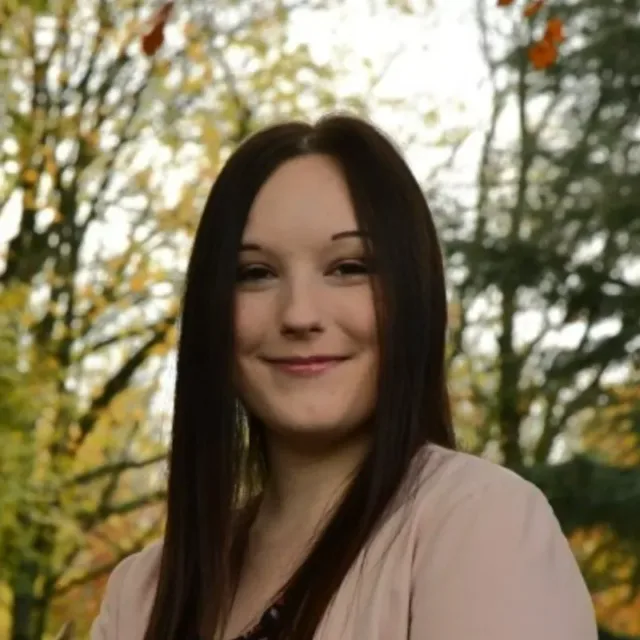
Catriona Iulia Reid
Master of Science
Science Communication
Galway City – Dublin Road
Can you tell us your name, job title, and the course you are studying at ATU?
My name is Catriona Iulia Reid and I am a Research Assistant in MaREI/University College Cork, and I am studying the MSc in Science Communication at ATU
Can you share your career path to date?
I studied Government and Political Science for my undergraduate degree, after which I worked as a research intern on a public engagement project involving children in co-creating resources for schools to use for education around biodiversity loss, and from there I moved to a research assistant role covering various projects on themes such as marine spatial planning, marine restoration, and climate action.
What does your current role involve?
My current role involves public engagement and project management on a UCC led project called ‘A Brush With Climate’ where we are engaging with hairdressers about climate action, providing them with climate literacy training and supporting them to talk about climate with their clients.
What motivated you to start studying?
I took a break from education after my undergraduate degree because I wanted to gain some real-world experience, and now that I have built a foundation for my career, I felt it was the right time to return to education because I wanted to specialise in science communication.
Why did you choose this course at ATU?
I chose this course because it offered exactly the niche I was searching for in a format which is accessible for me, meaning I can balance working with studying. The course is really tuned in to current needs in science communication, which was a big selling point for me.
How do you find the process of studying in a flexible manner? What elements did you find helpful? Were there elements you found challenging?
The flexibility offered at ATU is really brilliant – we are a small class so it’s very easy to fit deadlines around to suit our schedules. Our lecturers are all really supportive and kind, and attending class just feels really fun because we are all really passionate about the topic and we all really want to be in the (virtual!) room.
How do you balance work and study?
Time management is really key – I do most of my coursework in the evenings after work, and sometimes on the weekends. Naturally, coming up to an assignment due date, I am a little busier but I knew that I was able to give that commitment. You get what you give!
In terms of your employer, were they supportive of your decision to study? Are there elements of the course that are particularly relevant to your current employer?
Yes – I am very lucky to have a really supportive leadership team in my workplace, and they were fully on board with me returning to education part-time. We spoke about how best they could support me, and this masters has really direct relevance to my work, so it was a win-win. I have found the practical communication strategy management material covered in Communication Theory very useful, and Science and Society has helped me think of new ways to design public engagement for maximum reach and impact.
What advice would you have for anyone considering studying a flexible learning programme?
I would say just do it! The flexibility is embedded in the course, and you just need to be willing and able to commit the time outside of work. I think this course would be ideal for anybody who is looking to transition into a science communication role, because they give you an excellent grounding in communication studies at the very start. For people like me who already work in sci-com or public engagement, you’ll enhance the work you’re already doing, and you’ll definitely learn new things along the way too.
In what way has studying with ATU benefitted your career to date?
I’ve already picked up some really practical tools which I can begin using right away – one example is that I recently was helping a colleague draft a press release for our project, and I was able to refer to the materials we had covered the previous week in Communication Theory to help me. Having a master’s degree also allows me the freedom of choice to either continue down the professional research support route, or to build into a PhD if I choose.
Do you find that the elements you are studying have practical relevance in your day-to-day role?
Absolutely – there are so many things to consider when designing science communication, some of which I was familiar with but some of which are totally new to me. I have found the tools and resources shared in class really useful for my work. My day-to-day role is quite varied – one day I might be designing social media content, or I might be analysing qualitative data, and the next I could be presenting at a conference – either way, science communication comes into my work every day. Another aspect is the science of communication – I have found that I have become a better interpersonal communicator inside and outside of work by studying this course!