
Courses
Meet the Irish marine biologist building a coral reef paradise
An Irish marine biologist from Co Kildare is supporting critical restoration work in the Maldives one coral fragment at a time.
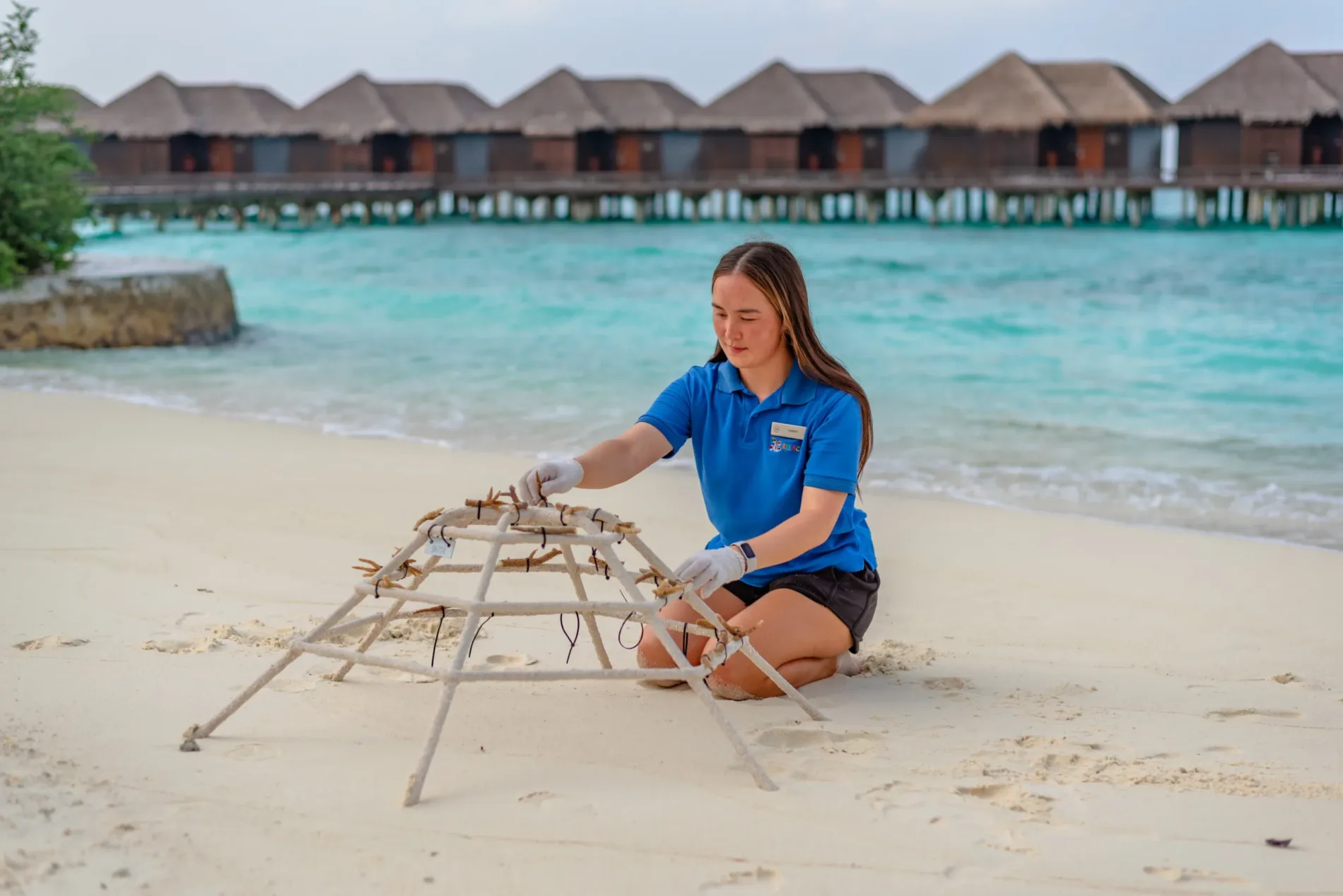
Marine biologist from Co Kildare, Katelyn Hegarty-Kelly, is helping rebuild coral reefs in the Indian Ocean by creating what she describes as a “reef garden from nothing”.
Her work comes at a critical moment. She has warned that global coral reefs are approaching a point of no return as the world experiences its fourth mass bleaching event in recorded history.
“Coral supports 25% of marine life,” Katelyn explains.
That whole 25% category of marine life is under threat. They rely on corals for habitat, for food, and if we lose those corals, we lose those species.
From Kildare to the Maldives
As a graduate of Atlantic Technological University (ATU), Katelyn’s journey began with research on microplastics before her interest turned towards coral reef ecosystems.
“I knew I wanted to work in coral restoration or research if given the opportunity,” she says.
After graduation, she applied to Reefscapers, a coral restoration initiative working across resort islands in the Maldives. Ten months later, she arrived to contribute to a project that would blend scientific research with public engagement.
What drew me was seeing a project that actually works.
“They were actively showing progress online, through social media, and that transparency really appealed to me. I wanted to be part of something new and make it grow.”
The journey to 1,000 underwater coral frames
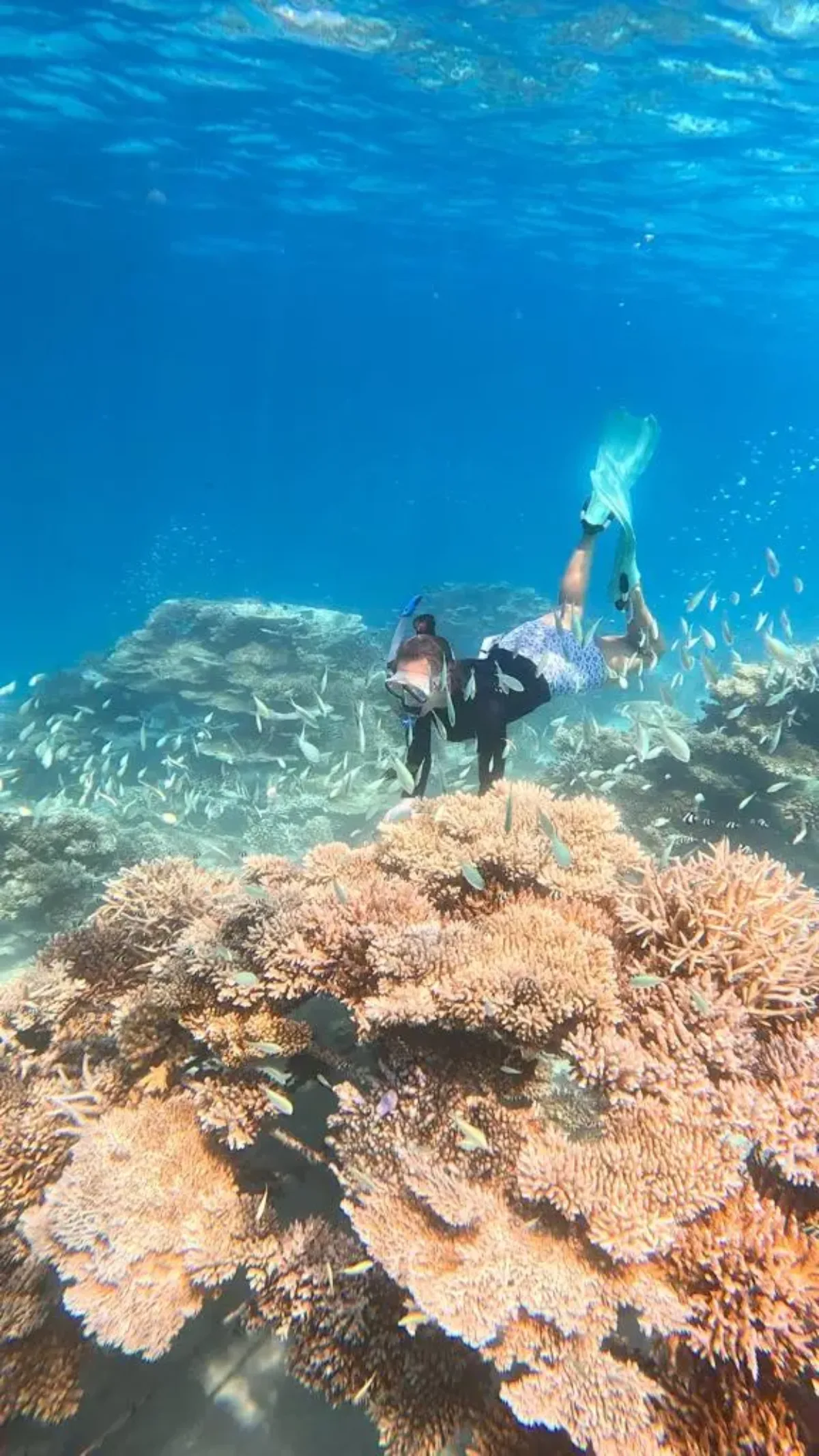
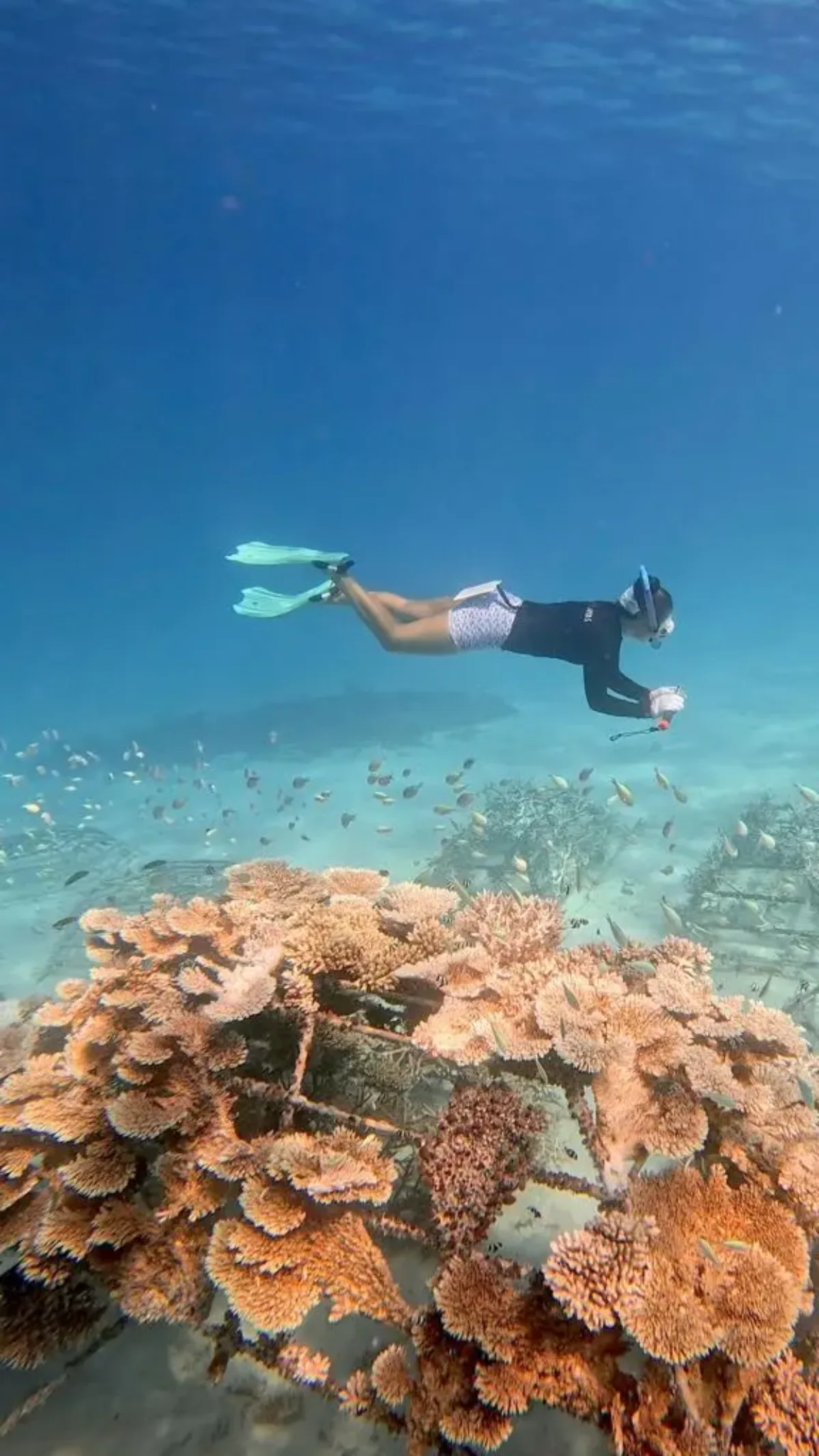
The coral garden Katelyn works on started in a sandy lagoon with no natural reef. Over nearly six years, her team has transformed this area into a thriving ecosystem.
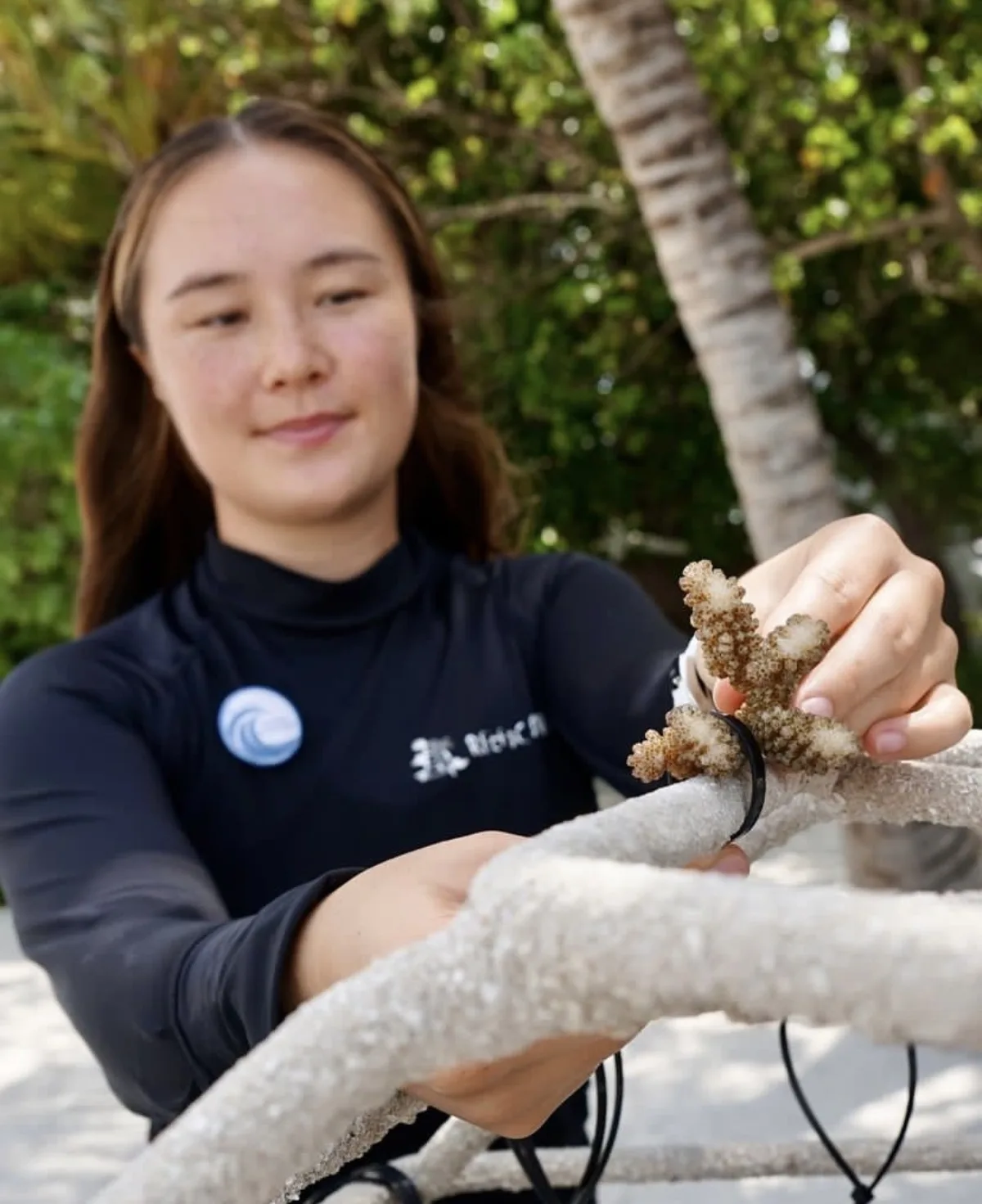
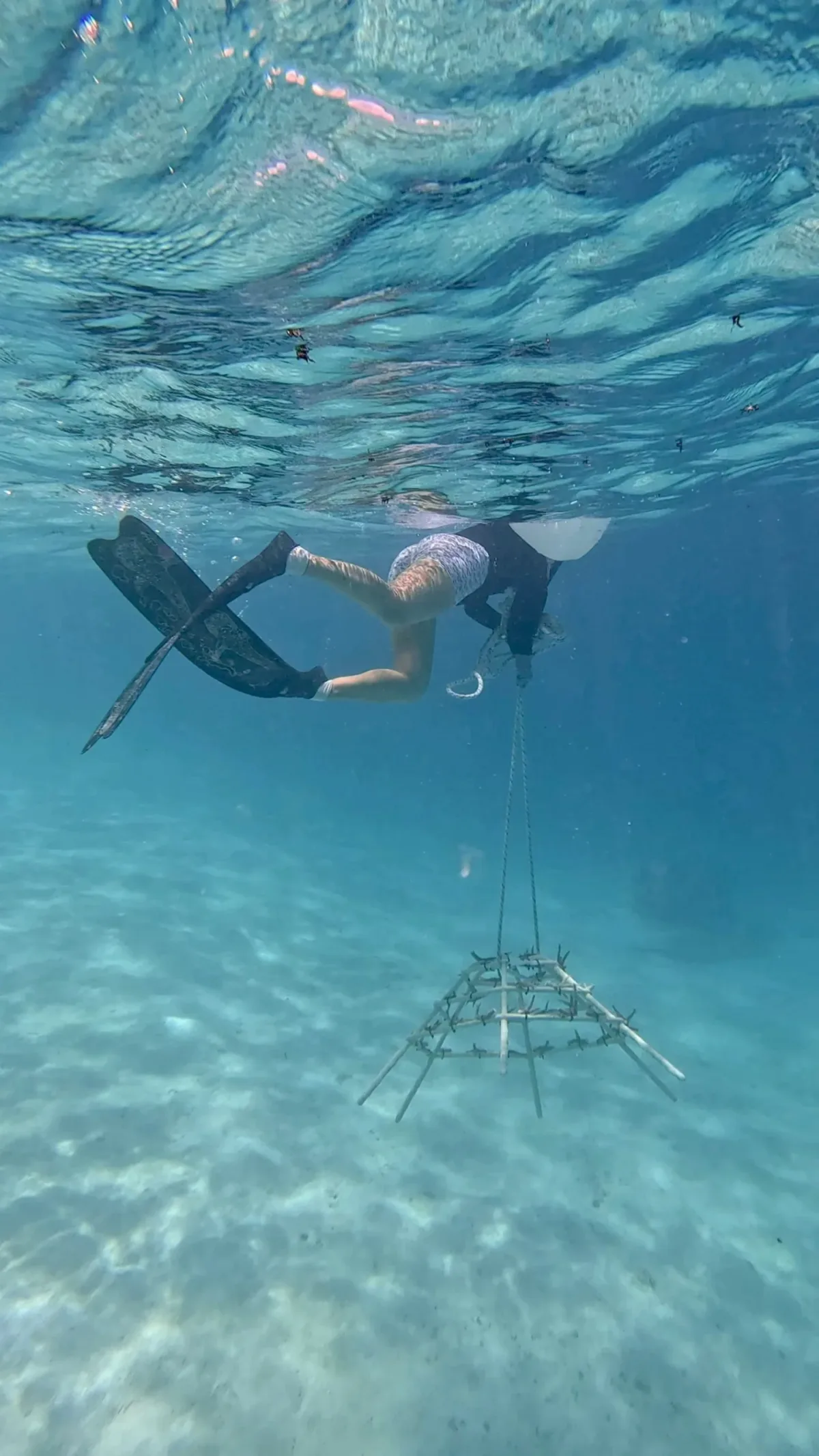
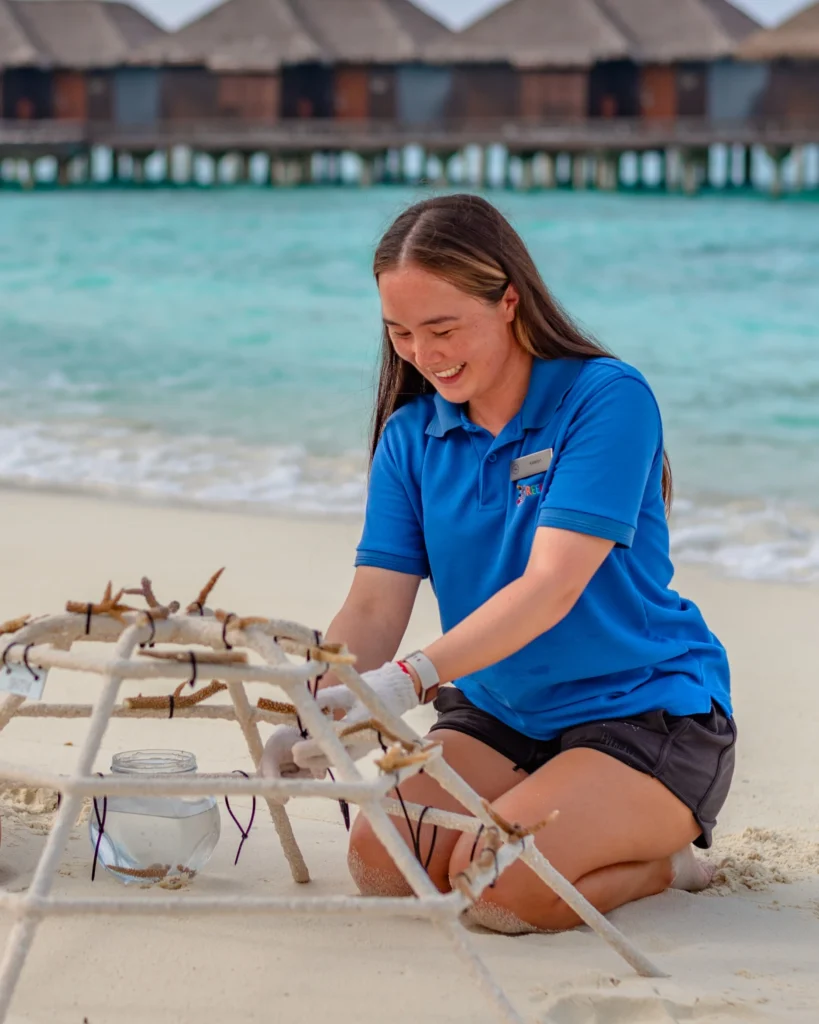
Since joining, Katelyn and her colleagues have planted over 900 coral frames, each made from metal rebar and designed to hold around 41-106 coral fragments. The frames, which resemble spider webs once underwater, are tagged and monitored every six months to track growth.
“That in itself gives me chills,” she says. “We’ve taken a barren lagoon and turned it into a coral reef garden. Six years ago, there was almost nothing here”.
Guests visiting the resort can take part through Reefscapers’ ‘Adopt a Coral’ programme, attaching coral fragments and learning about reef ecosystems.
Some guests have never seen coral up close,” Katelyn says. “Through our programme, we show them what we’re doing, why it matters, and what they can do to help.”
Responding to global bleaching events
In 2024, a worldwide coral bleaching event caused significant stress to reefs, including the coral gardens in the Maldives.
Katelyn emphasizes the stakes:
“Corals support an entire trophic level in the ocean. If they disappear, reef fish populations collapse, local communities lose income, and coastal areas become far more vulnerable to storms”.
We’re at 1.4°C warming now. If we hit the 1.5°C tipping point by 2030, we may lose warm-water corals entirely, not just for our grandkids, but potentially in our lifetime.
Katelyn Hegarty-Kelly
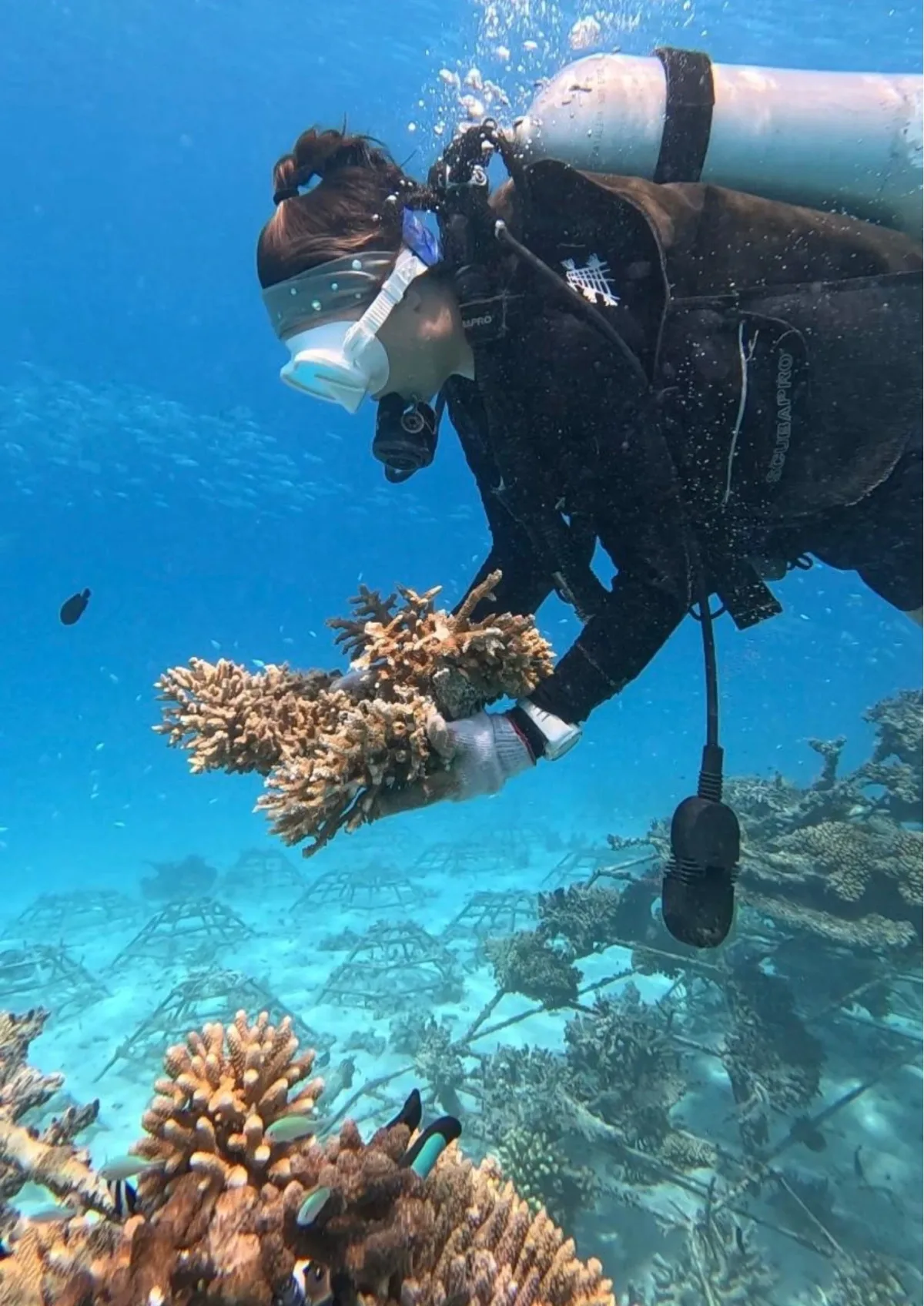
Bleaching happens when corals are stressed by higher sea temperatures and expel the tiny algae that give them their colour and provide essential nutrients. Without these algae, corals turn pale and lose a critical source of food. Prolonged bleaching can lead to widespread coral death.
Reclaiming what’s lost
Another serious threat undergoing the destruction of coral reefs is the process of land reclamation. Katelyn describes it as a controversial practice.
When islands are made, sand is pumped on top of a coral reef. That’s what we call land reclamation. It happens a lot, and unfortunately it can destroy coral.”
In February 2025, Katelyn’s team at the Sheraton Maldives Full Moon Resort & Spa relocated five tons of coral from a reclamation site and into their coral garden.
“We had a big team that moved five tons of coral to the resort. It took seven hours for the coral to arrive on the boat because they need to remain submerged in saltwater”.
It’s a huge project with a huge financial investment, but it’s necessary to save these ecosystems.
Her work reflects the balance between tourism and conservation.
“We can’t stop construction entirely, but at least we can relocate corals and protect what’s left.”
The future of coral reefs
Despite the challenges, Katelyn remains hopeful:
“Seeing a reef emerge from nothing is remarkable. It shows what’s possible with the right tools, knowledge, and community support.”
She believes that restoration and public awareness are essential to securing the future of coral reefs.
About Reefscapers
Reefscapers, founded by Maldivian marine biologists in 2000, partners with resorts to restore damaged reefs, relocate threatened coral and educate visitors. The organisation has deployed thousands of coral frames across the Maldives, making it one of the largest marine restoration projects in the region.
For more information or to support coral restoration, visit Reefscapers.
For media enquiries, contact:
Jorden McMenamin
Communications Officer
Tel: 074 918 6127
E: jorden.mcmenamin@atu.ie
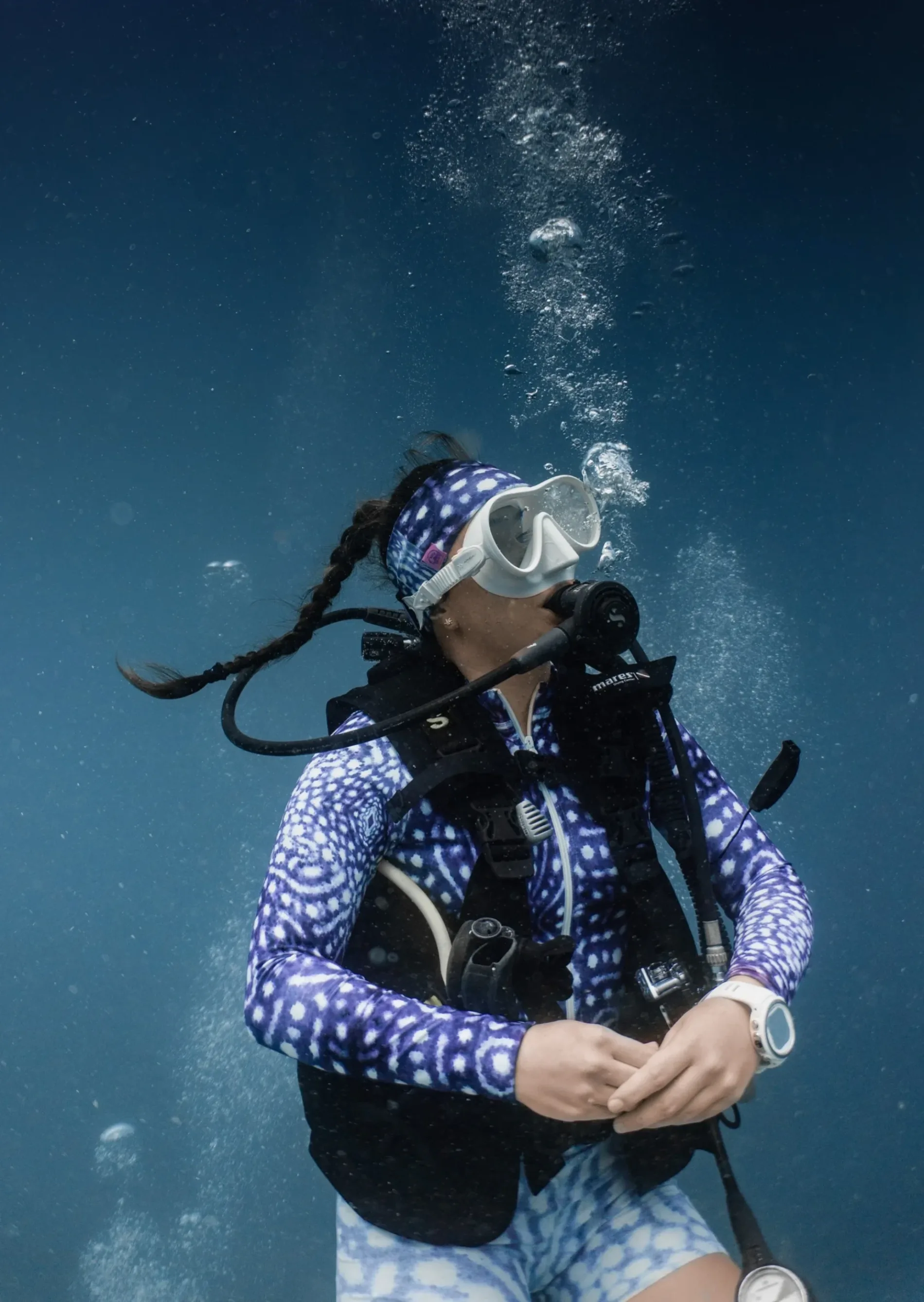
Featured Image: Katelyn Hegarty-Kelly is a marine biologist from Co Kildare. Photo by Mesmorising Maldives.
Photo Captions:
- Katelyn demonstrates attaching corals to a frame for World Oceans Day.
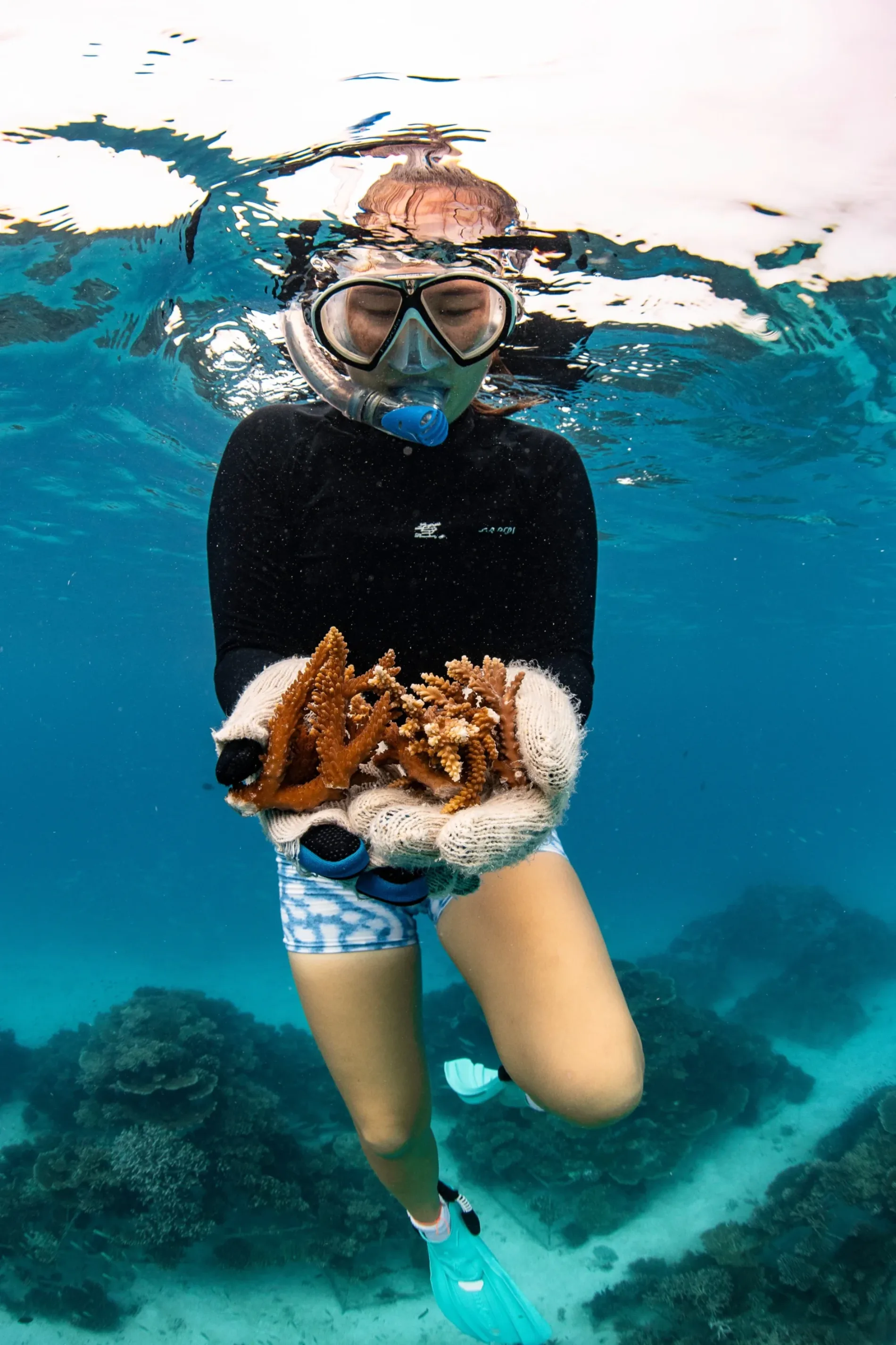
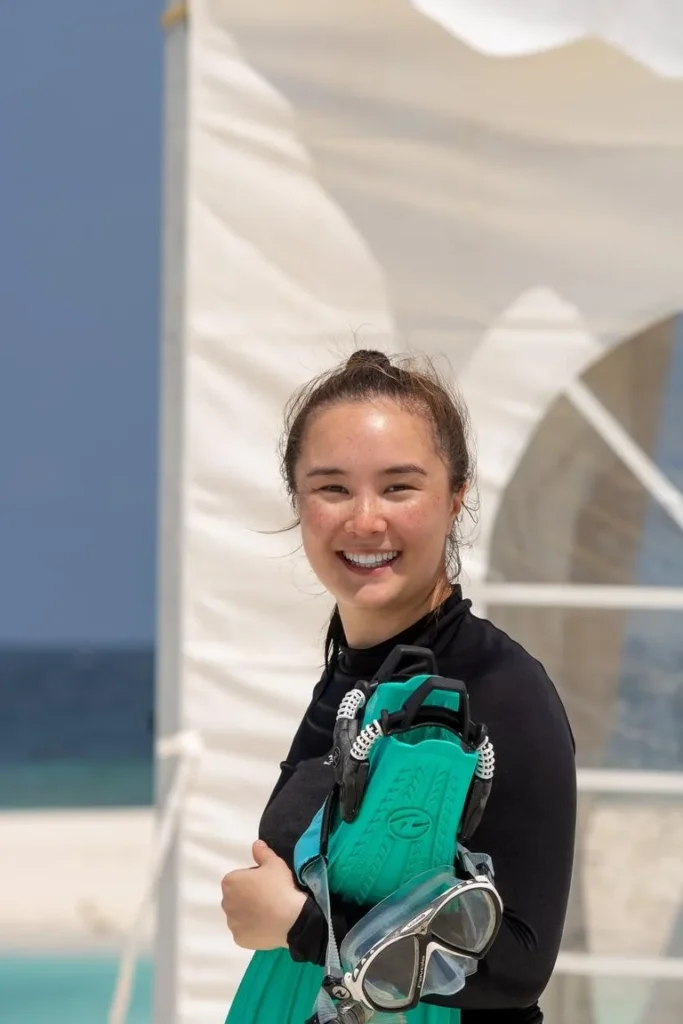
- Katelyn collecting coral fragments. Photo by Brooke Pyke.
- Katelyn diving. Photo by Modeyx.