
Courses
A new generation of apprentices: She started her career at 18 and hasn’t looked back
A third-year Civil Engineering student at Atlantic Technological University (ATU) has spoken about choosing the apprenticeship pathway over a traditional full-time university programme, and why she believes it has accelerated her career.

Kate Gaffrey, from Dunmore, Co Galway, who is completing the Bachelor of Engineering in Civil Engineering (Apprenticeship) at ATU’s Sligo Campus, received a CAO offer to study engineering through the traditional route. However, after careful consideration, she decided to pursue the apprenticeship model instead.
After completing my Leaving Certificate, I received a CAO offer to study engineering at a university. But when the apprenticeship option became known to me, it felt like perfect timing,” she said. “I decided to seize the opportunity, and I haven’t really looked back since. The idea of total independence and a pay cheque coming in every week was also very appealing.
Kate admits the decision was not without doubt.
“I questioned my decision for weeks and even months into the apprenticeship, especially watching my peers settle into college life while I adjusted to working life. Some people couldn’t understand why I would want to start my career so young instead of spending four or five years in college. But I believed the apprenticeship would best set me up for the life I wanted.”
She believes there are still misconceptions around engineering- and apprenticeships in particular.
“People often don’t fully understand what civil engineering involves. Before signing up, it’s important to learn about the profession and the different roles within it- even the choice between working with a contractor or consultant,” she said.
She also notes that the structure differs from what many expect.
“It doesn’t run like a traditional apprenticeship. We work four days a week, have one day of online college and attend in person once a month. There are no long summers off- learning continues year-round. Summers can be the busiest time with projects and exams. It requires commitment and strong time management.”
Kate, who has been working in Athlone for the past two and a half years, is employed by Ward & Burke, where she works alongside experienced engineers while completing her degree.
“The biggest benefit of working while studying is having fully qualified engineers around you who are willing to help,” she said. “Whether it’s calculations or project ideas, there is always someone you can sit down with. Even listening to engineers solve problems teaches you something.”
Now working as a site engineer, she says the experience has transformed how she approaches her studies.
“It has completely changed the way I approach academic learning. I aim to work in the most efficient way possible, delivering the best quality in the fastest way. I’ve picked up so many practical skills in the workplace, from report formatting to Excel and professional communication.”
Looking ahead, Kate believes the apprenticeship will give her a significant advantage.
I feel I’ll be more career-ready than I would be through a traditional programme. I aim to finish a master’s degree at 24 with six years of site experience. That level of experience would typically take much longer through the traditional route.
Beyond experience, she says the professional network she has built is invaluable.
“The connections I’ve made throughout the programme will benefit me long-term. As a class group, we’ve become close and we support each other. You also learn how different companies treat their employees, which helps you make informed decisions about your future.”
Civil engineering, she notes, offers diverse pathways- from site engineering and sustainability to project management, research and education.
“I love what I do as a site engineer, but I know this lifestyle won’t be forever. What excites me is knowing how many options I have.”
For Leaving Certificate students currently considering their CAO choices, her advice is practical.
“Give yourself as many options as possible. Most engineering programmes offer common entry, so you get a feel for different disciplines before specialising. When filling out your CAO, think about the bigger picture- where do you want to be in five years? Choose something that genuinely interests you.”
She also encourages parents to keep an open mind.
“If there is someone in your life who is hardworking, determined and self-motivated, this pathway could really suit them. It’s ideal for those who prefer hands-on learning, but you must be reliable and willing to push yourself. Make an informed decision and try to gain insight into what engineers do day to day.”
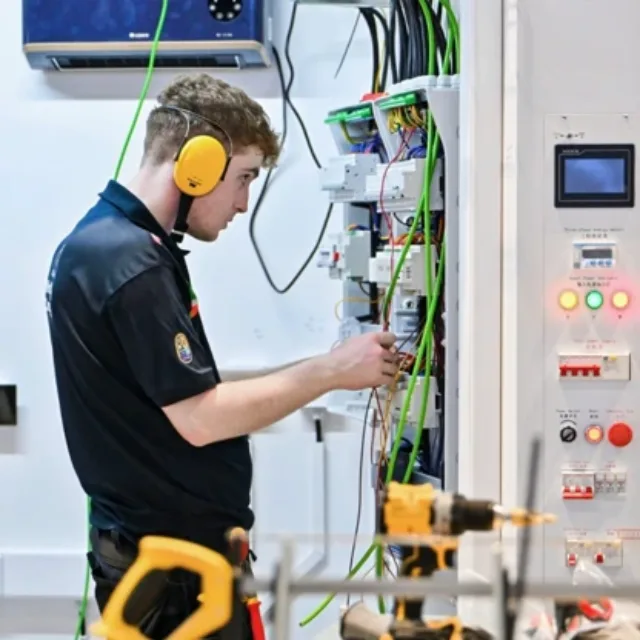
Photo caption: Kate Gaffrey, a third-year Civil Engineering student at Atlantic Technological University (ATU).
Ivana Hanjs
Communications Officer
Tel: +353 89 963 9559
E: ivana.hanjs@atu.ie