Courses
User Research & Persona Design for SMEs
This 3-hour, human-first, AI-enabled workshop helps startups, SMEs and larger organisations move from assumptions to evidence when designing new products and services. Drawing on best practices from Stanford’s school and MIT, together with design thinking methods developed at Atlantic Technological University (ATU) and refined through a decade of regional industry engagement, you will be guided through a clear, step-by-step qualitative research and analysis process.

This 3-hour, human-first, AI-enabled workshop helps startups, SMEs and larger organisations move from assumptions to evidence when designing new products and services. Drawing on best practices from Stanford’s school and MIT, together with design thinking methods developed at Atlantic Technological University (ATU) and refined through a decade of regional industry engagement, you will be guided through a clear, step-by-step qualitative research and analysis process.
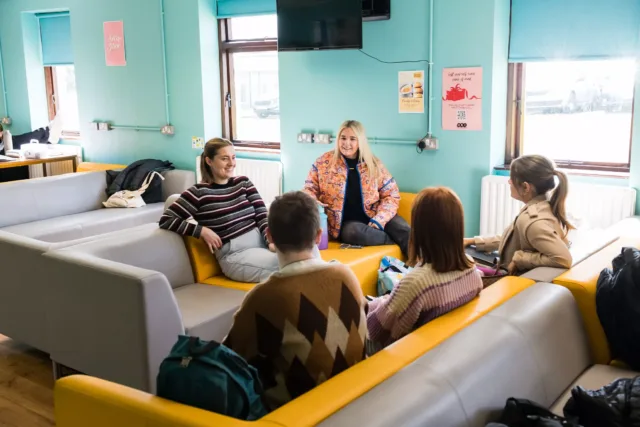
You will work in teams on a real innovation opportunity, learning how to design and conduct semi-structured user interviews, extract and analyse needs, and turn those insights into robust, evidence-based user personas. AI tools are used to support (not replace) human interpretation, ensuring your personas remain grounded in real user stories and contexts. By the end, you will have a repeatable, practical workflow you can apply immediately to your own innovation and new product development work.
Who is it suitable for?
This workshop is designed for people working in SMEs (and larger organisations) who are involved in innovation, new product development, service design or customer experience. It is ideal for:
It is particularly suitable for:
- Founders, product owners and innovation leads who need to validate ideas before building
- Marketing, CX and business development professionals who want deeper insight into customer needs
- Cross-functional teams who design or improve products and services and want to reduce guesswork
If your role involves understanding users, shaping new offerings or making design and innovation decisions, this workshop will give you a practical, evidence-based approach you can use straight away.
This event is funded through Innovate+. Innovate+ is a fully funded programme supporting small and medium-sized businesses across Northern Ireland and the border counties to adopt innovation, improve sustainability and strengthen their competitiveness.
Delivered through a cross-border partnership, the programme is funded through the PEACEPLUS Programme and managed by the Special EU Programmes Body (SEUPB), with support from the European Union, the UK Government, the Northern Ireland Executive and the Irish Government