Courses
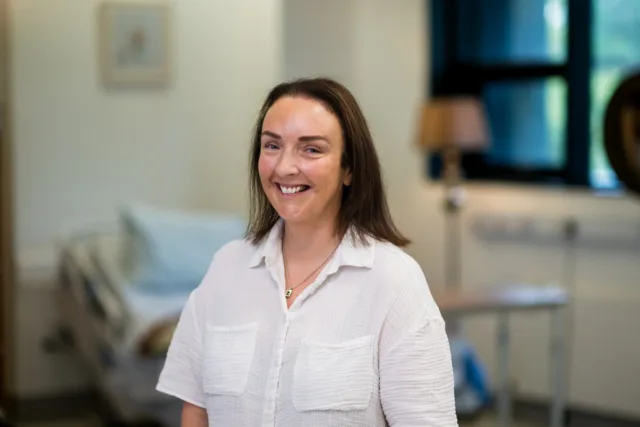
Can you tell us your name, job title and the course you studied at ATU?
My name is Margaret Kelly
I am a Clinical Nurse Specialist in Palliative Care.
I studied the postgrad in Palliative and End of Life Care in 2022. I then went on to study the Master of Science in Palliative and End of Life Care in 2023.
Can you share your career path to date?
I qualified as an RGN in 2019 through GMIT Mayo. I worked in care of the elderly (stroke unit) until August 2022 and I then moved to the North West Hospice as a palliative and end of life nurse in September 2022. From here I progressed into my current role as a Clinical Nurse Specialist in Palliative and End of Life Care in the community in May 2025.
What does your current role involve?
I’m starting a new role in May 2025 as a CNS.
What motivated you to start studying?
My motivation to start studying was
- Career Progression
- To acquire the education behind the art and science of Palliative and End of Life Care, allowing me to deepen my knowledge.
- I was eager to specialise and apply my learning in real time.
Why did you choose this course from ATU?
I chose this particular course in ATU as I had previous experience of the learning styles, skills and the traits of the lecturers in Mayo and these all aligned to my personal and professional skills set. The teaching style was on a level field with no hierarchy displayed and the lecturers cater for all different learning styles.
How did you find the process of studying online? What elements did you find helpful? Were there elements you found challenging?
Studying online has been a unique and rewarding experience. One of the most helpful aspects was the flexibility it offered. I could structure my study time around work and family commitments which made it manageable. Accessibility to lessons and signposting of materials to learn all helped my understanding and progressed my learning.
However it is not all plain sailing. I require motivation without that daily in person interaction that undergraduate programmes provide. Time management was paramount as my allocated study time was slotted in around school drop offs and collections. Wifi in the country can be frustrating and will challenge the adaptability of any person (which I have had to overcome many a time). However, I displayed motivation, digital communication skills and ability to work independently and to work to deadlines.
How did you balance work and study?
The days I was working I would read on my 15 minute evening break and ensure I got at least 15 minutes of fresh air. On the days I was off time management was critical. I had a 6 hour window so planning the night before was crucial. I would always carry a notebook with me and jot down ideas. I never as a rule took study material to read at night time. This was protected time and space from education. The weeks I worked night shift was always a challenge and work and educational commitments sometimes clashed but I overcame this with planning, resilience and staying focussed.
In terms of your employer, were they supportive of your decision to study? Were there elements of the course that were particularly relevant to your current employer?
I had been with Care of the Elderly since my internship in my general nursing undergraduate programme. Here I was nurtured and encouraged to pursue my passion for further study and to specialise in Palliative and End of Life Care. I was allocated study days and I was able to plan my days off to meet assignment deadlines. When I commenced my Masters I moved to the North West Hospice and I applied the same principal as with my past grad. Once I completed my Masters I was selected to present my findings to the audience of the 2nd Stage Early Research Forum, a very proud and professional moment for me.
What advice would you have for anyone considering studying online?
If you have a desire to learn and progress while juggling life commitments then online studying is for you. Its flexible and incredibly rewarding but requires discipline, time management skills and prioritising your course over personal commitments and your day off. For the year or two years of your course you treat your study time and learning as non-negotiable. You will meet like minded people and expand your professional circle while making friends for life. During tough times visualise yourself at the finish line and the career prospects you will receive.
In what way has studying online with ATU benefitted your career?
I have progressed from RGN to CNS by successfully gaining the educational requirements to do so from ATU. ATU has allowed me to become aware and develop invaluable qualities such as hard work, reliability and exceptional communication, planning and organisational skills and clinical expertise, for that I am forever grateful.
Did this course provide any unexpected benefits to your career?
The postgrad and masters is certainly benefiting my career and in my opinion is not isolated to one or two key moments.
Did you find that the elements you were studying had practical relevance in your day-to-day role?
The theories, tools, frameworks I studies aligned seamlessly with my clinical work such as PC emergencies, breaking bad news, PCOC handover tool and the signposting of frameworks and evidence based research. This all expanded my practice and allowed me to make informed decisions. I grew personally and professionally and I could see a clear connection between what I was studying and the direct impact on my work.
What were the key skills you took away from your time studying at ATU?
My commitment to providing dignity, respect and independence aligned seamlessly with the values of ATU. With a dedication to evidence based practice, a person centred approach, a focus on continuous improvement personally and professionally I am confident in my ability to make a meaningful contribution to Palliative and End of Life Care from my academic background sought from ATU