
Courses
Understanding AI: ethics, education, business and mental health
In this four-part series, we explore the growing influence of artificial intelligence on ethics, education, society and mental health- all through the expert lens of Máire Carr, a cyberpsychologist at Atlantic Technological University (ATU).
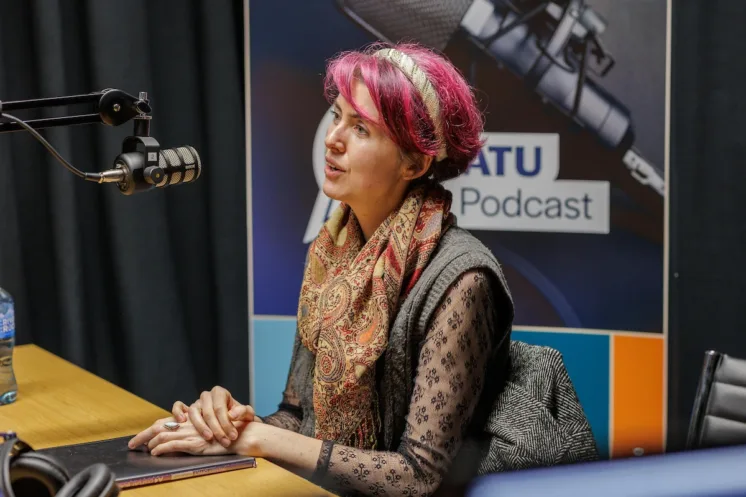
Each episode breaks down Máire’s evidence‑based insights on how AI shapes creativity, ethics, identity, and everyday digital life.
AI and ethics
Máire Carr examines the fast-moving ethical challenges emerging as artificial intelligence becomes more deeply embedded in everyday life. The discussion explores how AI’s expanding creative capabilities are raising urgent questions around copyright, consent and transparency. Recent examples include AI-generated art in the style of Studio Ghibli, allegations of AI-generated “ghost bands” on Spotify, and authors discovering that their work was used to train AI systems without their permission.
The episode also considers whether AI improves or undermines human creativity. It highlights the responsibility of technology companies to prevent misuse, including the spread of deepfakes and misinformation, and the need to ensure original creators are properly credited and protected.
The discussion highlights regulation, citing frameworks such as the EU AI Act as essential tools for keeping pace with rapid technological change. Overall, the episode sheds light on the ethical dilemmas facing society as AI becomes more powerful, more accessible and influential.
AI for business
Máire Carr offers a practical, human-centred view of how artificial intelligence is reshaping the modern workplace. Drawing on real-world examples, from small and medium enterprises engaging with Ireland’s “AI Here for Good” initiative to teams adopting everyday tools such as Otter AI and Slack, the discussion addresses why many organisations feel overwhelmed by AI and how meaningful adoption begins with identifying real workplace challenges rather than chasing hype.
The episode explores the psychological and cultural barriers that can accompany AI integration, particularly staff concerns around job security and change. It highlights the importance of transparent communication and involving employees early in conversations about AI.
Framing AI as a complex but adaptable system, the discussion highlights the value of taking small, measurable steps and focusing on user-centred design. Overall, the episode presents AI not as a threat but as a tool that, when implemented thoughtfully, can reduce cognitive load, support staff, and contribute to a more inclusive workplace culture.
AI and mental health
In this episode, ATU cyberpsychologist Máire Carr examines the growing use of artificial intelligence for emotional and psychological support. Drawing on her experience with the clinically designed mental health chatbot Woebot, she contrasts evidence-based therapeutic tools with general-purpose AI systems, highlighting the absence of crisis protocols, nuance detection and safeguarding measures in mainstream platforms.
The episode addresses serious real-world concerns, including instances in which AI systems failed to recognise suicidal ideation, stressing why scale, design priorities, and the lack of human oversight make general-use AI unsuitable for mental health care. It also explores why people form emotional attachments to chatbots, particularly in the context of loneliness and post-pandemic anxiety, and how AI’s agreeable nature can create misleading emotional bonds.
While acknowledging the potential of technology to support mental health services, the discussion emphasises that AI can only ever complement, not replace, human therapy. The episode highlights the need for regulated, transparent, and ethically designed mental health technologies.
AI and education
In this episode, Máire Carr examines the increasingly complex role artificial intelligence is playing across education, from primary and secondary classrooms to higher education. She addresses growing concerns about “cognitive offloading,” explaining how over-reliance on AI for tasks such as structuring essays or generating arguments can undermine the development of thinking skills central to learning, work, and everyday decision-making.
The discussion highlights the uncertainty many educators currently face as they seek to define appropriate uses of AI, referencing established frameworks such as Bloom’s Taxonomy and ongoing work by Ireland’s Higher Education Authority. Máire outlines the need for assessment models to evolve in response to AI, balancing innovation with academic integrity.
The episode presents practical and inclusive approaches to AI in education, including using AI for idea generation, study support and administrative tasks. It also addresses issues of access and digital literacy, warning against widening inequalities, and emphasises the importance of reflective learning, oral and practical assessments, and open dialogue between students, educators and institutions.
Artificial intelligence (AI) is shaping teaching, research, work, and everyday life across ATU. If you’re involved in an AI-related project, or have ideas worth sharing, we’d love to hear from you. Get in touch with the Communications team to help us showcase and support the great work happening across the university.
Contact: communications@atu.ie or catherine.howley@atu.ie
This piece is part of Bright Minds, Big Impact, a series highlighting ATU’s research excellence and the people driving meaningful change.