
Courses
“Future-focused with clear potential for real-world impact”: Research targeting major health gaps across the Northwest
Why people don’t take up vaccination programmes. How technology can support healthier childhoods. The role of nutrition in improving sleep and long-term health.
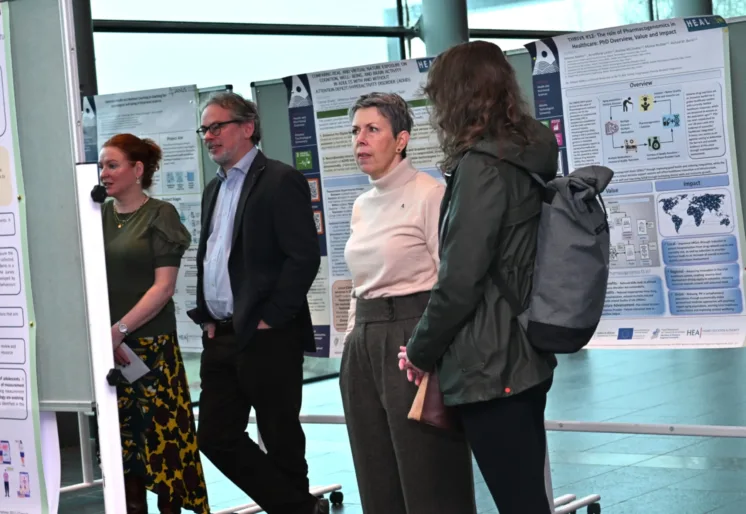
These were among the real-world health challenges examined at the THRIVE Symposium (Translational Health Research, Innovation, Prevention & Equity), held at ATU’s Galway City campus. The three-day event brought together researchers, policymakers, and regional stakeholders to focus on health issues with immediate relevance to communities across the Northern and Western region.
TU RISE supporting regional health impact
Reflecting on the THRIVE symposium, Neil McDermott, Senior Manager for System Development and Performance Management at the Higher Education Authority (HEA), said the event demonstrated how TU RISE is enabling research with clear societal value:
The research presented was both future-focused and people-focused, with clear potential for real-world impact.
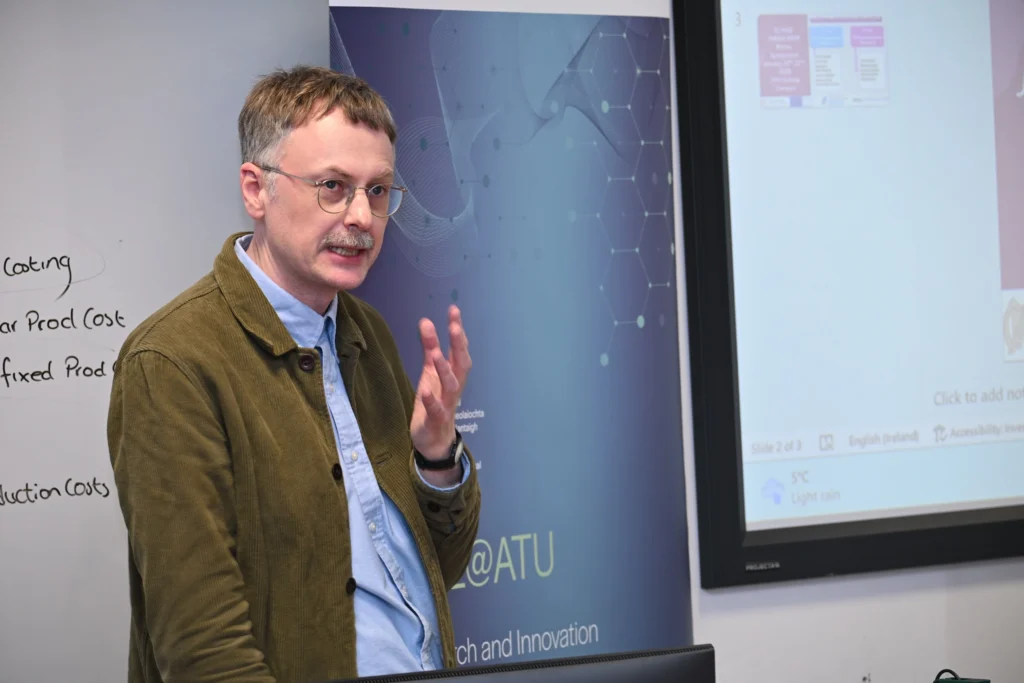
“The THRIVE symposium was a valuable opportunity to engage with ATU researchers and to learn how TU RISE-funded activity is contributing to the development of the Northern and Western region,” he said.
He added that the HEA, alongside the Northern and Western Regional Assembly, looks forward to continued collaboration with ATU on the outcomes of this research, in support of the Northern and Western region.
Health research grounded in everyday realities
Research on vaccination and screening programmes explored how communication, trust and accessibility influence uptake and long-term health outcomes.
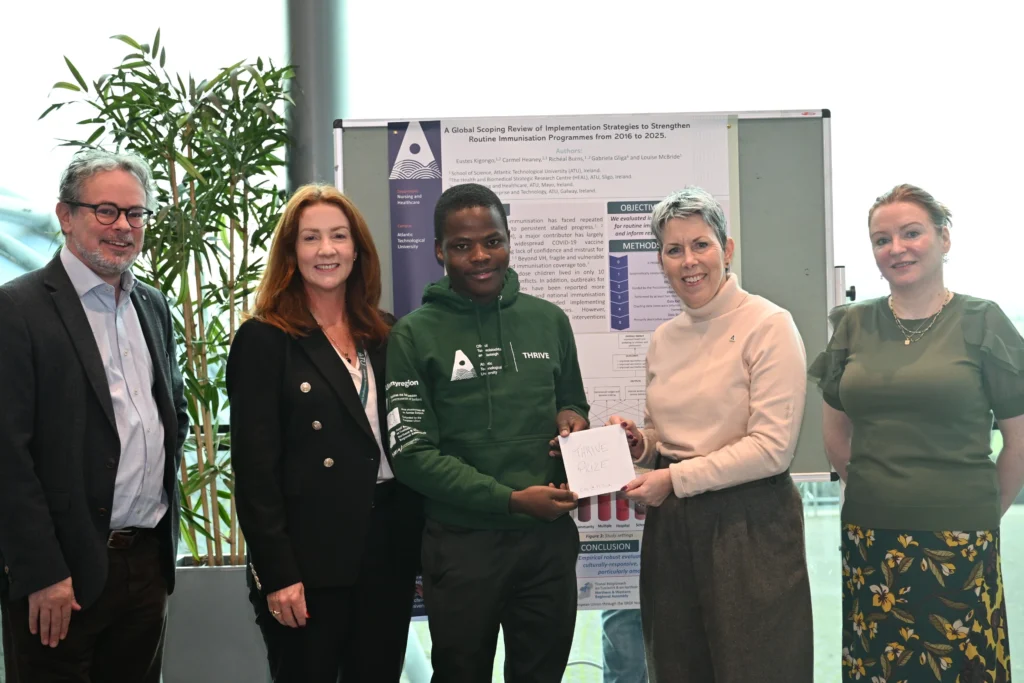
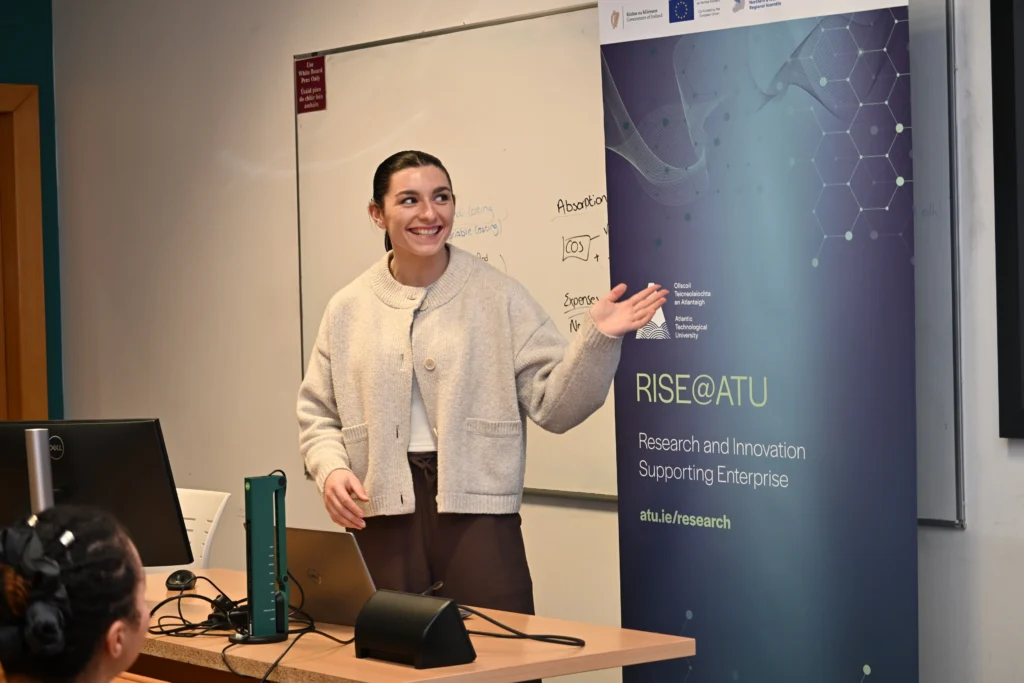
PhD researcher Eutestes Kigongo, whose work received the Best Pitch award, highlighted that parental hesitation around vaccination often stems from concern rather than opposition.
“Many parents today have questions and concerns about childhood immunisation, and that concern comes from love and a desire to keep children safe”, he said. “But true protection goes beyond avoiding harm; it means giving children the opportunity to grow healthy, thrive, and look forward to a bright future”.
Routine immunisation, he noted, has played a critical role in public health over the past five decades by preventing deadly diseases.
In fact, between 2021 and 2030, vaccines alone are expected to prevent around 50 million child deaths globally.
Technology, childhood health and prevention
Other projects examined how digital technologies can be integrated into public health approaches to childhood obesity. Lauren Callaghan, PhD researcher, received the Best Talk award for highlighting how perceptions of exercise needs to change to combat our growing statistics on obesity.
Nutrition, sleep and long-term wellbeing
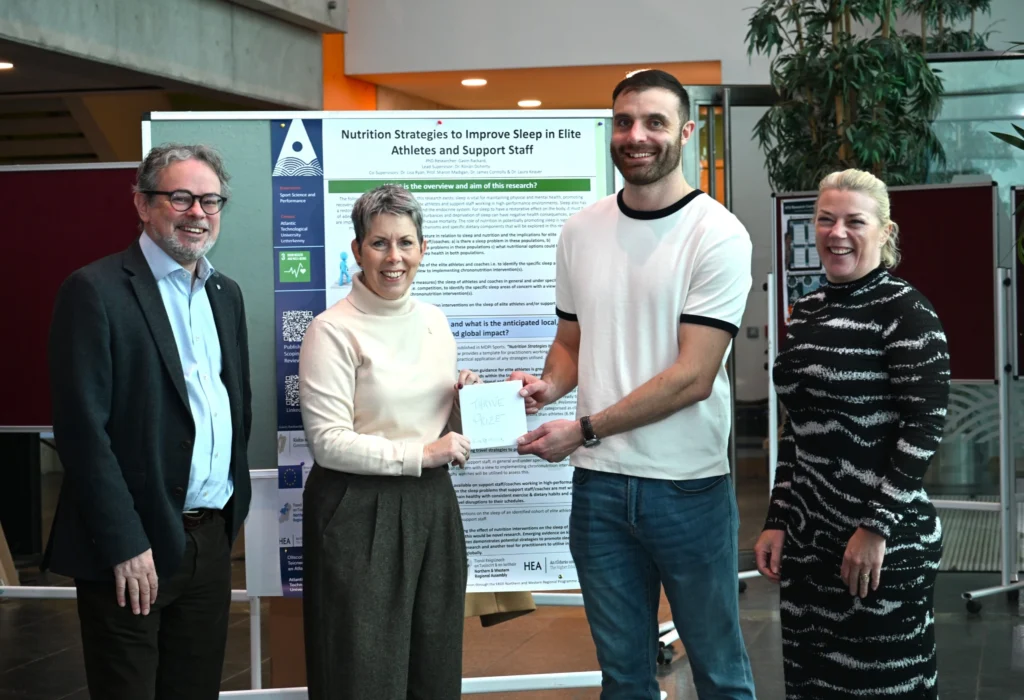
Gavin Rackard, PhD Candidate, whose work evaluating nutrition-based interventions received the Best Poster award, is investigating how dietary strategies influence sleep quality and recovery.
“Sleep is pivotal for recovery, immunity, and energy restoration; however, sleep problems exist in elite athletes,” he explained.
Elite athletes experience unique psychological and physiological demands above non-elite athletes and may require different nutrition strategies to promote sleep.
He added that the role of nutrient interventions in improving sleep quality represents an emerging area where further research is warranted.
The THRIVE Symposium demonstrated how RISE@ATU is supporting ATU to strengthen research capacity while ensuring that health research is aligned with regional needs, public policy priorities and societal impact.
RISE@ATU is co-funded by the Government of Ireland and the European Union through the ERDF Northern and Western Regional Programme 2021–2027.

Photo Caption:
Featured Image: ATU President Dr Orla Flynn and Dr Brendan Jennings, Chief Officer for Research, Innovation & Engagement at ATU, examine the latest translational health research poster.
Jorden McMenamin
Communications Officer
Tel: 074 918 6127